A Line Stretching Down the Block: The New Normal for New York's Hungry
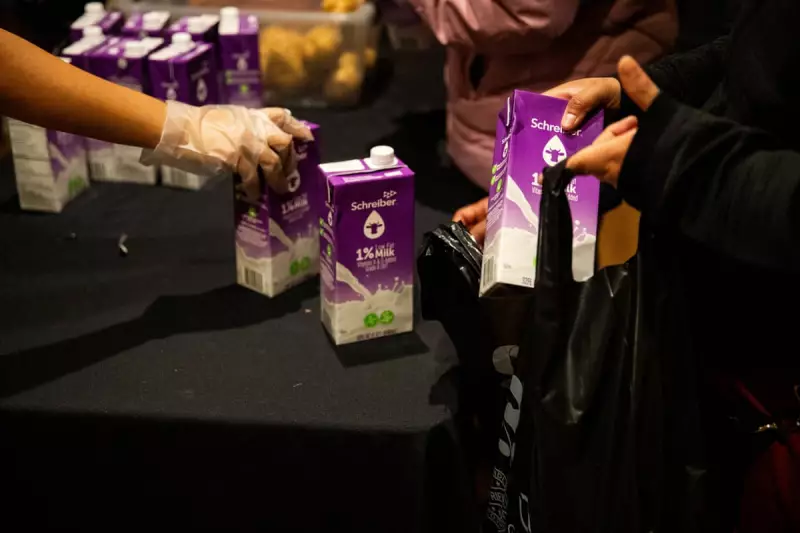
On a bitingly cold November morning in Lower Manhattan, a queue of hundreds snaked past the end of the block outside Trinity Commons. With temperatures hovering at 44°F, families, many with young children in tow, waited patiently for their turn at the Compassion Market food bank, an outreach of the historic Trinity Church.
"It’s all the way down the block today," observed Vidia Cordero, the church’s deputy chief community impact officer. Less than an hour after opening, they had already welcomed around 250 people inside. This surge is no longer an anomaly; the previous week, the church served more than 1,000 individuals on Tuesday and Thursday alone, the days the food bank operates.
The Driving Forces Behind the Surge
This staggering growth, Cordero explained, accelerated when the federal government began withholding Supplemental Nutrition Assistance Program (SNAP) benefits during the recent record-long government shutdown. However, the roots of the crisis run deeper. Food prices have climbed steadily throughout the year, exacerbated by the dual burdens of Donald Trump's tariffs and persistent inflation affecting households across the United States.

The financial pressure on consumers is quantifiable and severe. An October study from S&P Global indicated that companies face an additional $1.2tn in expenses for 2025, a cost increasingly being passed on. Researchers calculated that American consumers would absorb over $900bn of this "expense shock". Further analysis from the Yale Budget Lab estimated that tariffs would cost the average household nearly $2,400 extra per year.
As a stark testament to the affordability crisis, the average monthly grocery bill for a family of four has hit a record $1,030, according to the Kobeissi Letter. This marks a sharp increase of $280 since 2017, when the same family spent $750 per month.
Compassion in the Shadow of Wall Street
The location of this humanitarian effort presents a profound contrast. The Gothic Revival architecture of Trinity Church stands defiant among the skyscrapers, situated literally opposite Wall Street. The New York Stock Exchange, the heart of the world's financial capital, is just around the corner. Here, in the wealthiest nation on Earth, commuters and tourists bustle mere steps from where people queue for essential groceries.
To manage the overwhelming demand, the church has devised new queuing systems and diversified its aid. They now offer "non-cook bags" with ready-to-eat items for those without access to kitchens, such as the unhoused, and have noted a significant increase in requests for them. For others, a "client choice market" provides a dignified, shopping-like experience where visitors can select their own groceries within set limits.
The church's support extends beyond food. They also distribute clothing, toiletries, blankets, and winter coats, all brand new. However, demand frequently outstrips supply, forcing staff to sometimes turn people away when stocks are depleted.
A particularly poignant surge has been in demand for baby supplies. Tuesdays are now largely dedicated to distributing diapers and formula, serving over 200 people for these items alone in a single day. The church also assembles comprehensive "baby bundles" for expectant parents, which include a stroller and all essential newborn items.
A Broader Philanthropic Mobilisation
Trinity Church's response is two-fold, acting as both a direct service provider and a funder for other charities. Bea De la Torre, chief philanthropy officer, revealed that in response to the government shutdown, the church directed close to $400,000 to organisations supporting those who lost SNAP benefits or were distributing food more widely.
The scale of their commitment is monumental. In 2024, Trinity spent $1.6m to provide 2.5 million meals. So far in 2025, that figure has more than doubled, with $3.3m spent to provide five million meals.

Inside the Compassion Market, a practised efficiency prevails. Volunteers restock shelves and greet families in multiple languages, continuously filing people in from the cold. As the December holiday season approaches, the work shows no sign of slowing. "That’s what we’re here for," Cordero said. "To give folks what they need that they aren’t getting elsewhere."