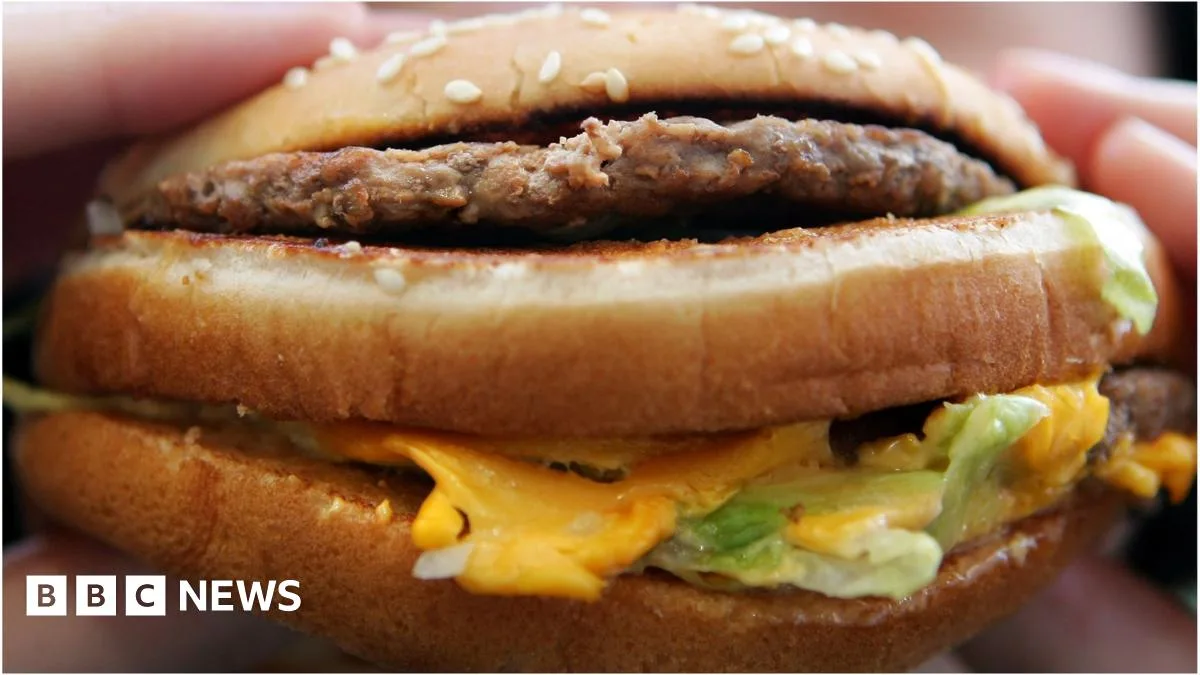
A New York man has filed a proposed class-action lawsuit against McDonald's and Wendy's, accusing the fast-food chains of deceptive advertising that makes their burgers appear significantly larger than they are in reality. Justin Chimienti is seeking $50 million (£40.3 million) in damages for himself and other customers who he claims were misled.
The lawsuit alleges that the burgers depicted in marketing materials are at least 15% larger than the actual products served. It cites social media complaints, including a YouTube reviewer who described a Wendy's Bourbon Bacon Cheeseburger as 'looking a little sad' compared to its advertisement. Another reviewer warned: 'It's going to be a small burger folks.'
The complaint argues that the ads are 'unfair and financially damaging consumers as they are receiving food that is much lower in value than what is being promised'. It highlights that such practices are 'especially concerning now that inflation, food, and meat prices are very high and many consumers, especially lower income consumers, are struggling financially'.
McDonald's and Wendy's have not commented on the case. The same law firms previously filed a similar lawsuit against Burger King in Florida in March, which has since attracted additional plaintiffs. Burger King has yet to respond in court.
Legal experts suggest the plaintiffs face an uphill battle. Mark Bartholomew, a law professor at the University of Buffalo, noted that proving customers were actually fooled and that ads influenced purchasing decisions is challenging. He added that fast-food companies could argue that some exaggeration in marketing is expected. 'My guess is that what they really want is a settlement,' he said.
In the UK, regulators banned a Burger King ad in 2010 for overstating the size of chicken sandwiches. However, such cases are relatively rare in the US, where advertising disputes are often resolved privately through industry bodies, according to Deborah Gerhardt, a law professor at the University of North Carolina-Chapel Hill.