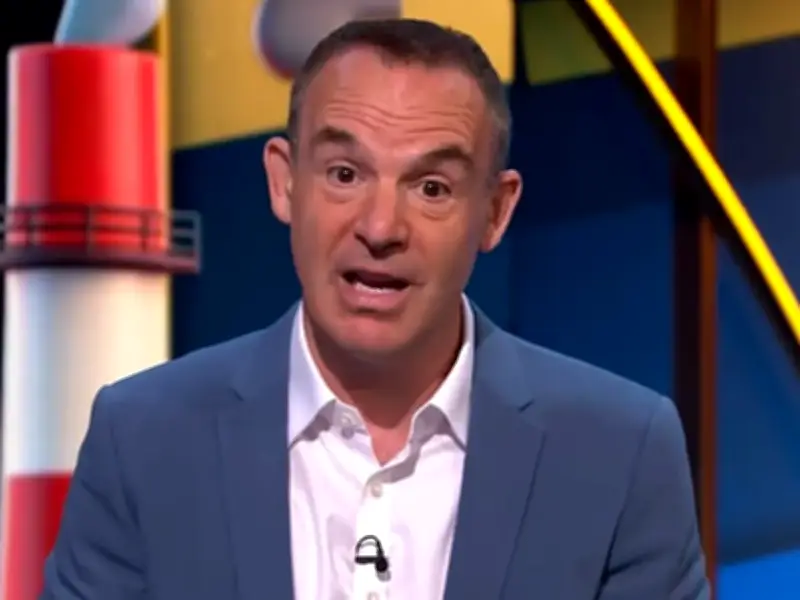
Martin Lewis has urged people to regularly check over their bank accounts after a fan secured a £1,100 refund. He said the principle applies to "all of your accounts" as you should inspect your details are correct.
Fan's £1,184.61 refund for mis-sold data
A person wrote into his BBC podcast to share how they had managed to get money back for their phone contract. They told the show: "While checking my contract details, I realised I've been mis-sold a data plan that I hadn't used since 2017. I challenged the provider about this historic mis-selling, and they agreed and gave me a cash refund of £1,184.61."
They thanked Mr Lewis for his work, saying they would "never have spotted this" or known they could challenge it, without the financial expert pointing out that it was an option.
'Grey area' of responsibility
Mr Lewis said this was a very "interesting" case study as he would be curious to know what sort of mis-selling it was. He said: "I suspect she was paying for data that she wasn't using. Now, it's interesting when that happens, because it is a grey area of whose responsibility it is. I tend to find that with the big networks, they will give you the money back."
He explained how it could be more difficult to get a refund, depending on the situation: "If it was a case that she cancelled it and they continued to charge her, then it's pretty clear-cut. But if she didn't cancel it, she just wasn't using it, or she moved on and they didn't cancel it, it's always more of a gray area."
Nonetheless, he was "delighted" she managed to get the money paid back. The consumer advocate took this opportunity to urge his listeners to do a "direct debit audit" for all their bank accounts.
Check your bank accounts
He explained what this involves: "Every year, at least every year, you should be going through your direct debits and standing orders on all of your accounts to just show what are you paying for on a regular basis, and asking yourself, 'Do I need it? Is it worth it? Am I getting the best value from it?'"
He warned people often needlessly pay for things because they don't do these regular checks. Mr Lewis said: "So many people have money dripping away, seeping away from their pockets because of that."
However, it can be more challenging to spot erroneous payments on your bank account statement if they are a recurring payment, which is different from a direct debit. You often pay in this way for digital subscription services such as Netflix or Disney+.
'You don't have the same rights'
Mr Lewis explained: "A recurring payment is when you give the long details on your credit or debit card. So, interestingly, a direct debit is from your bank account; a recurring payment is from your debit card, that's the same bank account, but you don't have the same rights."
The financial expert explained why these can be more difficult to identify: "The problem is, these are not broken down in your account. Classic ones are subscriptions, like your streaming service subscriptions, are recurring payments. So they take the payment each month, but not via a direct debit. It's not listed and broken down."
Mr Lewis explained the best way to pick out these hard-to-see payments. He said: "The best way to do it is you just need to look at a few months' statements and look at the payments that recur which you haven't actively made a payment for. They are your recurring payments, and you should put those in your direct debit audit as well."
While you may not have the same rights as with direct debits, you can take action to cancel these regular payments. Mr Lewis said: "You do have a right to cancel those with your card provider. It can be a bit tricky, but you do have a legal right to do so if the company won't cancel them."