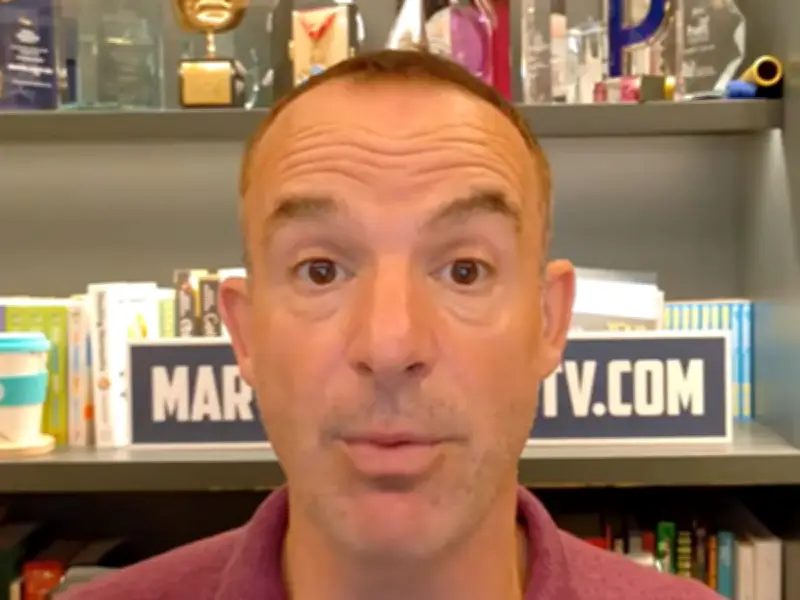
Personal finance expert Martin Lewis has explained the '49-day' rule for customers of energy suppliers including Octopus Energy, British Gas, E.ON Next, OVO Energy, EDF Energy and Scottish Power. Households in the UK are facing a bills hammer blow because of massive rises which are incoming.
Energy bills are predicted to surge by 25% in January, according to Bloomberg Economics. It would mean roughly an extra £427 added to the £1,723 energy price cap due in October, pushing it up to £2,150.
What is the 49-day rule?
Mr Lewis has advised people that in general the best thing to do is fix their deal and get off the 'price cap'. The energy price cap is a set limit on the cost of each unit of gas and electricity used by consumers.
On his 'ask me anything' YouTube session this week, one viewer asked Martin: "My current fixed tariff ends on December the 18th. Should I wait for the 49-day rule or change now?"
Mr Lewis explained: "The 49-day rule is the rule that says you cannot be charged early exit penalties within the last 50 days of your fixed tariff. So, at that point, you're free to do a comparison and switch. So, should you wait? Yes, absolutely. There's no point in paying an exit penalty. The fallacy is people get confused because I'm talking about the price cap going up in January, the energy price cap on the 1 of January potentially going up by 20%. People then think that's happening to fixes.
Why the January rise isn't about January
"I've said this many times, but the truth of this is the price cap is based on past prices. We are in the assessment period for January now. Today's new October price cap started today, which was about an assessment from mid-May to mid-August. It's not based on today's prices. It's based on past prices. So the fact it's going up in January isn't about what's going to happen in January. It's actually about what's happening right now.
"So what will happen to fixed rates depends on world wholesale rates primarily and mainly about what's going on in the Middle East. We do not know whether it will be better or worse in a few weeks time than it is right now. It is just as possible it will be better than it is worse because uh wholesale rates are peaking right now or just off the peak as it happens to be."
He explained that people fixing now because of the rise in January were basing it on predictions - when the situation could well improve. He said: "So the idea that you would rush in to get a fix now when we're at a peak because the price cap which is based on past prices is going to get worse in January doesn't bear logic out. There is no right answer. I cannot tell you what will happen to wholesale prices.
What should customers do?
"I mean, if you did, you would make billions from it because that's what the whole markets are based on. It is about what happens in future. So my answer would be I'd take the bird in the hand of the cheap price that you've got because if you fix before you're on a cheap price as long as you can definitely not pay an early exit penalty and cross your fingers and keep an eye on for a cheap fix.
"There is absolutely no reason that the day before your fix ends, fixes will be more expensive than now or cheaper than now. They could also be the same as now. It'll be one of them, but we don't know which."
Prices are being pushed higher by the escalating conflict in the Middle East and disruption to supplies of oil and gas through the Strait of Hormuz. Ofgem's price cap sets a maximum price that suppliers can charge customers for each unit of gas and electricity they use.
New Ofgem chief executive Tim Jarvis said "We know many households remain concerned about energy costs and the challenges they may face this winter.
"Ofgem will continue working closely with government, suppliers, consumer organisations and other partners to protect consumers, support those most in need and ensure the market works as effectively as possible."
He also said the regulator needed to "evolve" to support the UK's transition to a more sustainable energy system, including encouraging investment and reform.