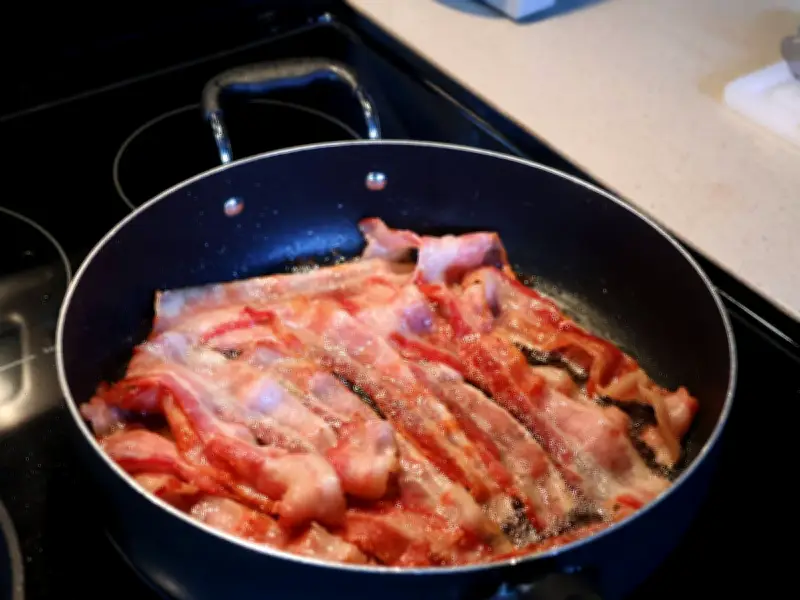
An expert has shared a simple pan trick that changes the way bacon and steak taste. Niall McCusker, an expert at specialist butcher Campbells Meat, says the temperature of the pan before the meat goes in makes all the difference. For bacon and fatty cuts of steak, starting hot is the worst thing you can do.
Why a hot pan is bad for bacon and steak
The key to perfectly cooked bacon and steak lies in starting with a cold pan. While a red-hot pan works well for lean cuts like chicken breasts or pork chops, it is not great for high-fat cuts. When fatty meat is dropped into a searingly hot pan, the outside seizes up almost instantly. The fat does not have time to render down properly, resulting in chewy, tough meat with burnt or rubbery fat.
"These foods have a high fat content, so you need to know how to render the fat and get it nice and crispy without burning the meat," Niall explained. "Starting off with a cold pan lets the fat slowly melt as it turns into a liquid. That cooks off the fat and gives you that flavour without burning the meat. It also results in a more tender texture, as it hasn't tightened up from cooking on a high heat."
How to cook bacon on the hob
For best results with bacon, lay the rashers flat in a cold, dry frying pan - no oil needed. Place the pan over a medium heat and let the bacon cook slowly, turning occasionally. As the pan heats up, the fat will start to render, turning golden and crisp. The process takes around six to eight minutes depending on thickness. Once cooked, transfer to a plate lined with kitchen roll to absorb excess grease.
How to cook steak properly on the hob
The same cold-pan principle applies to fatty cuts of steak like ribeye, sirloin or T-bone. Before cooking, take the steak out of the fridge at least 20 to 30 minutes before cooking to allow it to come to room temperature. Pat the steak dry with kitchen paper. Season generously with salt and freshly ground black pepper. Place the seasoned steak in a cold pan, then turn the heat to medium-high. For a steak around 2.5cm thick, cook for roughly two to three minutes per side for medium rare. If the steak has a thick fat cap, hold it upright with tongs to render that fat fully.
Don't skip the resting stage
After cooking, place the steak on a warm plate and leave it to rest for at least five minutes before cutting. Resting allows the juices to redistribute throughout the steak, so they stay in the meat rather than running out onto the plate.