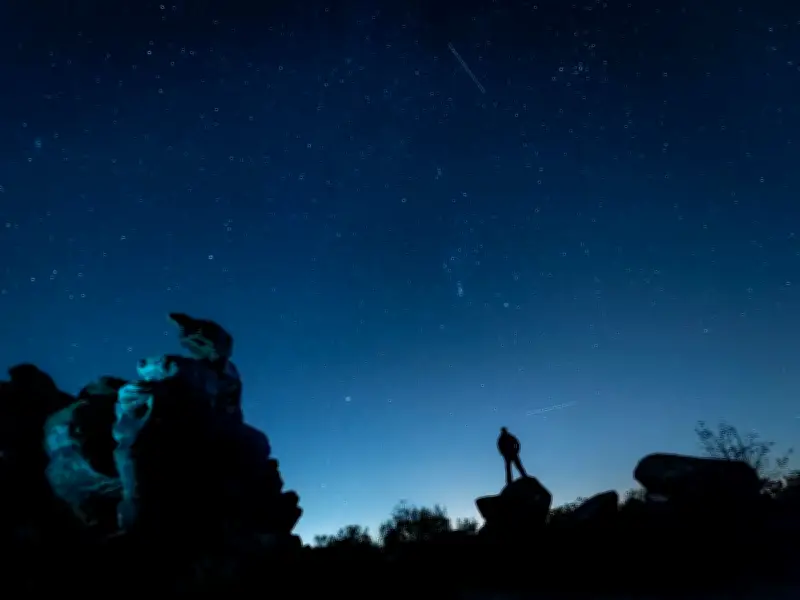
Stargazers across the UK will have the chance to see the Orionid meteor shower this month as it reaches its peak. According to Royal Museums Greenwich, the shower is active from October 2 to November 7 and is one of the most reliable meteor showers of the year.
The meteors can be seen with the naked eye, provided the sky is clear and dark enough. The Orionids are expected to peak overnight on Wednesday, October 21, into Thursday, October 22. Viewing conditions will depend on the weather and levels of light pollution.
What causes the Orionid meteor shower?
The meteor shower occurs when Earth passes through dust and debris left behind by Halley's Comet. The tiny particles enter the atmosphere at speeds of around 41 miles per second, heating up and burning away to create the bright streaks of light known as shooting stars.
Although Halley's Comet only passes close to the Sun about once every 75 to 76 years, the Earth passes through its debris trail twice a year, creating the Orionids in October and the Eta Aquariids in May.
How to watch the Orionids
Royal Museums Greenwich advises that the Orionids can be seen with the naked eye, meaning there is no need to buy binoculars or invest in a telescope to enjoy the event.
The most important factor is finding a suitable viewing location. Areas away from streetlights, buildings and other sources of artificial lighting generally provide better conditions, particularly when trying to spot fainter meteors. Royal Museums Greenwich advises: "The meteors can be seen in all parts of the sky, so it’s good to be in a wide open space where you can scan the night sky with your eyes."
During the peak, observers may have a better chance of spotting several meteors over the course of an evening, although the exact number visible can vary considerably. The display is not a guaranteed stream of constant shooting stars, so patience is important. For the best chance of seeing the shower, stargazers should plan to head outside late at night or in the early hours of the morning, when the radiant point in the constellation Orion is higher in the sky.
Cloud cover could affect viewing opportunities across the UK, while bright moonlight and artificial lighting may make fainter meteors more difficult to spot.