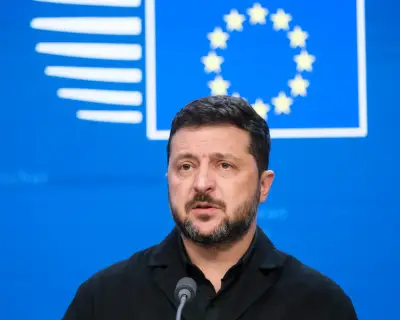
A report published on Monday by the Institute for Public Policy Research (IPPR) argues that the UK should now make becoming an EU state its “medium-term” goal, citing changes in global politics over the past decade.
The influential left-wing think tank said Britain lacks the “scale” to deal with “Russian aggression, American unreliability and Chinese coercion” on its own, restricting the UK’s sovereignty and its ability to act.
Think tank calls for EU membership
Harry Quilter-Pinner, IPPR’s executive director, said: “The world Britain built its post-Brexit strategy for no longer exists. We are entering an age in which economic strength, security and political influence increasingly depend on scale, and Britain cannot manufacture that scale on its own.”
The report argued that such “hedging” between the US and Europe was “a strategy for survival rather than success”. The Government has so far insisted it can maintain strong partnerships with both.
IPPR associate director Laura Chappell said: “Whether it’s protecting households from swings in the cost of living, restarting industry, or keeping us secure, we lack the weight to act alone. In today’s world, we can’t take back control while being an outsider in Europe.”
Path towards membership
The think tank conceded that the Government would need time to build a case for membership, suggesting working with the EU on defence, manufacturing and democratic resilience as steps towards full membership.
Mr Quilter-Pinner said: “There is one option which is best for the UK’s relationship with Europe – membership of the EU. That does not mean announcing another referendum tomorrow. But this means starting work to move towards this destination, building political support at home and in Europe.”
Part of moving towards membership could include seeking inclusion in the EU’s “Made in Europe” scheme, which prioritises European firms for public contracts and subsidies. Discussion has so far focused on including the UK’s car industry, which the Government has said would be welcome, but is also likely to require alignment with EU tariffs on Chinese electric vehicles, potentially putting net zero targets at risk. IPPR said a “more comprehensive – and less transactional – approach” was needed.
Public support and government response
Polling carried out for the think tank by Persuasion UK in June found 52% of people supported rejoining, while only 29% opposed. Even among Labour voters considering switching to Reform UK, some 54% supported joining the EU.
The think tank said old arguments about freedom of movement had lost “salience”, while claims of “betraying” the 2016 referendum also mattered less. However, it noted that concerns about contributions to the EU’s budget and replacing the pound with the euro could cause significant damage to support for membership.
A Government spokesman said: “The threadbare Brexit deal inherited by this government has weakened our ability to control illegal immigration, slowed growth and left businesses tangled in red tape. We are working on practical deals that pay off for British farmers and families and will support growth in every UK postcode, cutting back on paperwork and easing pressure on prices.”
Meanwhile, Home Secretary Shabana Mahmood is to meet EU commissioner Magnus Brunner in London on Monday for talks on migration. Ahead of the talks, Mr Brunner said the UK’s contribution to tackling illegal migration was “indispensable”. Pointing to a significant drop in illegal migration, including across the Channel, he said: “Anyone looking at the EU’s migration record today will find a different picture from the one many remember. We have put our European house in order.”