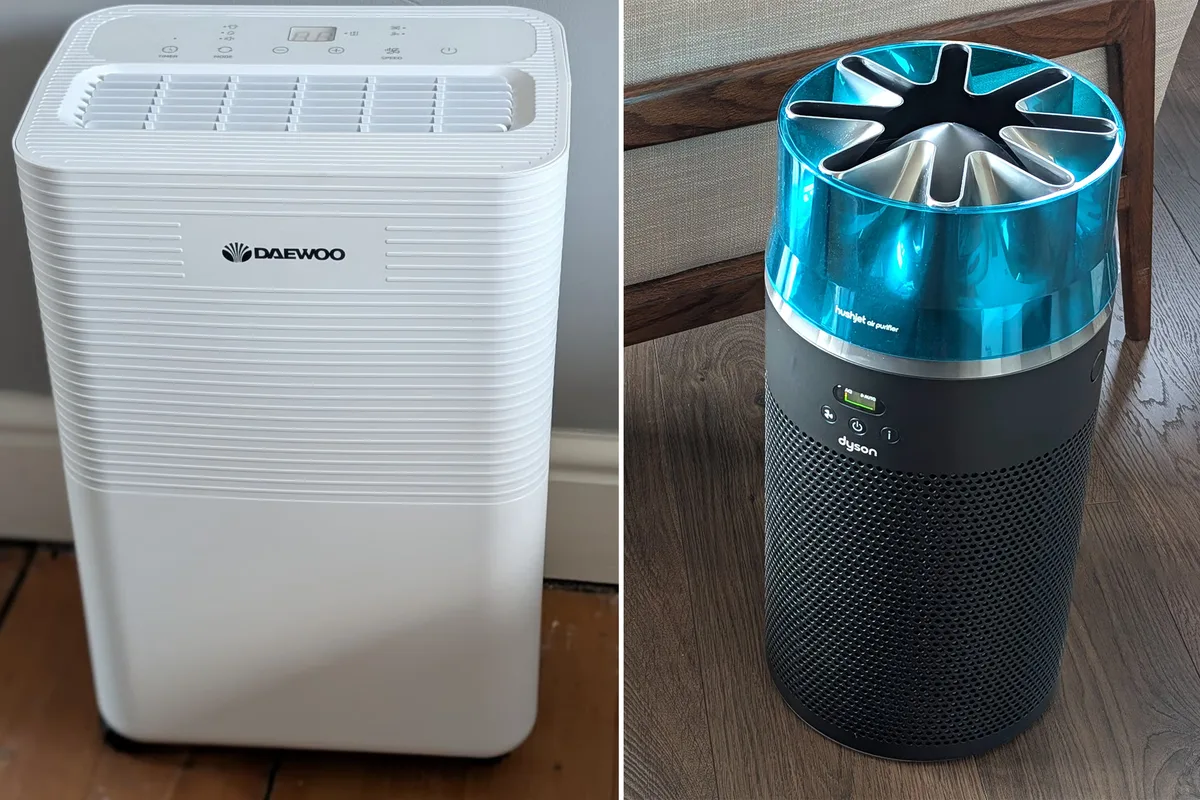
Air Purifiers vs Dehumidifiers: Which Appliance Does Your Home Actually Need?
The Independent's journalism is supported by our readers. When you purchase through links on our site, we may earn commission. Why trust us? Air purifiers versus dehumidifiers: Which one does your home require, according to industry specialists? Experts provide comprehensive insights on which appliance is optimal for your household environment and personal wellbeing.
Understanding the Fundamental Differences Between These Devices
If you have ever observed condensation dripping down your bedroom windows, detected a faint musty odour in a cupboard, or experienced sudden sneezing fits when commencing dusting, you might have pondered: "Do I require an air purifier or a dehumidifier?" You have arrived at the perfect location to discover the answer. Having reviewed air purifiers and dehumidifiers for nearly a decade, I have tested numerous models in my damp-prone, pet-filled period home. I have counted more airborne particles than you could possibly sneeze at and emptied sufficient dehumidifier tanks to fill an Olympic-sized swimming pool, providing substantial expertise regarding which appliance genuinely addresses which specific problem.
Do not merely accept my perspective, however; I have additionally consulted air treatment specialists and industry experts to obtain their professional opinions regarding what these machines actually accomplish and, equally significantly, what they cannot achieve. One of the most prevalent misconceptions people hold is that air purifiers and dehumidifiers perform identical functions. In reality, they resolve completely distinct issues. As Katy Lillywhite, air treatment expert at AO, clarifies: "The primary function of an air purifier involves removing airborne allergens, including pollen, pet dander, and mould spores."
"Conversely, a dehumidifier is principally engineered to reduce moisture levels, assisting in preventing allergen growth," she further elaborates. Understanding which device you genuinely require can prevent you from purchasing the incorrect appliance entirely. If you experience dampness or mould, or if you suffer from allergies, selecting the appropriate device becomes particularly crucial. Here is comprehensive guidance on making that determination.
What Do Air Purifiers and Dehumidifiers Actually Accomplish?
These appliances might appear similar externally, but the internal mechanisms of an air purifier versus a dehumidifier could not be more divergent. As Dr Jaspreet Dhau, Vice President of research and development at air purifier brand Molekule, explains, "Air purifiers are designed to eliminate airborne pollutants such as dust, pollen, pet dander, smoke particles, and other microscopic irritants, contributing to a cleaner breathing environment."
In straightforward terminology, an air purifier draws air through filters that capture these particles, enhancing the overall air quality within your residence. Many premium air purifiers utilise ultra-efficient HEPA filters, considered the gold standard in air purification, trapping up to 99.97% of airborne particles as minute as 0.3 microns. Consequently, air purifiers typically appeal to individuals managing allergies, asthma, or urban pollution, since they can remove allergens that conventional dusting and cleaning cannot eliminate.
A dehumidifier, on the other hand, does not filter particles whatsoever. Compared to a purifier, its function is actually relatively simple: extracting excess moisture from the air by pulling humid air across cold coils, condensing the moisture into water, and collecting it within a tank. Reduced humidity levels make a room feel fresher and drier, diminish mould and dampness, and crucially, as Lillywhite emphasises, "can also restrict dust mite proliferation."
Which Device Proves Superior for Addressing Mould and Damp Issues?
This represents where confusion frequently arises. While a purifier might capture airborne mould spores (provided it contains a genuine HEPA filter), it does not eliminate the humidity that permits mould to develop initially. Therefore, if your walls or windows exhibit dampness, the underlying cause almost invariably involves excess atmospheric moisture – something exclusively a dehumidifier can combat. Extracting moisture from the air and lowering humidity levels to approximately 40 to 50 percent can help halt mould progression decisively.
This explains why dehumidifiers have grown increasingly popular throughout the United Kingdom, where older housing stock and colder winters can render condensation and mould persistent concerns. During winter and early spring in our household, we typically operate two dehumidifiers simultaneously, simply to maintain humidity at a healthy level and keep laundry dry indoors (an additional advantage of the humble dehumidifier). Mould tends to accumulate in room corners where two external walls converge, and operating a dehumidifier significantly reduces this during damper months.
While numerous purifiers also incorporate activated carbon filters, which can diminish that musty, damp odour associated with mould, those spores will simply settle and regenerate if you do not address that troublesome humidity. The fundamental conclusion? If you intend to combat mould and dampness within your home, you require a dehumidifier, not an air purifier.
Which Appliance More Effectively Assists Individuals with Allergies?
If you experience allergies, the balance decisively favours air purifiers. Contemporary research indicates that air purifiers, particularly HEPA models, can reduce indoor allergens and airborne particles. However, they tend to prove more effective at addressing pet-related allergens than dust mites, an important consideration if that represents your specific allergy.
Simone Miles, chief executive of Allergy UK, underscores the broader impact of deficient indoor air quality. "For numerous individuals living with indoor allergies, their home does not function as a sanctuary. Instead, it can constitute a health hazard. Indoor allergies can impose substantial burdens on personal quality of life, contributing to sleep disturbances, mental health struggles, absenteeism from work or school, and ongoing financial expenses."
"Access to cleaner air can create transformative differences," she adds. "An indoor allergy carries hospitalisation risks, and prolonged exposure to poor-quality air can result in irreversible lung damage." In bedrooms especially, where we all spend extended periods breathing identical air overnight, a purifier can generate noticeable comfort improvements. Air purifiers can assist in capturing harmful airborne particles and alleviating those bothersome allergy symptoms like sneezing, nasal congestion, watery eyes, and coughing.
Which Device Promotes Superior Overall Health?
Both appliances can enhance your home's air quality, but they achieve this through markedly different methodologies. An air purifier focuses entirely on what you are inhaling. If you have ever found yourself sneezing while dusting, awakening with a blocked nose, or contending with floating pet hair despite frequent vacuuming, that represents where a purifier becomes relevant. It extracts those minuscule airborne irritants from the atmosphere, which can create noticeable improvements if you experience allergies or asthma.
A dehumidifier, conversely, addresses how your home feels physically. If your windows stream with condensation each morning, your clothes require excessive drying time on an airer, or certain rooms emit slightly musty odours, excess moisture typically represents the culprit. By drying the air, a dehumidifier makes mould and mildew establishment considerably more challenging.
Which Appliance Demonstrates Lower Operating Costs?
As with all electrical appliances, running expenses can fluctuate depending on model specifications and whether devices incorporate eco modes or other energy-saving features. Nevertheless, several key distinctions merit recognition. An air purifier generally proves cheaper to operate daily, since it primarily powers a fan and filter mechanism. The complication involves the filters themselves – these usually require replacement every twelve months, and cumulative costs can accumulate over time, particularly if operating continuously.
As technology advances, more brands are releasing air purifiers featuring extended-lasting filters, like the innovative Dyson HushJet (£349, Dyson.co.uk), which boasts an impressive five-year filter lifespan instead of the standard one-year duration found on most purifiers. A dehumidifier, by comparison, consumes more electricity because it actively extracts moisture from the atmosphere. You might notice greater impact on your energy bill if operating for extended durations, especially during winter months.
That acknowledged, in many households, a dehumidifier can actually generate savings through alternative means. If utilising it for laundry drying instead of a tumble dryer, for instance, it frequently represents a considerably more energy-efficient alternative, and gentler on clothing fabrics as well.
How Should You Decide If Purchasing Only One Device?
If attempting to select between these two appliances, the simplest approach involves concentrating on the specific problem you actually observe within your residence. As Lillywhite explains: "If your primary triggers involve pollen or pet dander, an air purifier represents the appropriate device for you. However, if you encounter issues with dampness, humidity, mould, or dust mites, a dehumidifier constitutes the superior option."
But, she adds, neither device guarantees problem resolution. "While both products can assist in making allergies more manageable, they do not function as standalone solutions. Combining them with regular cleaning routines, allergen source control, and adequate ventilation will collectively help maintain allergy management."
Nevertheless, a new category of appliance is beginning to blur distinctions between these two devices. Hybrid machines now exist that combine air purification and dehumidification within a single unit, meaning they can extract excess atmospheric moisture while simultaneously filtering dust, pollen, and other airborne pollutants. A dual-function appliance will not always outperform specialised machines in each category, but if your home struggles with both dampness and poor air quality, they can provide convenient, and sometimes more economical, comprehensive solutions.
One exemplary model involves the Dryzone 12L air purifier and dehumidifier (£149.99, Amazon.co.uk), which combines moisture extraction with HEPA filtration to address both humidity and airborne particles concurrently. In comprehensive testing, this device "accelerates indoor clothes drying to approximately six hours – and at 4p per hour, that proves significantly cheaper to operate than a tumble dryer." Another formidable contender includes Meaco's arete one 20L (£260, Argos.co.uk), which delivers immediate improvements in air quality and humidity management through intuitive, user-friendly controls and efficient performance.