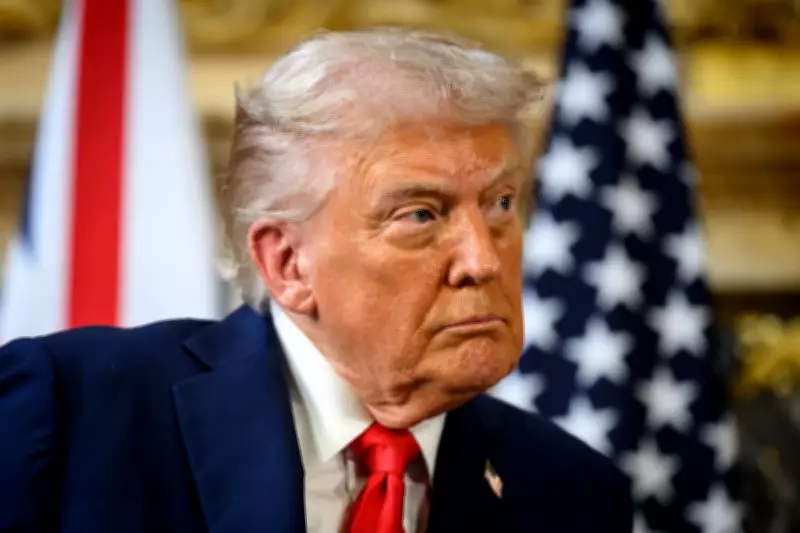
Donald Trump is poised to announce his selection for the chairman of the United States Federal Reserve, a highly anticipated decision that will shape monetary policy for the world's largest economy. The announcement, expected imminently, comes amid a backdrop of significant political tension and market speculation.
Speculation Fuels Market Movements
Market indicators on Friday morning suggested that former Federal Reserve governor Kevin Warsh is the president's leading candidate for the role. This speculation contributed to a strengthening of the US dollar against major currencies, including the pound and the euro. The pound fell by approximately 0.5% against the dollar, while the euro declined by 0.4%.
Trump confirmed his intention to reveal his choice, hinting cryptically that "a lot of people think that this is somebody that could have been there a few years ago." This statement has been widely interpreted as a nod towards Warsh, who was previously considered for the position.

A Fraught Environment for the Current Chair
The nomination process unfolds during a particularly challenging period for the incumbent chair, Jerome Powell, whose term concludes in May. Earlier this month, Powell released a video statement disclosing that he is facing threats of a criminal investigation initiated by the Trump administration.
Powell asserted that these threats stem from testimony he provided concerning renovation projects at the Federal Reserve's office buildings. However, he firmly linked the pressure to the central bank's policy decisions, stating the actions were a "consequence of the Federal Reserve setting interest rates based on our best assessment of what will serve the public, rather than following the preferences of the president."
Global Defence of Central Bank Independence
Powell's statement prompted a swift and unified response from central bank leaders worldwide. Figures including Andrew Bailey, the Governor of the Bank of England, publicly expressed their support for Powell and emphasised the critical importance of preserving the Federal Reserve's operational independence from political influence.
This international backing underscores a fundamental principle: central banks, including the Fed, are designed to operate independently of government, setting interest rate policy free from political interference to ensure long-term economic stability.
The Ongoing Feud Over Interest Rates
The tension between Trump and Powell is not new. The president has repeatedly criticised the Federal Reserve and Powell personally for not implementing interest rate cuts at the pace he desires. This public feud highlights the significant pressure on the institution, which holds considerable power over the US and global economy through its monetary policy levers.
Whoever assumes the role of chair will inherit this complex dynamic, tasked with navigating political expectations while upholding the Fed's mandate for price stability and maximum employment.
Market Analysis and Investor Sentiment
Financial analysts are closely monitoring the situation. Dan Coatsworth, head of markets at AJ Bell, commented: "Reports suggest Kevin Warsh is primed to take the role. Investors seem to be taking this as a positive sign in terms of Fed independence – with Warsh perceived as a more orthodox choice versus some of the other mooted names."
Coatsworth noted Warsh's previous experience as a Fed governor and his prior competition with Powell for the chairmanship in 2017. He added a note of caution: "Whether Warsh will transform from a hawk to a dove thanks to external pressure, assuming he gets the job, will only become clear over time." This observation points to the uncertainty surrounding how a new chair might balance established economic principles with potential political demands.
The impending nomination represents a pivotal moment for US economic governance, with implications that will resonate through global financial markets and the ongoing debate over the separation of monetary policy from political direction.