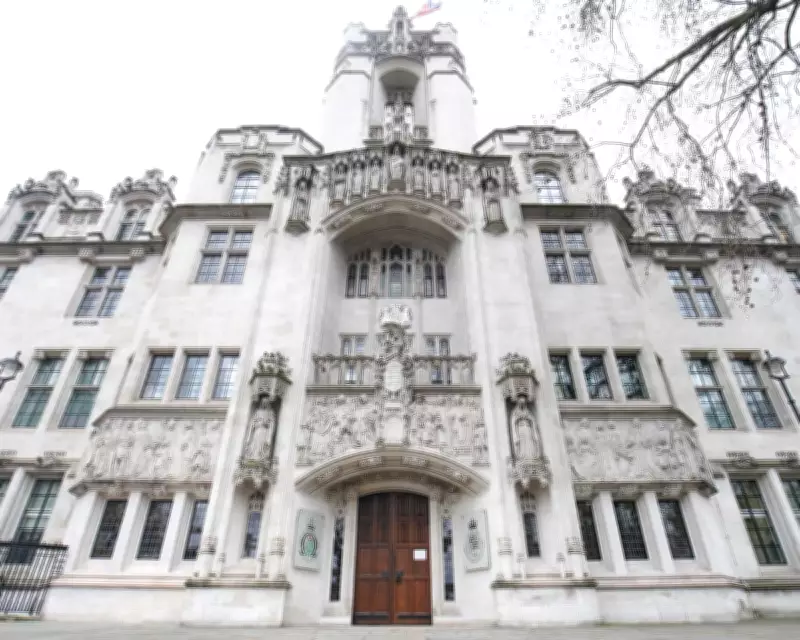
Fresh Legal Challenges for Convicted Bankers Following Supreme Court Ruling
The legal landscape surrounding historic rate-rigging convictions has been dramatically reshaped, with five more former bankers now being granted an opportunity to challenge their fraud convictions. This development follows the Criminal Cases Review Commission's decision to refer their cases back to the Court of Appeal, creating significant implications for financial sector accountability and judicial precedent.
Landmark Supreme Court Decisions Trigger Review
The referral comes directly in the wake of two pivotal Supreme Court rulings that overturned the convictions of traders Tom Hayes and Carlo Palombo. In July 2025, the Supreme Court identified serious flaws in the original trials, particularly criticising the judge for providing what they termed "inaccurate and unfair" instructions to the jury. These instructions had formed the basis for convictions on conspiracy to defraud charges.
The five individuals now seeking to clear their names are Alex Pabon, Jay Vijay Merchant, Jonathan Mathew, Philippe Moryoussef, and Colin Bermingham. All were convicted between 2016 and 2019 for their alleged roles in manipulating either the Euro Interbank Offered Rate (Euribor) or the now-defunct London Interbank Offered Rate (Libor). These benchmark rates influenced the value of countless financial products globally, affecting everything from ordinary mortgages and pensions to complex derivatives worth hundreds of trillions.

Unsafe Convictions and Legal Errors
In their applications to the CCRC, the convicted bankers argued that their trials suffered from the same fundamental legal errors identified by the Supreme Court in the Hayes and Palombo cases. The CCRC conducted thorough analysis of all five cases and concluded there were "no distinguishing factors" between these convictions and those already overturned.
The commission stated clearly: "After analysing the submissions in all five cases ... the CCRC has determined there is no distinguishing factor between these cases and the cases of Mr Hayes and Mr Palombo, and the jury misdirection and legal errors have undermined the safety of all the convictions."
The original convictions resulted in substantial prison sentences. Pabon, Merchant and Mathew received sentences ranging from two to six and a half years following their 2016 convictions at Southwark Crown Court. Moryoussef was sentenced to eight years in 2018, while Bermingham received a five-year sentence in 2019.
Broader Implications and Ongoing Fallout
This development represents just the latest chapter in the long-running Libor and Euribor scandal that rocked global financial markets. The original investigations led to nearly $10 billion in fines for numerous banks and brokerages, with nine bankers ultimately receiving fraud convictions.
The Serious Fraud Office, which originally brought the charges, acknowledged that the convictions "may be considered unsafe" following the Supreme Court's rulings. This admission paved the way for the CCRC's referral decision.
Meanwhile, Tom Hayes continues to pursue legal action against his former employer, Swiss bank UBS, seeking $400 million in damages. Hayes alleges he was made a "hand-picked scapegoat" for the scandal and claims UBS misled authorities about his role. Having served five and a half years of an eleven-year sentence before his conviction was quashed, Hayes's case highlights the profound personal consequences of these legal battles.
The Court of Appeal will now examine whether these five convictions should stand or be overturned, potentially reshaping how financial misconduct cases are prosecuted and judged in the United Kingdom for years to come.