
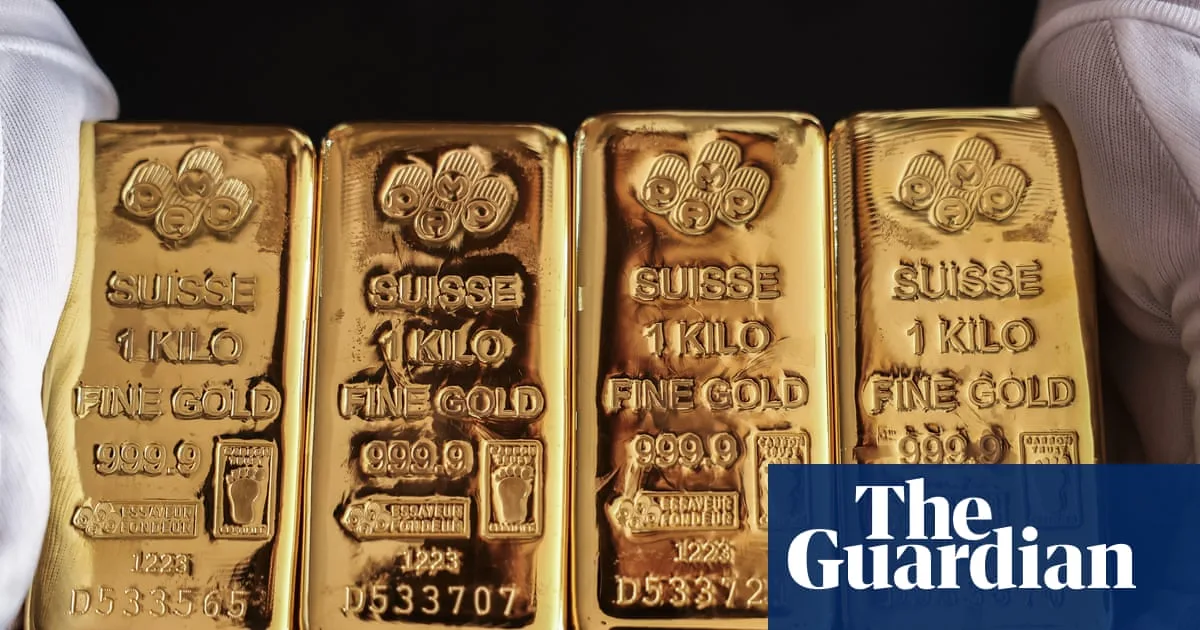
The price of gold has reached a new record high, surpassing $3,500 (£2,614) an ounce, as investors flock to safe-haven assets amid global uncertainty and inflationary pressures. The precious metal has nearly doubled in value since early 2023, driven by a weakening US dollar and central banks increasing their gold reserves while reducing holdings of US government bonds.
Long-term borrowing costs have risen to multi-year highs in the UK, France and Germany. UK 30-year government bond yields hit a 27-year peak, intensifying pressure on Chancellor Rachel Reeves ahead of her autumn budget. France's 30-year yields jumped to their highest in over 16 years, while Germany's 30-year yields reached a 14-year peak.
The pound fell 1.2% against the dollar to $1.338, its biggest daily drop since April, following Donald Trump's announcement of new tariffs. The FTSE 100 declined by 0.7% to 9,131 points, retreating from last month's record high of 9,357. European and US markets also experienced sell-offs.
Mark Haefele, chief investment officer at UBS Global Wealth Management, highlighted that heightened political and geopolitical risks underpin gold's appeal. He forecast gold could reach $3,700 by next June, and possibly $4,000 if conditions worsen. Central banks in India, China, Turkey and Poland have been increasing gold reserves, which overtook the euro as the world's second-largest reserve asset last year.
Ipek Ozkardeskaya, senior analyst at Swissquote Bank, noted that central banks' shift from US treasuries to gold accelerated this year due to US debt concerns and geopolitical risks. She added that Indian pension funds are seeking approval to invest in gold ETFs, indicating strong demand. Silver also rose to its highest since 2011, with potential for further gains.




