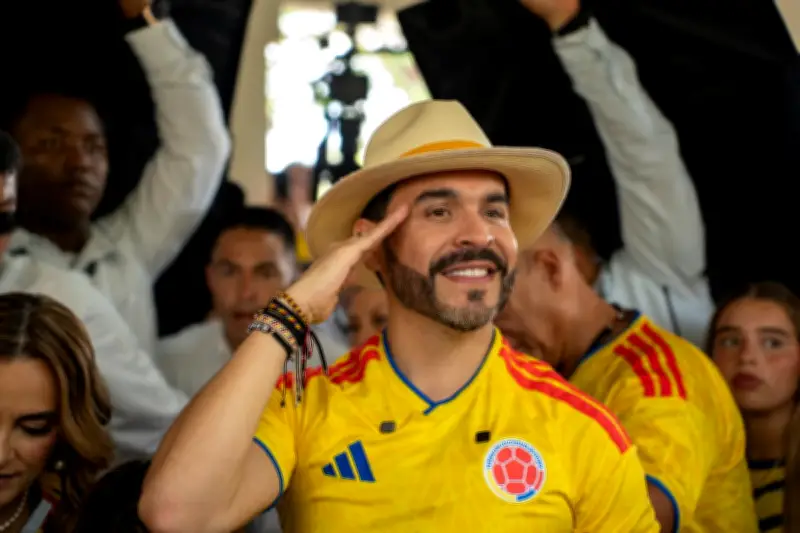
Abelardo de la Espriella, a far-right millionaire lawyer and self-styled outsider, has won Colombia's presidential runoff, narrowly defeating leftwing senator Iván Cepeda. With 99.99% of ballots counted in the preliminary tally, De la Espriella secured 12.96 million votes (49.66%), just 250,830 more than Cepeda's 12.7 million (48.7%). An additional 1.6% of ballots were cast blank.
Narrower Margin Than First Round
The margin was narrower than in the first round three weeks earlier, when De la Espriella had led Cepeda by 673,000 votes. De la Espriella's victory marks a sharp swing back to the right after four years under Colombia's first leftwing president, Gustavo Petro, who was constitutionally barred from seeking re-election and had endorsed Cepeda as his successor.
Regional Far-Right Wave
The result is seen as further evidence of a far-right wave sweeping Latin American presidential elections, following recent victories by Nasry Asfura in Honduras and José Antonio Kast in Chile, while Keiko Fujimori leads the vote count in Peru. De la Espriella also received an endorsement from US President Donald Trump after winning the first round; Trump shared the news on social media, writing: 'He Won, BIG!'
Victory Speech and Promises
In his victory speech in Barranquilla, De la Espriella promised to respect the constitution and be president of 'all Colombians.' Addressing those who did not vote for him, he said: 'Your rights, even if you did not vote for me, will be respected. Your opinions will be heard. You will never have to fear thinking differently.' He spoke from behind bulletproof glass, as he had throughout the campaign.
In a video posted by US Republican congresswoman María Elvira Salazar, De la Espriella stated: 'To solve Colombia's problems, we need to build a very close alliance with the US, which is not only our main trading partner but also our most important strategic ally in the fight against organised crime.' US Secretary of State Marco Rubio congratulated him, saying: 'The Trump administration looks forward to working closely with your incoming administration to advance regional security cooperation, end illegal immigration to the United States and strengthen our economic ties. Colombia's best days are ahead.'
Allegations of Irregularities
President Petro alleged irregularities in the preliminary vote count released by the National Civil Registry, the independent body organizing elections. He wrote on social media that he would only recognize the outcome of the official scrutiny process, expected to take about two more days. 'No president can be declared yet. It is the scrutiny process that determines who the president is,' he said. In the first round, Petro had also alleged fraud without presenting evidence, drawing widespread criticism; the difference between preliminary and official counts was less than 0.1%.
Cepeda declined to recognize preliminary results, saying without evidence that his party's lawyers were 'proceeding to challenge 33,000 polling stations across the country.' He added: 'Once the final scrutiny result is produced and the corresponding verifications have been carried out, we will recognise the official result that emerges from that scrutiny process.'
Protests and Clashes
Protests erupted among Cepeda supporters; in Cali, demonstrators burned US flags and clashed with police. In Bogotá, hundreds gathered outside the country's largest polling station. De la Espriella called on Petro and Cepeda to respect the result: 'Refrain from unleashing social unrest.'
Iron Fist Approach to Crime
De la Espriella's campaign focused on violence plaguing the country. He promised an iron fist approach, building 10 maximum-security 'mega-prisons' and killing criminals 'like rats and cockroaches.' Calling himself 'El Tigre' (The Tiger), he vowed to break with Petro's 'total peace' plan of negotiating with criminal groups. After four years, the government disarmed only one group of 99 members on Thursday, while experts estimate over 27,000 people belong to Colombia's criminal organizations. De la Espriella promised full-scale military confrontation and US support for airstrikes against coca plantations. Colombia is the world's largest cocaine producer; drug trafficking drives much of the violence.
Background and Allies
Born in Bogotá but raised on the Caribbean coast, De la Espriella rose to prominence as a criminal lawyer representing paramilitary leaders. He later expanded into liquor, real estate, and menswear, showcasing a lavish lifestyle on social media. He announced his presidential bid in July last year, a month after rightwing senator Miguel Uribe Turbay was shot and later died. Though long associated with the rightwing establishment, De la Espriella presented himself as anti-establishment. His vice-president is economist José Manuel Restrepo, former finance minister under conservative Iván Duque. De la Espriella said Restrepo would implement a plan to shrink the state by 40%.
They will take office with a minority in congress and a deeply divided country after the most polarised election in years, with the two candidates failing to agree on a single debate and trading insults.