
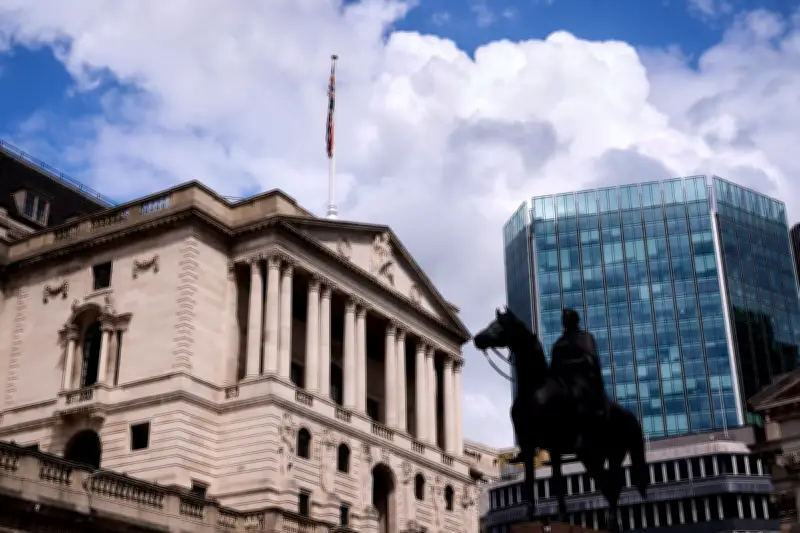
The Bank of England has held interest rates at 3.75% as it cautioned that the cost of living was still set to rise this year because of the fallout from the Iran war.
Policymakers nonetheless said that a recent fall in energy prices meant it was no longer expecting inflation to go as high as it was in April.
Seven of the Bank’s nine-person Monetary Policy Committee (MPC) voted to keep interest rates the same at the latest meeting, while two opted to hike them to 4%.
Governor Andrew Bailey, who voted for a hold, said: “Oil prices have fallen in recent days, and that’s encouraging. But they’re still higher than before the war. Whatever happens in the future, the higher energy prices of the past four months mean there’s already some inflationary pressure in the pipeline.”
Overnight, US president Donald Trump said he had signed an agreement with Iran which secures free passage of the Strait of Hormuz for 60 days. The prospect of the peace deal has sent oil prices to fall back down towards levels seen before the US-Israel’s war with Iran.
The MPC said this meant it was now expecting the rate of Consumer Prices Index (CPI) inflation to be just under 3% during the next three months, before picking up to slightly above 3.25% towards the end of 2026. This is lower than under each of the three scenarios for inflation that were set out in April – with the most benign prediction showing inflation peaking at about 3.6% by the end of this year. Under a worst-case scenario where oil prices remained elevated, the MPC had previously forecast that inflation could peak as high as 6.2%.
Despite this, the Bank said that some direct effects of the energy shock had already pushed up inflation, especially from the spike in fuel prices. The latest official figures showed that CPI inflation stayed at 2.8% in May, the same as April, which remains above the Bank’s 2% target level.
Meanwhile, two members of the MPC – Megan Greene and Huw Pill – preferred to hike interest rates at the latest meeting as a safety measure for the economy. They were more concerned about uncertainty around the UK inflation outlook and the volatility of energy prices, despite the new ceasefire agreement.




