

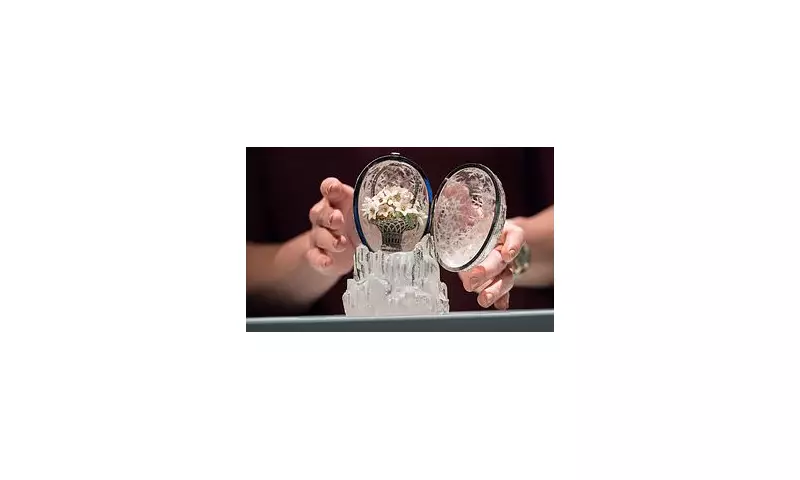
A breathtakingly rare Fabergé egg, originally created for the Russian Imperial family, is poised to shatter records with an estimated £20 million price tag as it goes under the hammer at Christie's today. The sale of the 1913 Winter Egg marks a milestone moment in the world of collectable decorative arts.
The Pinnacle of Imperial Craftsmanship
Kieran McCarthy, a leading global authority on Fabergé, described the 112-year-old masterpiece to the Daily Mail as "the most iconic example of decorative art ever." His praise centres on both its exquisite artistry and its storied legacy. Of the 50 Imperial eggs made by the House of Fabergé for Tsars Alexander III and Nicholas II, only 43 survive. Just seven remain in private hands, and McCarthy notes that a mere three are in "truly private" collections, making this auction exceptionally significant.
The tradition of Imperial Easter eggs began in 1885 when Tsar Alexander III commissioned the first from Fabergé as a gift for his wife, Tsarina Maria Feodorovna. Enchanted by the white enamel egg with its golden interior and hidden hen, the Tsar established an annual tradition. His son, Nicholas II, continued and expanded the practice after his father's death in 1894, ordering two eggs each year—one for his mother and one for his wife, Empress Alexandra.

The Frosty Inspiration Behind a Masterpiece
The Winter Egg is one of only two Imperial eggs designed by a woman, Alma Pihl, the granddaughter of a Fabergé workmaster. Her inspiration struck in late 1912 while working in the St Petersburg atelier on jewellery for Swedish oil baron Emanuel Nobel. Gazing up at windows covered in ice and snowflakes, she conceived the "Winter Jewels" series, using rock crystal adorned with platinum and diamonds to mimic frost.
She later applied this concept, with even greater opulence, to the 1913 Easter egg for the Dowager Empress Maria Feodorovna. Margo Oganesian, head of Christie’s Fabergé department, likened the four-inch tall egg, set with over 4,500 diamonds, to a "luxurious Kinder Surprise." The craftsmanship is staggering; carving rock crystal without cracking it is exceptionally difficult, and applying the platinum-set diamonds to create a frosty effect would have been a monumental task.
The result is a vision of winter magnificence: tiny rose-cut diamonds form sparkling snowflakes on the crystal surface, with more diamonds cascading down the base like melting ice. The requisite "surprise" inside is a platinum and diamond basket, holding a delicate posy of carved white quartz wood anemones rising from gold moss, symbolising the coming spring.
A Tumultuous Journey to the Auction Block
The egg's history mirrors Russia's turbulent past. Two years after the execution of Tsar Nicholas II and his family in 1918, the Winter Egg was sold for just £450 to London dealer Wartski. It later passed to Lord Alington of Dorset in 1934 for £1,500. Since then, it has changed hands multiple times. Its most recent sale was in 2002 at Christie's New York, where it was acquired by a relative of the Emir of Qatar for $9.6 million (approximately £7.2 million).
Now, the egg that McCarthy declares "the greatest of them all" and without equal returns to auction. Its potential to fetch £20 million would represent a new high-water mark for Fabergé, offering one lucky bidder a slice of royal history and a peerless work of art—a truly spectacular winter gift.






