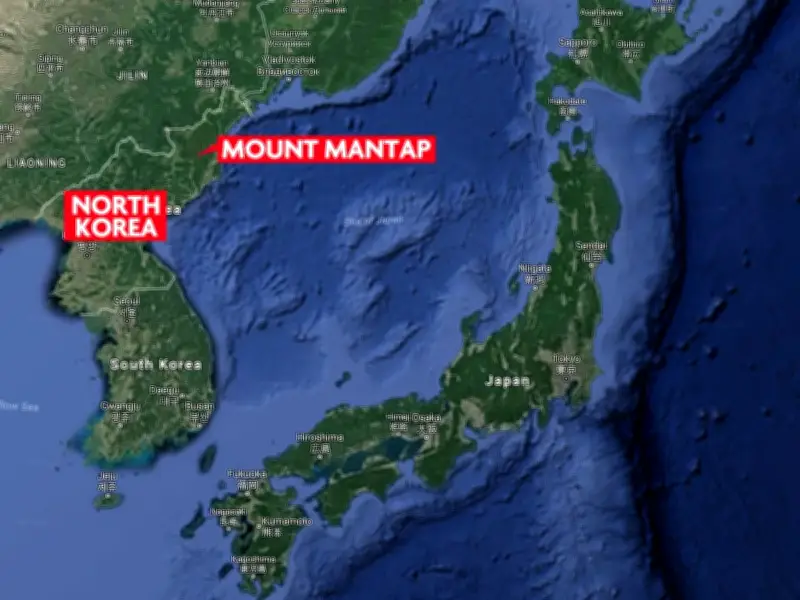
Scientists have observed a strange increase in underground movement at the site where North Korea conducted recent nuclear tests. Experts say there has been an increase in seismic activity reported at Mount Mantap, the area known to have been used for underground nuclear tests between 2006 and 2017, and say the movements could point to delayed effects from repeated explosions in the area.
Persistent and intensified seismic activity
Chinese researchers have looked into the area and since found that the seismic activity has persisted and intensified for years after the bombings stopped, and fear it proves there are now long-lasting effects following the tests. Scientists say rather than suggesting any more recent activity, it likely points to the fact that underground nuclear explosions have the potential to reactivate seismically quiet faults and could start earthquakes.
The findings could have implications for monitoring former nuclear test sites, according to the study published in the journal Science, after the Mantap nuclear site hosted six underground tests between 2006 and 2017. The largest and final known test is believed to have been conducted by Pyongyang in September 2017 and had an estimated yield of 100 to 250 kilotons, and registered a magnitude 6.3 seismic event, according to the US Geological Survey.

Substantial deformation of the mountaintop
Satellite radar measurements also reported substantial deformation of the mountaintop by about 3 metres following the explosion. Scientists have now - for the first time - analysed seismic data recorded in China and South Korea since 2008 to trace how earthquake activity around Mount Mantap has changed over time and since the explosions.
The data included records from seismic stations located about 80km to 200km from the test site and looked at a total of 1,399 local earthquakes between 2008 and 2025, which is far more than previous earthquake catalogues had recorded. Researchers found that after the 2017 nuclear test, seismic activity around Mount Mantap appeared to be fundamentally altered. Previously quakes in the area produced short-lived seismic sequences that decayed rapidly after testing ceased.
Organised fault reactivation
But after the detonations in 2017, earthquakes increased dramatically and continued to grow in both frequency and magnitude through until 2025, scientists found. The earthquakes were concentrated along two roughly north-northwest–trending fault structures.
This indicates persistent and organised fault reactivation rather than random seismic activity, scientists say, and now researchers suspect that the repeated nuclear explosions at the mountain progressively damaged the region’s shallow crust. The test likely altered the way the crust tolerated stress and led to faults that were already close to failure to become active gradually over several years, they say.