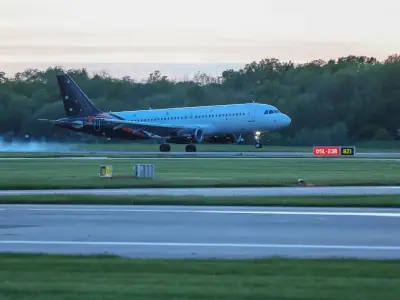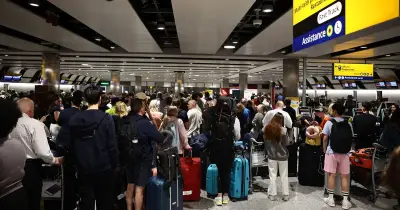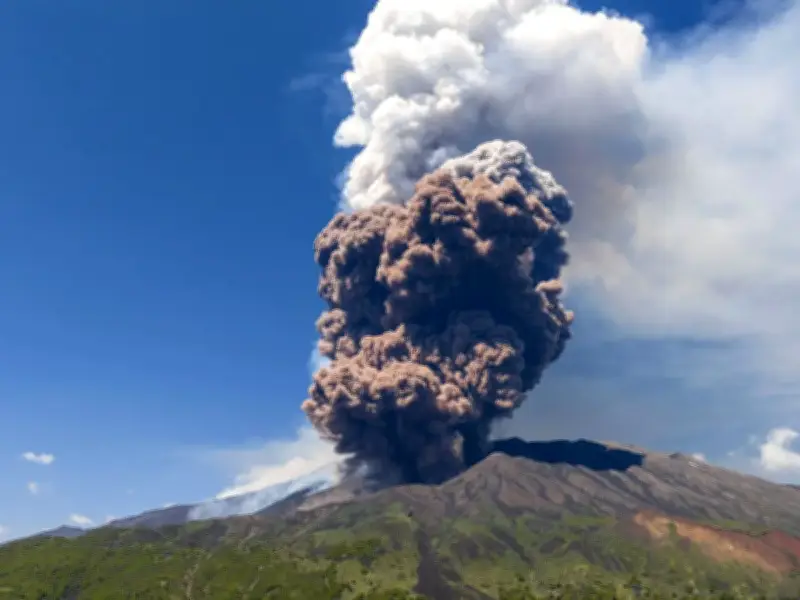
Catania Airport in Sicily suspended flights for safety reasons after Mount Etna erupted on Monday morning (September 14), causing travel disruption across the region. A 4km high eruption cloud was seen above the volcano, and a red flight alert (VONA, Volcano Observatory Notice for Aviation) was issued by INGV Etneo Observatory.
Red alert and redirected flights
The red alert meant that any aircraft bound for Catania Airport had to be redirected. The warning was initially in place until 4pm on Monday but was extended into Tuesday morning (September 15).
Shortly before 6am local time on Tuesday, plumes of black smoke were seen rising from the mountain once again, leading to a further extension of the flight suspension until 10am.

Passengers advised to check flight status
Catania Airport said on social media: “Passengers are kindly advised to check the status of their flight with their airline before travelling to the airport. Further updates will follow.”
Around 150 flights were cancelled due to the volcano. The disruption comes after a five-day shutdown of the Sicilian aviation hub last month, which marked the longest emergency closure at the airport since 2002.
Previous closure and ongoing volcanic activity
During the peak Ferragosto holiday, airport operator SAC said that 36 per cent of arrivals scheduled between 6 and 12 August were cancelled, while more than 600 flights were diverted to alternative destinations including Palermo and Trapani.
According to Italy's Institute of Geophysics and Volcanology, Mount Etna is experiencing ‘variable-rate degassing’ and is known for its frequent emissions and ash activity. The institute said in a statement: "A rapid evolution of the ongoing phenomena towards more energetic activity with the formation of eruption columns, ash clouds, and collapse of portions of the summit cones with the formation of pyroclastic flows cannot be ruled out."