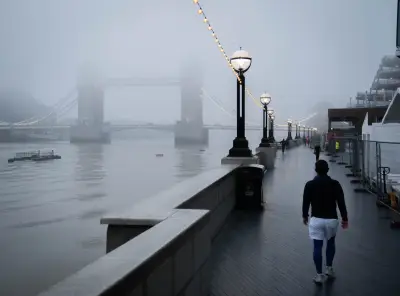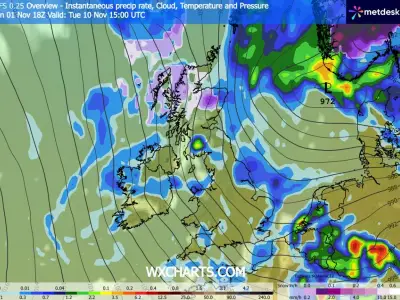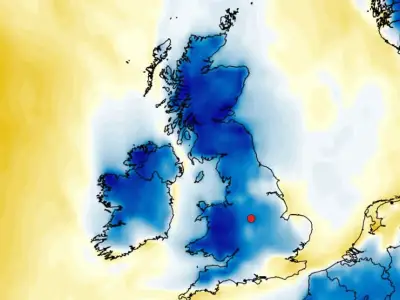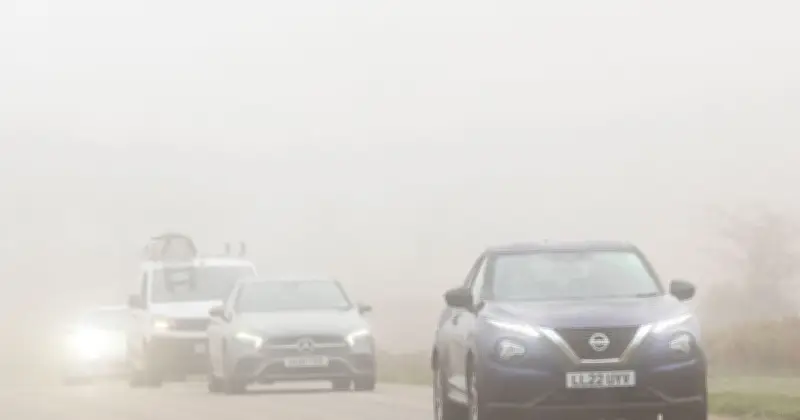
The Met Office has issued yellow weather warnings for fog covering England, Wales and Northern Ireland, with the alert set to last until 10am on Tuesday. The warnings come as foggy conditions are expected to cause travel delays across large parts of the UK.
Fog warning details
The warning states: "Fog will redevelop across the area this evening, becoming dense at times overnight, with visibility reduced to less than 100m. This will likely lead to some delays to transport and difficult travelling conditions. Fog will thin and clear during Tuesday morning."
Several crashes were reported on motorways over the weekend as fog made driving difficult, highlighting the risks posed by the weather conditions.
AA guidance on fog lights
According to breakdown experts at the AA, fog reflects the light from normal car headlights back, making glare worse. The AA explains: "The difference between fog lights and normal headlights is how they cut through the fog to reduce glare. Front fog lights are designed to shine downwards to illuminate the road below any hovering fog. The top of the beam is cut off sharply so that the lights won’t reflect back off the fog. They’re mounted lower down on the car so they can shine underneath the fog."
The AA adds: "Normal headlights aren't angled downwards in the same way and are mounted higher up on the front of the car."
Legal requirements and insurance
The AA notes that the Highway Code states drivers must use headlights when they cannot see for more than 100m in front of them. Using front or rear fog lights is optional, but drivers "must turn fog lights off when visibility improves so you don’t dazzle other drivers."
The AA also warns: "You don't have to use fog lights, but your insurer might take issue if you're in an accident in poor visibility and they weren't on." Drivers are advised to use common sense when deciding whether to switch on fog lights.