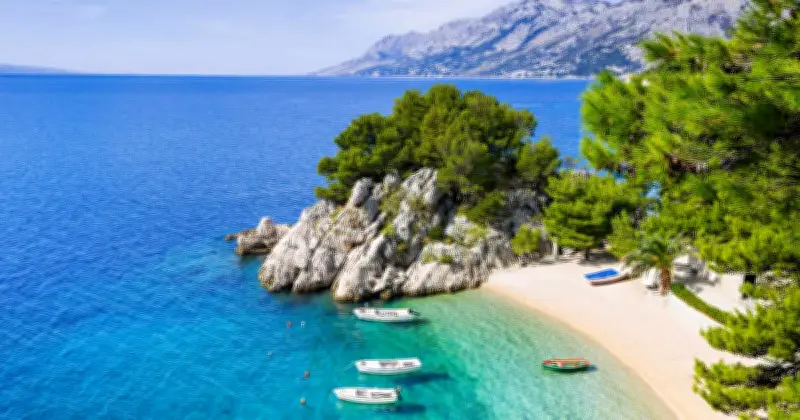
Croatia's stunning Adriatic coastline has long been a magnet for British holidaymakers, drawn to its crystal-clear turquoise waters, pebble beaches and historic seaside towns like Dubrovnik. Now, a major policy shift in one popular corner of the country is set to make that experience even more appealing, with officials moving to guarantee completely free and unrestricted access to the region’s beaches.
New Rules in Zadar County
Croatia is already one of Europe’s most popular summer destinations, but the new rules in Zadar County are expected to strengthen its reputation for open coastal access at a time when parts of the Mediterranean are becoming increasingly commercialised. Under the new framework introduced in line with Croatia’s revised maritime domain legislation, beaches operating under concession will no longer be allowed to charge entry fees or restrict public access. Over the coming years, fenced-off beach areas are expected to disappear entirely.
Visitors to Zadar County will be free to enjoy beaches without paying entry charges or being met with barriers. According to CroatiaWeek, once the final five existing beach concessions - including Zaton Beach, Pakoštane and Šimuni on Pag Island - expire over the next two years, there will be no remaining beaches in the county with restricted access.
Widespread Welcome
The move has been widely welcomed by both residents and tourists, many of whom say it restores fairness to how coastal space is used. Visitors in Zadar have described the coastline as something that should remain freely accessible, with tourists also highlighting the benefit of being able to enjoy beaches without paying entry charges or encountering barriers during their stay.
Limited Concessions Remain
While concessions will continue in a limited form, authorities have confirmed that two agreements have already been extended under the new system, but only for a reduced period of five years. Crucially, these updated contracts ban fencing and prohibit any form of beach entry fee. In return, concessionaires will be responsible for maintaining cleanliness, safety and general order across the areas they manage.
Tighter Regulation on Rentals
Sunbed and equipment rentals will also face tighter regulation. Operators will be limited to occupying no more than 60% of any designated beach area, leaving the remainder fully open for public use, including visitors bringing their own towels and umbrellas. Meanwhile, concession fees will now apply to the entire beach area rather than just the commercially used sections, significantly increasing operators' financial obligations.
Monitoring and Penalties
Inspection services and municipal authorities have already begun monitoring compliance, with penalties in place for breaches of the new rules. In serious cases, concession holders risk losing their rights entirely.
Long-Term Protection
Officials have said the measures are designed to prevent gradual commercial encroachment and ensure long-term protection of Croatia’s coastline as a shared public resource. The decision has been broadly praised locally, with many arguing it offers a practical balance between tourism services and public access, while also setting Croatia apart from other Mediterranean destinations, such as Spain and Greece, where beach restrictions are more common.