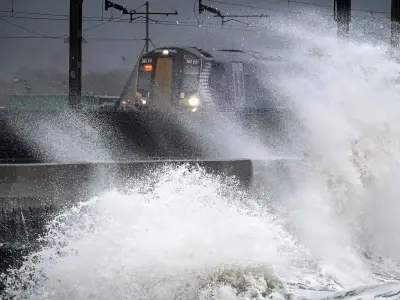
Storm Boelo continues to cause disruption across Wales this morning, with flooded roads, fallen trees and rail cancellations affecting travel as further heavy rain moves across the country. Nine flood alerts remain in place across Wales, while communities already hit by flooding over the weekend face the prospect of further disruption.
Road closures and transport disruption
As of 6.30am on Monday, October 26, Michaelston Road in St Fagans, Cardiff, is closed in both directions because of flooding between Falconwood Drive and Cardiff Road. In Pembrokeshire, Market Place has been closed in both directions because of a fallen tree between Clarbeston Road railway station and Chapel Road in Crundale. Heol Goch also remains closed between Clos Goch in Pentyrch and Main Road in Taff's Well following another fallen tree.
Rail passengers are also facing further disruption, with several Transport for Wales services delayed, cancelled or replaced by buses because of the adverse weather. Replacement buses are operating between Swansea and Llandrindod, and between Shrewsbury and Llandrindod, while there is no train service between Llanelli and Craven Arms. Services between Aberystwyth and Machynlleth have also been suspended because of poor weather conditions. In north Wales, flooding has disrupted services between Llandudno Junction and Blaenau Ffestiniog.
Further rain and flood alerts
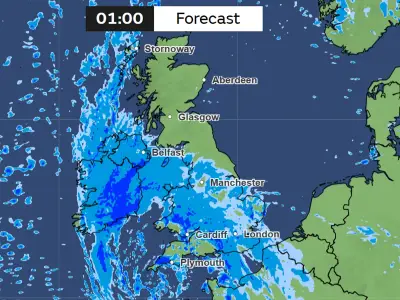
Further rain is forecast across Wales this morning, with coastal areas expected to experience some of the heaviest downpours. Weather maps indicate that areas around Swansea, Fishguard and Cardigan could see persistent rain, while parts of Pembrokeshire could receive between 8mm and 16mm of rainfall at around 8am. Conditions are expected to improve as the day progresses, with rainfall forecast to ease across much of the country by the afternoon. However, scattered showers could persist in some areas, and the saturated ground means further rain could cause additional flooding.
According to Natural Resources Wales, there continues to be nine active flood alerts across Wales. This covers: the Pembrokeshire coast, Carmarthenshire coast, the Ceredigion coast between Clarach and Cardigan, the Lower Severn catchment in Powys, the Upper Teifi, Lower Teifi and Lower Towy. Residents are being urged to remain alert to changing conditions and check the latest flood warnings before travelling.
Weekend impact and wider UK disruption
The latest disruption follows a difficult weekend for Wales, with Storm Boelo bringing flooding, power cuts and widespread transport problems on Sunday (October 25). One of the worst-affected areas was St Fagans, on the outskirts of Cardiff, where the River Ely burst its banks following prolonged heavy rain on Saturday and overnight into Sunday. Floodwater inundated roads, submerged vehicles and left several routes impassable, while the nearby railway line was also affected, disrupting services between Cardiff and Bridgend and Swansea.
Around 834 homes in St Fagans and the surrounding area were left without electricity for several hours on Sunday morning. Flooding also affected nearby communities, including Peterston-super-Ely and Ely Bridge in Cardiff, as river levels rose following the persistent downpours. St Fagans National Museum of History was also affected by the flooding, with access restricted to the A4232.
Although the rain eased in parts of Wales on Sunday morning, the damage caused by the overnight downpours continued to be felt. Natural Resources Wales issued four flood warnings for areas surrounding the River Ely as water levels rose, highlighting the risk to communities along the river. The severe weather also brought down trees across the capital. More than 40 trees had fallen across Cardiff since Friday, adding to the pressure on emergency services and road crews dealing with blocked routes and hazardous conditions.
Wales was not the only part of the UK to experience severe disruption, with powerful winds and heavy rain causing dangerous conditions across the country. Two men died in separate incidents involving falling trees on Sunday. The BBC reported that a man in his 20s was killed in north London after a tree fell onto the car he was driving. Earlier, a 60-year-old man died in Dumfries and Galloway, Scotland, in an incident also involving a falling tree.
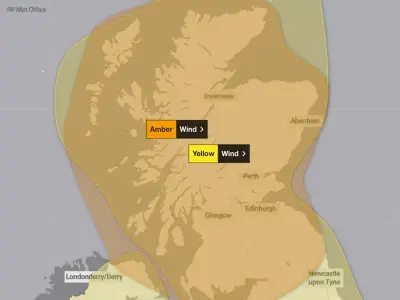
The deaths came as Storm Boelo continued to bring strong winds across the UK, following the earlier Storm Austen, which affected parts of the country from Friday. Wind gusts reached 85mph at Machrihanish in Argyll and Bute on Sunday morning, while Stornoway in the Outer Hebrides and Capel Curig in north Wales both recorded gusts of 84mph.
The storms also caused widespread power cuts. According to figures attributed to the Energy Networks Association, around 838,700 properties across the UK experienced power cuts during Storm Boelo and Storm Austen, leaving electricity network operators facing the task of restoring supplies amid difficult weather conditions.
Air travel was also thrown into chaos over the weekend, with two Ryanair flights diverted hundreds of miles from their intended destinations after strong winds prevented them from landing. Flight FR2955 departed Dublin Airport at approximately 10pm on Saturday, October 24, bound for Bristol. However, as the aircraft began its descent towards the English city, the attempted landing was abandoned and the plane was diverted to Alicante-Elche Airport in southern Spain, around 910 miles from its intended destination. Reports said the aircraft had entered a holding pattern as it approached Bristol before returning to cruising altitude while alternative landing locations were considered.
A second Ryanair flight, FR7644, travelling from Faro in Portugal to Edinburgh, was also forced to divert because of adverse weather conditions. The aircraft was redirected to Oslo in Norway, approximately 600 miles from the Scottish capital.