Met Office Unveils Major Forecast Upgrade with New Supercomputer
The Met Office has announced a significant upgrade to its weather prediction system, marking the agency's most substantial enhancement in three years. This new forecast model, the first to operate on a more powerful supercomputer, aims to reduce unexpected flight delays and improve daily planning by delivering more accurate and extended weather forecasts.
Enhanced Accuracy for Winter Weather and Fog
The most noticeable improvements will target Britain's notoriously unpredictable winter weather. Specifically, the system will provide more precise guidance on cloud cover and fog, which have historically been challenging to predict. Professor Simon Vosper, Met Office Director of Science, highlighted that this represents 'the biggest positive step in our forecasting systems for many years.' He added, 'The improvements we're introducing will make our forecasts more accurate, more useful and more reflective of real-world weather.'
This accuracy boost stems from an upgraded understanding of weather physics, particularly microphysics—the complex interactions within clouds that determine precipitation. The model now better predicts when and where clouds form, including low cloud and fog, which are critical for aviation operations. Professor Vosper noted, 'When you're trying to run busy airports like Heathrow, low cloud and fog can be a real problem, so having more accurate forecasts there is very, very beneficial.'

Extended Forecasts and Practical Benefits
The upgrade extends global weather forecasts to 10 days in advance and local forecasts to 14 days, offering earlier warnings for events that could disrupt travel. The Met Office claims this is vital for the aviation industry, potentially leading to safer take-offs and landings, fewer delays, and reduced cancellations. Science Minister Lord Vallance emphasized, 'Improvements in weather science benefit us all, from more flights running on time, to roads being gritted when they need to be, to enabling earlier preparations for storms that risk lives and damage to homes and businesses.'
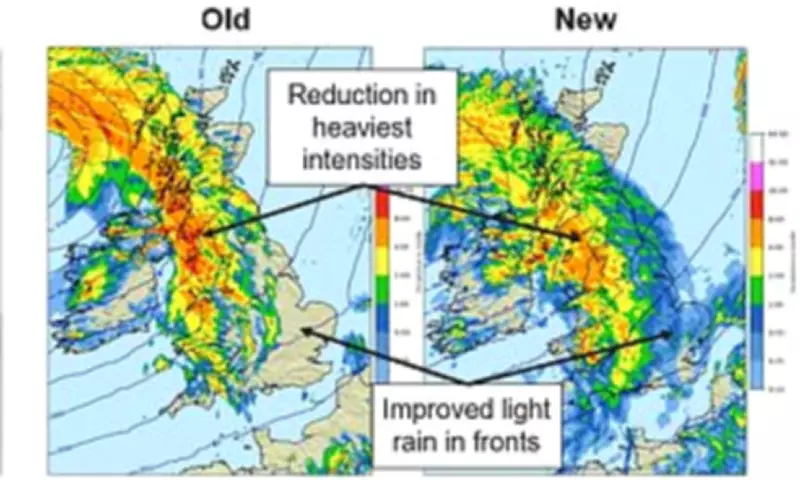
Additionally, the new model addresses previous shortcomings in rain prediction. The old system often overestimated rain intensity in some areas while missing light drizzle elsewhere, leaving people unprepared. Now, more patches of drizzle should be detected, helping individuals decide whether to carry an umbrella. This is particularly relevant given recent wet conditions; for example, Reading recorded 25 consecutive days of rainfall, the longest spell since 1908, due to a blocked jet stream pattern funneling Atlantic rain over Britain.
Technological Advancements and Global Impact
The forecast improvements are enabled by transitioning to a more powerful supercomputer operated by Microsoft, part of the Azure Cloud network. This system processes 200 to 300 terabytes of data daily, allowing for more detailed simulations. Instead of maintaining its own supercomputer, the Met Office now leverages Microsoft's global data centres, enhancing computational efficiency.
Beyond local benefits, the upgrade improves global weather predictions. The new system better models how hot and cold air circulate around oceans and mountains, enabling more accurate long-range forecasts for extreme events like tropical cyclones and dangerous storms. This advancement supports broader preparedness and safety measures worldwide.
In summary, the Met Office's forecast upgrade represents a leap forward in meteorological science, combining cutting-edge technology with refined physics to deliver more reliable weather information. From reducing travel disruptions to enhancing storm warnings, these improvements promise tangible benefits for daily life and critical industries across the UK and beyond.