California's 'Radiation Fog' Blanket Sparks Health Fears Across 400-Mile Stretch
California's 'Radiation Fog' Sparks Health Concerns

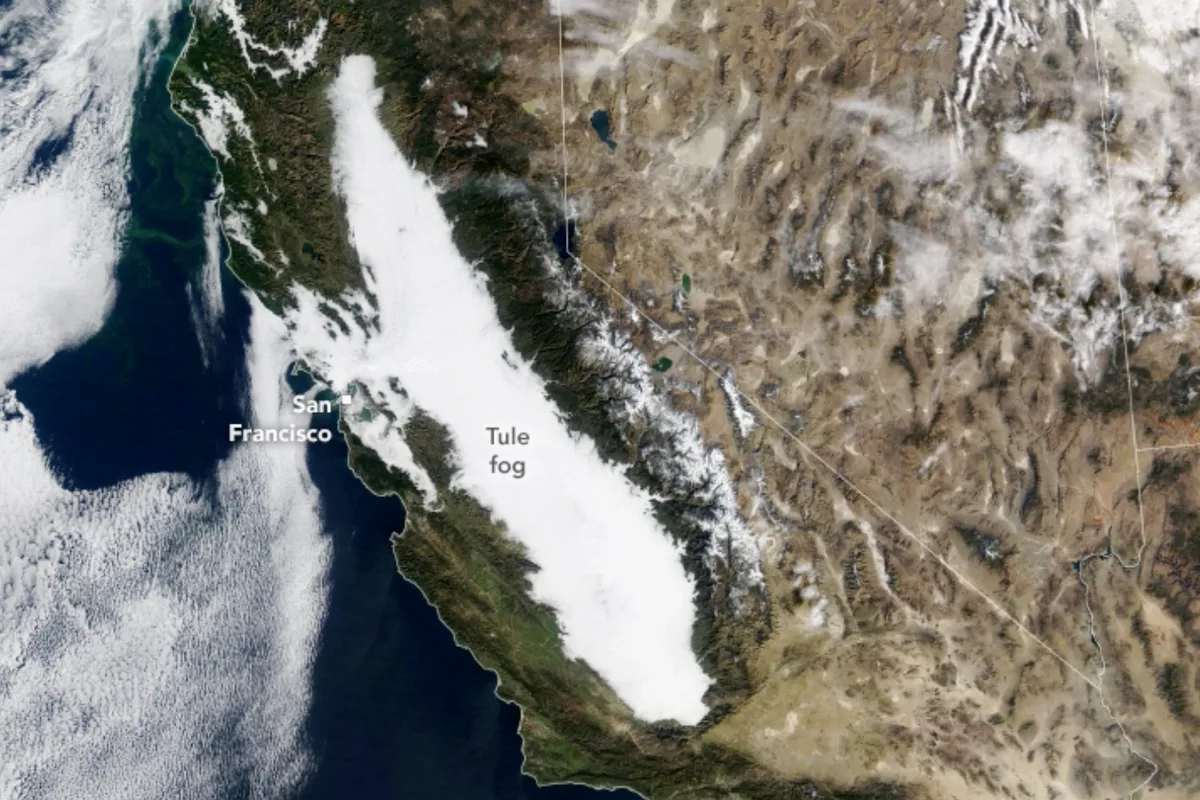
A thick, persistent blanket of 'radiation fog' has engulfed California's Central Valley for several weeks, coinciding with widespread reports of respiratory symptoms among residents. The phenomenon, which forms when the ground cools rapidly after sunset, has affected more than 20 counties across a 400-mile stretch of the state.

Residents Report Coughing and Congestion

Gerald Deperalta, a resident of Tracy, told the Daily Mail that he and his family have been suffering from coughing and congestion for about a week. "We've kept the kids' inhalers nearby, and we are trying to keep them indoors as much as possible," he said. Deperalta shared videos showing his car covered in the fog, which left a mysterious white, dust-like residue when wiped off.

On social media, many others reported similar experiences. One mother noted her children's eczema had flared up, while another local complained of experiencing three headaches in two weeks—something they had never encountered before. California resident Michael Washington stated, "I've been coughing for three weeks. Antibiotics, inhalers, cough syrups and benzonatate ain't working."

Fog Acts as a Lid, Trapping Dangerous Pollutants

Health experts have been quick to clarify that the fog itself—a cloud of pure water droplets at ground level—does not cause illness. However, they highlight a dangerous secondary effect. During these events, a temperature inversion occurs, acting like a lid on a pot. This traps car exhaust, industrial fumes, farm dust, and other pollutants near the ground where people breathe.

The trapped air contains tiny particles known as PM2.5, which can penetrate deep into the lungs and even enter the bloodstream. This significantly worsens air quality, leading to respiratory irritation and exacerbating conditions like asthma. Hospitals in the Central Valley typically see a rise in emergency visits for breathing and heart issues on such foggy, polluted days.

A Historic Hazard for Drivers and Health

This specific type of radiation fog, also known as Tule fog, is an annual autumn and winter occurrence in the region. The current major event began in late November 2025. Beyond health, it poses a severe risk to drivers by reducing visibility to near zero, historically causing catastrophic pile-ups.

One of the worst accidents occurred on November 3, 2007, involving 108 vehicles on Highway 99 near Fresno, killing two and injuring over 40. Another 40-car pileup on January 6 this year resulted in two fatalities and nine injuries.

Forecasters suggest a powerful weather system arriving around December 17 might help disperse the fog, but its strength remains uncertain. Interestingly, a 2019 study from UC Berkeley found that stricter clean-air rules have reduced the number of dense fog days over past decades, as fog needs pollution particles to form droplets. Researcher Ellyn Gray noted, "We have a lot more fog in the southern part of the valley, which is also where we have the highest air pollution concentrations."