The Northeastern United States is currently experiencing the final onslaught of a colossal winter storm that has wreaked havoc across vast swathes of the southern and eastern regions over the weekend. This significant weather event has delivered a treacherous mix of snow, sleet, and ice, leading to severe travel disruptions, widespread power outages, and dangerous cold conditions.
Widespread Disruption Across Multiple States
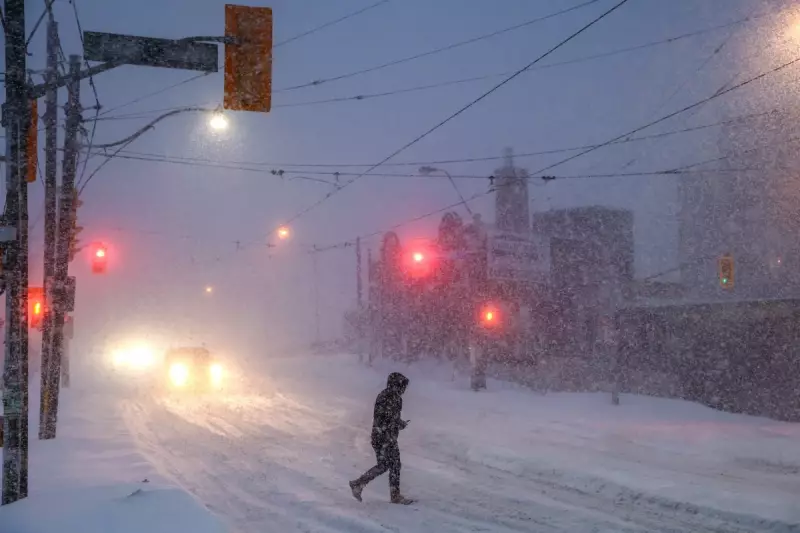
The new work week began with continued heavy snowfall in the Northeast, marking the tail end of a storm system that has paralyzed much of the nation. Deep snow accumulations, exceeding one foot (30 centimeters) in a band stretching over 1,300 miles from Arkansas to New England, brought traffic to a standstill, forced widespread school closures, and led to thousands of flight cancellations on Monday.
Local Impacts and Community Response
In harder-hit areas, forecasts predicted up to two feet (60 centimeters) of snow. Local communities felt the brunt of the conditions. In Falmouth, Massachusetts, approximately an hour south of Boston, heavy snowfall blanketed the town, effectively shutting it down. Local minister Nell Fields described shoveling out seven inches (18 centimeters) of snow, with more expected.

"I feel that the universe just put a big, huge pause on us with all the snow," Fields remarked, adding that she held church services despite the storm, viewing the weather as an opportunity for reflection and community.
Meanwhile, in Manhattan's Upper East Side, resident January Cotrel embraced the winter wonderland on a street traditionally closed for sledding and snowball fights during such events. "I pray for two feet every time we get a snowstorm. I want as much as we can get," she said. "Let the city just shut down for a day and it's beautiful, and then we can get back to life."
Bitter Cold Follows in the Storm's Wake
The precipitation was followed by a severe cold snap. Overnight on Sunday, the contiguous United States experienced its coldest average low temperature since January 2014, at 9.8 degrees Fahrenheit (minus 12.3 Celsius). According to former NOAA chief scientist Ryan Maue, only record warmth in Florida prevented the national average from being even lower.
From Montana to the Florida Panhandle, the National Weather Service issued numerous cold weather advisories and extreme cold warnings. Temperatures plummeted to zero degrees Fahrenheit (minus-18 Celsius) or lower in many areas, with wind chill exacerbating the conditions. This deep freeze threatened to refreeze roads early Monday, compounding the weekend's travel woes.
Southern States Grapple with Ice and Power Outages
In the South, freezing rain created perilous conditions, coating roads with ice and bringing down trees and power lines. Mississippi Governor Tate Reeves warned that even as precipitation ended, the danger persisted. The state faced its worst ice storm since 1994, deploying unprecedented amounts of ice-melting chemicals, salt, and sand.
"Do please reach out to friends and family," Governor Reeves urged residents, advising against unnecessary travel. In Corinth, Mississippi, heavy machinery manufacturer Caterpillar instructed employees at its remanufacturing site to stay home on Monday and Tuesday due to the hazardous conditions.
National Scale of the Crisis
At the peak of the storm on Sunday morning, approximately 213 million people were under some form of winter weather warning. Utility tracking site poweroutage.us reported hundreds of thousands of customers without electricity, with Tennessee and Mississippi being particularly hard-hit.
The aviation sector suffered massively, with around 12,000 flights canceled and nearly 20,000 delayed on Sunday alone, according to flightaware.com. Major airports in Philadelphia, Washington, Baltimore, North Carolina, New York, and New Jersey felt significant impacts, with disruptions expected to linger into Monday.

Tragic Consequences and Ongoing Investigations
The severe weather has had tragic outcomes. In New York City, Mayor Zohran Mamdani reported that at least five individuals found dead outdoors as temperatures plunged on Saturday, though the exact causes remain under investigation. Separately, the Louisiana health department confirmed two men died of hypothermia related to the storm in Caddo Parish.
As the Northeast endures these final blows, the storm's legacy of disruption, community adaptation, and reflection continues to unfold across the United States.