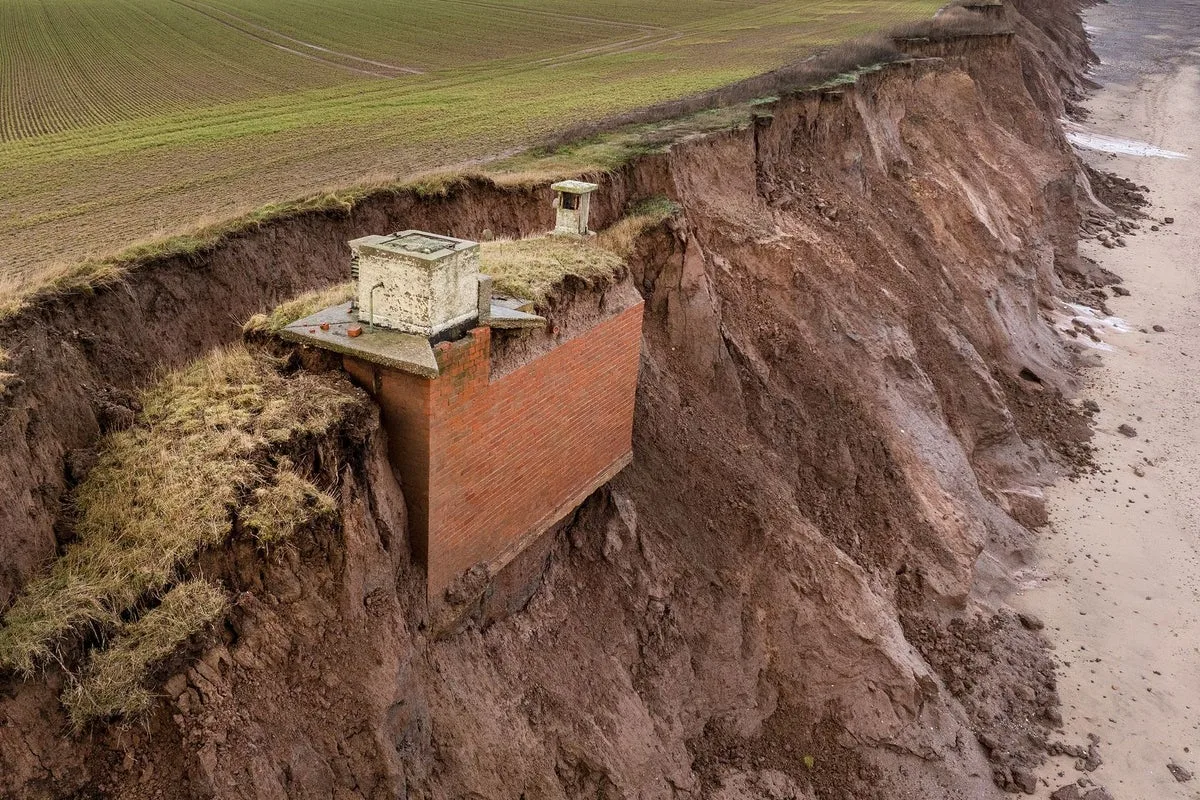
A Cold War-era nuclear bunker clinging to a cliff edge in East Yorkshire could be 'days away' from falling into the sea, according to an amateur historian monitoring its decline. The structure, located above Tunstall Beach between Withernsea and Hornsea, was built in 1959 as a lookout post in the event of nuclear war and was decommissioned in the 1990s.
Coastal erosion, which the Environment Agency has identified as among the fastest in the UK, has left the building teetering approximately 25 feet above the beach. Amateur historian Davey Robinson, who is filming the bunker's final days, told the BBC: 'We live on one of the most eroded coastlines in Europe and this bunker hasn't got long left, perhaps just a few days.'
An East Riding of Yorkshire Council spokesperson said the authority has no statutory responsibilities for the structure as it sits on private land. The council advised people to avoid the area, both at the cliff top and on the beach below, due to the risk of collapse. The Shoreline Management Plan for the location specifies 'no active intervention', allowing coastal processes to continue undefended.

The Yorkshire Marine Nature Partnership reports that the cliff line in the region is retreating by approximately four metres per year, releasing significant quantities of material into the sea. Climate change has accelerated these changes, with rising sea levels, more frequent and severe storms, and warmer sea surface temperatures increasing the likelihood of land-slips, erosion, and flooding.