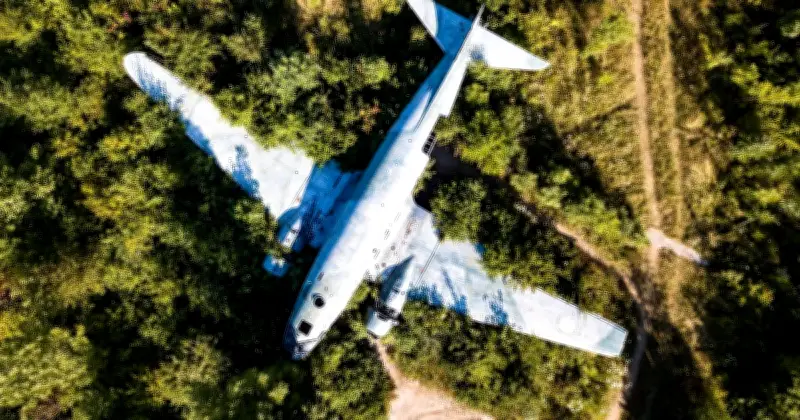
Beneath a European mountain lies a vast, unusual, and now abandoned airport. Known as Željava Air Base, this Cold War military complex has become a hotspot for dark tourism enthusiasts. With no official gates, ticket booths, or opening hours, it offers a unique opportunity to explore forgotten corners of civilization.
History and Construction
Željava Air Base, codenamed Objekt 505 or Klek, was the largest underground military airport in former Yugoslavia and one of Europe's most expensive defensive engineering projects. Built in secrecy between 1948 and 1968, it cost the Socialist Federal Republic of Yugoslavia an estimated $6 billion USD (equivalent to tens of billions today), according to Atlas Obscura.
President Josip Broz Tito ordered its construction during the Cold War, fearing a nuclear assault or invasion from Western forces or the Soviet Union. The base was carved deep into Plješevica Mountain, using the rock as natural armor.

Underground Features
The underground segment featured 3.5 kilometers of interconnected tunnels in a semi-circular layout. Corridors were 16 meters wide and up to 12 meters high, allowing heavy fighter aircraft to maneuver easily. Entrance portals were shielded by 100-ton reinforced concrete blast doors, and the complex was engineered to withstand a direct hit from a 20-kiloton nuclear warhead.
The bunker functioned as a self-sustaining underground city with its own water supply, power generators, air filtration systems, and barracks for up to 1,000 soldiers and pilots for 30 days. It could house two full squadrons of MiG-21 jet fighters (roughly 60 planes), according to Journal.
Destruction and Current State
Despite its dilapidated state, the base was never captured in war. In May 1992, during the Yugoslav Wars, retreating forces lined the tunnels with 56 tons of explosives and triggered a massive blast that shook the nearby city of Bihać. The explosions collapsed key arches, shattered blast doors, and filled the base with toxic smoke that burned for days.
Today, the airbase near Bihać in Bosnia and Herzegovina and Plitvice Lakes in Croatia is open to the public for free. Tour guides are available, but if exploring alone, check the official map.
Safety Warnings
The site sits on the border between Croatia and Bosnia and Herzegovina, with extensive minefields from the 1990s still surrounding the area. Visitors must stay on concrete runways or paved surfaces to avoid potentially fatal land mines.
The underground tunnels are pitch black, structurally compromised, and filled with toxic dust, loose metal debris, and deep holes. Thrill Quest warns: "Visiting Željava airbase is generally safe. However, some areas may still have unexploded ordnance, so it's crucial to stay within designated areas. Bring a strong flashlight!"
Because the site spans an active EU external border, Croatian and Bosnian border police patrol the runways. Carry your passport and avoid crossing into the Bosnian side through woods or unpaved paths, as this constitutes illegal border crossing.
Visiting Information
Tours are hosted year-round, with two daily sessions at 10am and 4pm.