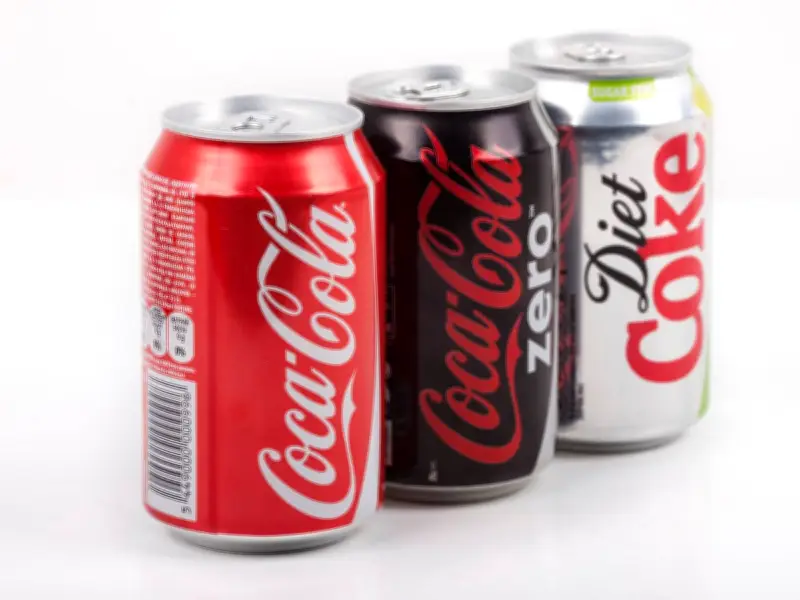
Diet Coke and Coke Zero are two of the world's most popular sugar-free soft drinks, but what exactly sets them apart? According to the Coca-Cola Company, the primary distinction lies in taste. A company spokesperson stated: "Both drinks are sugar free and calorie free. Coca-Cola Zero Sugar looks and tastes more like Coca-Cola original taste, while Diet Coke has a different blend of flavours which gives it a lighter taste."
Sales and Market Performance
Official figures from the Coca-Cola Company reveal that sales of Coke Zero grew by 14% in 2025, while Diet Coke sales remained level with the previous year. The company generated $47.9 billion in revenue in 2025, translating to billions of bottles and cans sold worldwide. Diet Coke, launched in 1983, was Coca-Cola's first sugar-free cola, followed by Coca-Cola Zero in 2006, which was replaced by Coca-Cola Zero Sugar in 2016.
Do Diet Sodas Help with Weight Loss?
Both beverages contain 0g of fat, carbohydrates, and sugar, leading many to believe they aid weight loss. However, Harvard Medical School's Robert H. Shmerling notes: "Research suggests that none of these choices may actually help with weight loss. Worse, they might even lead to weight gain." He explains that artificially sweetened sodas may create cravings for high-calorie foods and that some studies show a tendency toward weight gain among consumers. Nevertheless, he acknowledges that other studies indicate potential benefits for weight loss, and reverse causation may complicate findings.
Are Diet Coke and Coke Zero Bad for You?
Both drinks contain artificial ingredients, including Colour (Caramel E150d), sweeteners (Aspartame, Acesulfame K, and in Coke Zero, Enzymatically Produced Steviol Glycosides), Natural Flavourings, and Caffeine Flavouring. Dr. William Li, a physician and author, told the Zoe podcast: "The preponderance of clinical evidence... shows that high consumption of soda is associated with everything from metabolic disease to cardiovascular disease to cancer risk." However, both the Zoe Science and Nutrition website and Harvard Medical School caution that definitive conclusions remain elusive, and research is ongoing.
Ingredient Differences
Diet Coke's ingredients: Carbonated Water, Colour (Caramel E150d), Sweeteners (Aspartame, Acesulfame K), Natural Flavourings, Caffeine Flavouring, Acids (Phosphoric Acid, Citric Acid). Coca-Cola Zero's ingredients: Carbonated Water, Colour (E150d), Acid (Phosphoric Acid), Sweeteners (Aspartame, Acesulfame-K, Enzymatically Produced Steviol Glycosides), Natural Flavourings, Caffeine Flavouring, Acidity Regulator (Sodium Citrates). The inclusion of citric acid in Diet Coke and steviol glycosides in Coke Zero contributes to their distinct taste profiles.
Consumer Perspectives
Online forums are filled with opinions. On Reddit, one user commented: "Flavour wise, Coke Zero is supposed to be closer to regular Coke while Diet Coke is much more distinct." Another added: "I'm a life-long Diet Coke drinker and I can definitely taste the difference. Zero is too sweet. I don't want something that tastes like Coca-Cola. I want something that tastes like Diet Coke."