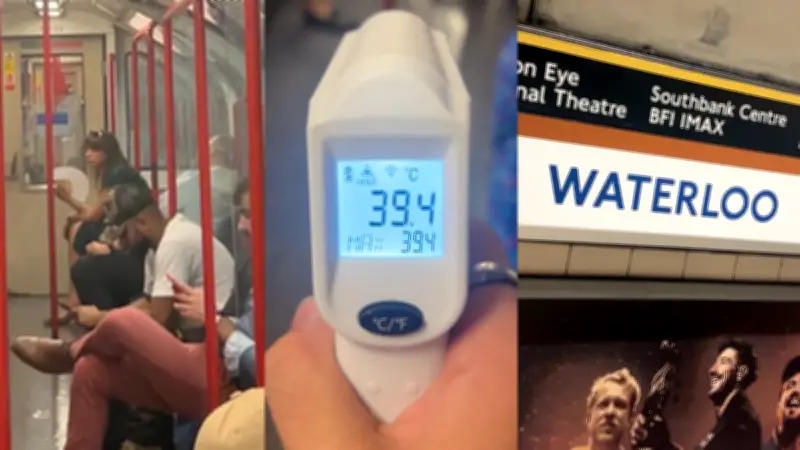
Commuters on the London Underground endured temperatures of 39.4C on the Central line on Wednesday, as the UK experienced its hottest June day on record. The capital reached 35.1C by 3pm, while the national record of 36.1C was set in Gosport, Hampshire.
Central line temperatures soar
The Central line was the hottest on the network, reaching 39.4C, described by passengers as 'hellish'. Edgar, a painter and decorator, told The Standard: 'It's crazy. It's really bad. My strategy is to try and be at the end of the carriage so I can stand next to the window so it offers a bit of relief. But, as everyone knows, the tunnels are hot so even in the wind it's warm. It's insane.' He described the escalator at Bank station as 'descending into hell'.
Other lines also recorded high temperatures: Jubilee 37.2C, Bakerloo 36.4C, Piccadilly 33.7C, Victoria 33.6C, Northern 33C. In contrast, the Metropolitan, Hammersmith & City, and Elizabeth lines, which have air conditioning, reached around 22.7C.
Reasons for lack of air conditioning
Most Tube lines lack air conditioning because the system is old, with some tunnels built in the Victorian era and too narrow to accommodate cooling equipment. Lines without air con include Central, Bakerloo, Jubilee, Victoria, Waterloo & City, Piccadilly and Northern.
Caroline Russell, Leader of the Green Group on the London Assembly, said: 'With sweltering temperatures becoming more common, London is expected to develop a climate comparable to southern European cities, such as Barcelona, over the coming years. We need air conditioning on every Tube and train to keep passengers and staff safe during periods of extreme heat.'
Commuters struggle with heat
Commuter Dillan said he was 'sweating buckets' within the first two stops on the Jubilee and Metropolitan lines. Miguel added: 'The older lines are terrible. Obviously they're in the sun and they come out of the line sweltering, no AC, you know. I don't know how we can survive really.'
The heatwave, driven by a 'heat-dome' over western Europe, has led to health warnings, school closures and transport disruption. The 50-year-old temperature record fell due to climate change from burning fossil fuels, which experts say is making heatwaves more frequent and intense.
Professor Stephen Belcher, Met Office chief scientist, said: 'Human induced climate change has made events like this more likely and more intense. To see temperatures like this in the UK in June is sobering. Events like this bring home the implications of climate change, with very high temperatures and humidity bringing significant health implications from heat stress, as well as impacts to transport, energy and water supply.'
TfL response
Nick Dent, TfL’s director of customer operations, said: 'We’re working to ensure our transport services remain resilient in the face of more extreme and frequent hot weather events. We are investing millions as part of our continuous work to improve the network, which includes introducing new trains to meet growing customer numbers whilst providing more comfortable journeys. We have implemented energy efficient solutions on new trains, which reduce the heat generated. We’re constantly looking at how innovative solutions can be rolled more widely on the transport network to ensure more passengers experience cool and comfortable journeys in the summer.'