Cosmic Giant WOH G64 Undergoes Dramatic Transformation
One of the largest known stars in the universe, WOH G64, has undergone a remarkable transformation that may signal its impending explosive death. According to new research published in Nature Astronomy, this colossal star has transitioned from a red supergiant to a rare yellow hypergiant, a change observed in 2014 that could indicate it is preparing for a supernova.
From Red Supergiant to Yellow Hypergiant
The study, led by Gonzalo Muñoz-Sanchez at the National Observatory of Athens, provides compelling evidence that WOH G64 is shedding its outer layers and heating up as it shrinks. This process is a key indicator that the star is moving closer to the end of its relatively short life. WOH G64, located in the Large Magellanic Cloud—a dwarf galaxy orbiting the Milky Way—was first discovered in the 1970s and is estimated to be less than 5 million years old, a stark contrast to our Sun's 4.6 billion years.
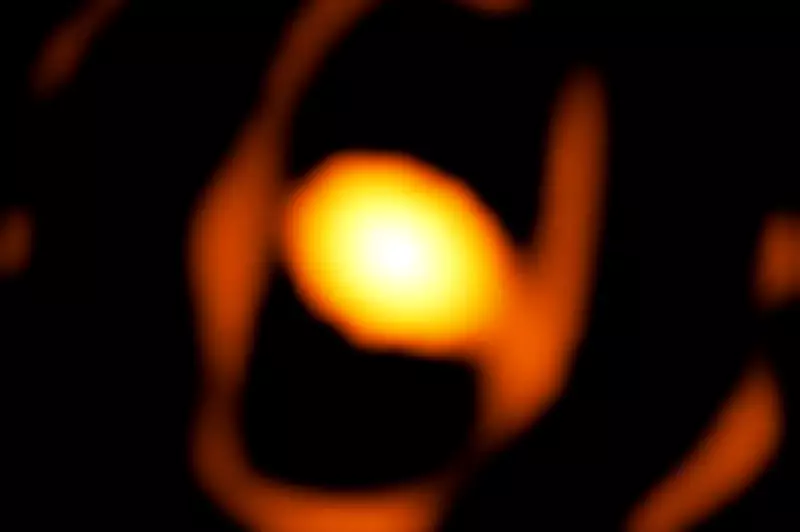
In 2024, the Very Large Telescope Interferometer captured the first detailed image of WOH G64 beyond our galaxy, revealing a dusty cocoon around the star. This confirmed that the star is losing mass as it ages, a critical step in its evolution. With a radius over 1,500 times that of the Sun, WOH G64 is not only extremely luminous but also one of the biggest stars ever identified.

Theories Behind the Transformation
Researchers propose two main theories to explain the star's dramatic change. One possibility is that a large portion of the star's surface was ejected in 2014, potentially due to interactions with a companion star, which has been confirmed through spectral analysis. Another theory suggests that WOH G64 is entering a pre-supernova "superwind" phase, characterized by strong internal pulsations as its core fuel depletes rapidly.
Not all supergiants become hypergiants; this transition typically occurs in very massive stars that quickly burn hydrogen and helium. Once a star becomes a hypergiant, it is destined for a swift demise in a supernova explosion. The evidence from WOH G64 suggests astronomers may be witnessing this process in real time, offering a rare opportunity to study such events.
Implications for Astronomy and Future Observations
Most stars exist for millions or billions of years, making it extraordinary to document significant transformations in a star outside our galaxy. If WOH G64 does explode in a supernova within our lifetimes, it would provide not only a spectacular intergalactic display but also valuable data to help scientists complete the puzzle of stellar evolution. This research underscores the dynamic nature of the cosmos and the importance of advanced telescopes in uncovering these celestial mysteries.