Celestial Rendezvous: Venus and Saturn Set for Twilight Encounter
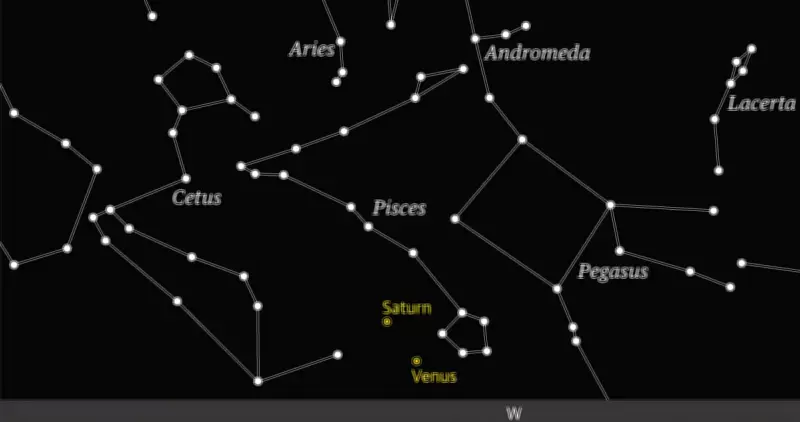
Astronomy enthusiasts are poised for a captivating sight this week as Venus and Saturn prepare to converge in the evening twilight. The two planets will appear remarkably close in the western sky shortly after sunset, creating a stunning visual display that requires no special equipment to observe.
Optimal Viewing Conditions and Timing
The planetary meeting is scheduled to occur in the early evening hours, with the best visibility expected under clear skies. Observers should look towards the west approximately 30 to 60 minutes after the sun dips below the horizon. During this period, Venus, often referred to as the "Evening Star," will shine brightly alongside the more subdued glow of Saturn, offering a striking contrast in luminosity.
Scientific Significance and Observational Details
While the planets will seem to touch from our earthly perspective, they remain millions of miles apart in space. This alignment, known as a conjunction, occurs when celestial bodies share the same right ascension in the sky. Such events provide excellent opportunities for both amateur stargazers and seasoned astronomers to witness the dynamic nature of our solar system. Binoculars or a small telescope may enhance the view, potentially revealing Saturn's iconic rings, though the naked eye will suffice for the main spectacle.

This conjunction is part of a series of planetary movements that highlight the predictable yet awe-inspiring patterns of orbital mechanics. Similar events are anticipated throughout the year, but this particular pairing of Venus and Saturn is noted for its accessibility and visual appeal. Weather permitting, the display should be visible from most locations with an unobstructed western horizon, making it a must-see for anyone with an interest in the night sky.
Tips for Observers:- Find a location with minimal light pollution for the best experience.
- Allow your eyes to adjust to the darkness for several minutes.
- Check local sunset times to plan your viewing accordingly.
- If using optical aids, ensure they are properly focused for optimal clarity.
As the planets gradually drift apart in the following days, this event serves as a reminder of the ever-changing celestial landscape above us. Whether you're a casual observer or a dedicated astronomer, don't miss this chance to witness the graceful dance of Venus and Saturn in the twilight sky.