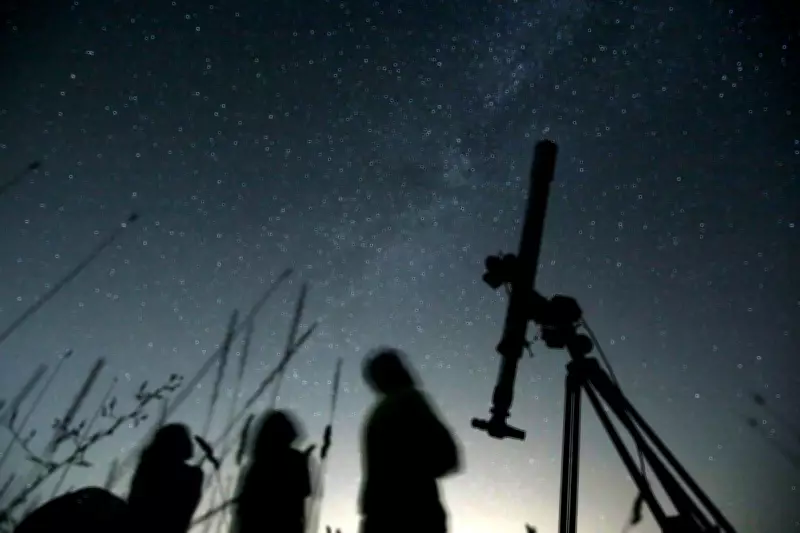
Six Planet Parade to Illuminate Night Sky in Late February
Skywatchers are in for a celestial treat as six planets will align in the night sky at the end of February, with most visible to the naked eye. This event, known as a planetary parade, occurs when multiple planets appear to line up on one side of the sun, offering a rare and stunning spectacle.
What is a Planetary Parade?
A planetary parade happens when several planets seem to form a line in the sky, though they are not perfectly aligned. According to NASA, it is common to spot two or three planets after sunset, but gatherings of four or five visible without aid are less frequent, occurring every few years. Last year featured lineups of six and even all seven planets, making this event part of a recent trend of impressive celestial displays.
Visibility Details and Timing
On Saturday, Mercury, Venus, Jupiter, and Saturn will be observable with the naked eye, provided clear skies prevail. Uranus and Neptune, however, will require binoculars or telescopes to be seen. For optimal viewing, venture outside about an hour after sunset and find a location away from tall buildings or trees that might obstruct the view. Look towards the western sky, where Mercury, Venus, and Saturn will be near the horizon, with Jupiter positioned higher up, accompanied by Uranus and Neptune.

How to Identify Planets in the Parade
Planetary scientist Sara Mazrouei from Humber Polytechnic in Canada offers a simple tip: “If it’s twinkling, it’s a star. If it is not twinkling, it’s a planet.” This parade should be visible over the weekend and into the following days, though Mercury will eventually dip below the horizon as the event progresses.
Historical and Cultural Significance
Planetary scientist Emily Elizondo from Michigan State University notes that glimpsing multiple planets at once connects us with astronomers from centuries past. “Ancient astronomers used to make sense of the universe just by looking up at the stars and the planets,” she said, “which is something that we can do today.” NASA adds that at least one bright planet is visible on most nights, making such parades a special opportunity for stargazers to engage with the cosmos.
The Associated Press Health and Science Department receives support from the Howard Hughes Medical Institute’s Department of Science Education and the Robert Wood Johnson Foundation, though the AP retains full responsibility for all content.