Rare Six-Planet Parade Illuminates the Night Sky
A spectacular celestial event is set to captivate keen astronomers tonight, as a rare 'planetary parade' featuring six planets becomes visible from Earth. Mercury, Venus, Jupiter, Saturn, Uranus, and Neptune will all align in the night sky, creating a breathtaking sight for stargazers.
How to Witness the Planetary Alignment
Excitingly, four of these planets—Mercury, Venus, Jupiter, and Saturn—will be visible to the naked eye, meaning no special equipment is required to enjoy the spectacle. However, to catch a glimpse of distant Uranus and Neptune, a telescope or powerful pair of binoculars will be necessary.
Although the planets are spread out over millions of miles, they all orbit on the same plane, known as the ecliptic. This alignment allows multiple planets to line up in just the right way for observers on Earth to spot them simultaneously.

Best Viewing Times and Tips
Dr David Armstrong, associate professor of astronomy and astrophysics at Warwick University, notes that opportunities to see four bright planets with the naked eye occur every few years on average. 'Even so, the planets are best observable just after sunset, so this is one of the most convenient opportunities for several years,' he says.
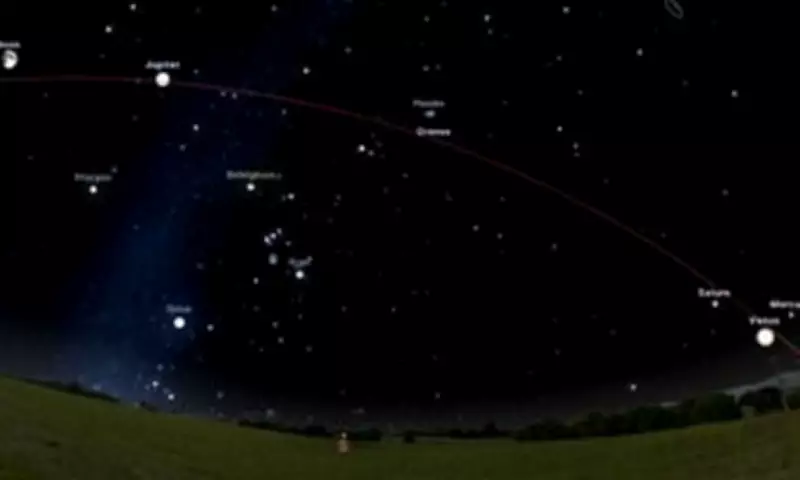
The planetary parade technically began near the start of the month, but until now, planets like Venus and Mercury have been too low and too far west to be visible close to sunset. Tonight and tomorrow evening offer the best chances to see all six planets stretching across the sky.
Given recent rainy weather, it is worth looking during any clear evenings in the first week of March, as you may still spot a few planets. 'The planets will be visible for an hour or so after sunset, though some will stay up for longer,' Dr Armstrong advises. 'The best time is about half an hour after sunset.'
Key Viewing Guidelines
- The best time to look is about half an hour after sunset.
- Venus, Mercury, and Saturn will be clustered; look for three bright lights near the western horizon.
- Find a location with a wide, unobstructed view of the horizon, as the planets will be low in the sky.
- Avoid city lights or other sources of light pollution.
- Allow your eyes to adjust to darkness by avoiding phone use after sunset.
- If using binoculars or a telescope, ensure the sun has set completely to prevent eye damage.
Planetary Positions and Visibility
For most of February, Mercury was too far west to be visible due to the setting sun, but it is now setting much later and should be seen close to the western horizon. Venus, similarly difficult to spot, will now be visible at around the same height and slightly to the left of Mercury. Both planets will be visible to the naked eye and so close that spotting one means seeing the other.
Saturn will be slightly higher in the sky, recognisable by its distinctive yellow glow. Jupiter will be much higher, near the moon and further towards the East, making it the brightest and easiest to see.
To maximise visibility, find a spot with an uninterrupted view and a wide, flat western horizon. This allows more time to see the planets after sunset and in darker conditions. Avoid light pollution and let your eyes adapt to the dark.
Using Telescopes for Distant Planets
If you have a telescope or binoculars, you can search for Neptune and Uranus, which are not visible to the naked eye. 'If you're looking for Neptune, it will be very close to Saturn, which can help in finding it,' says Dr Armstrong. Uranus will be higher in the sky, located near the Pleiades star cluster in the constellation of Taurus.
Dr Armstrong adds: 'With a pair of binoculars or small telescope, try looking at Jupiter and Saturn to spot Jupiter's moons or Saturn's rings. Four of Jupiter's moons can sometimes be seen as bright points of light near the planet.'
However, exercise extreme caution when using telescopes shortly after sunset, as even a brief glimpse of the sun through magnification can cause serious eye damage or blindness. Be especially careful when looking for Neptune, which will be just above the western horizon and extremely close to the sun.

Debunking Myths About Planetary Parades
The sight of several planets grouped together has often been attributed astrological or spiritual significance, but scientifically, it is merely a predictable geometrical coincidence. Dr Shyam Balaji, an astronomer at King's College London, explains: 'Planetary alignments have often inspired cultural or astrological interpretations, but scientifically they are predictable geometrical coincidences with no known physical influence.'
Another common myth suggests that planetary alignments amplify gravitational pull on Earth, leading to natural disasters. However, although planets appear close from our perspective, they are actually millions of miles apart. For example, Mercury and Venus, while appearing adjacent, are 23.3 million miles apart at their closest.
'These alignments have no gravitational effects on Earth,' says Dr Balaji. 'Their combined gravitational pull on Earth is negligible compared to that of the Moon or the Sun.'
Planetary Basics for Reference
- Mercury: Distance from Sun: 58 million km; Orbital period: 87 days; Radius: 2,440 km.
- Venus: Distance from Sun: 108.2 million km; Orbital period: 225 days; Radius: 6,051 km.
- Jupiter: Distance from Sun: 782.34 million km; Orbital period: 12 years; Radius: 69,911 km.
- Saturn: Distance from Sun: 1.434 billion km; Orbital period: 29 years; Radius: 58,232 km.
- Uranus: Distance from Sun: 2.913 billion km; Orbital period: 84 years; Radius: 25,362 km.
- Neptune: Distance from Sun: 4.4702 billion km; Orbital period: 164.8 years; Radius: 25,362 km.