Scottish Scientists Help Create Largest 3D Map of the Universe Ever Made
Scottish Scientists Create Largest 3D Universe Map

Scottish Scientists Help Create Largest 3D Map of the Universe Ever Made

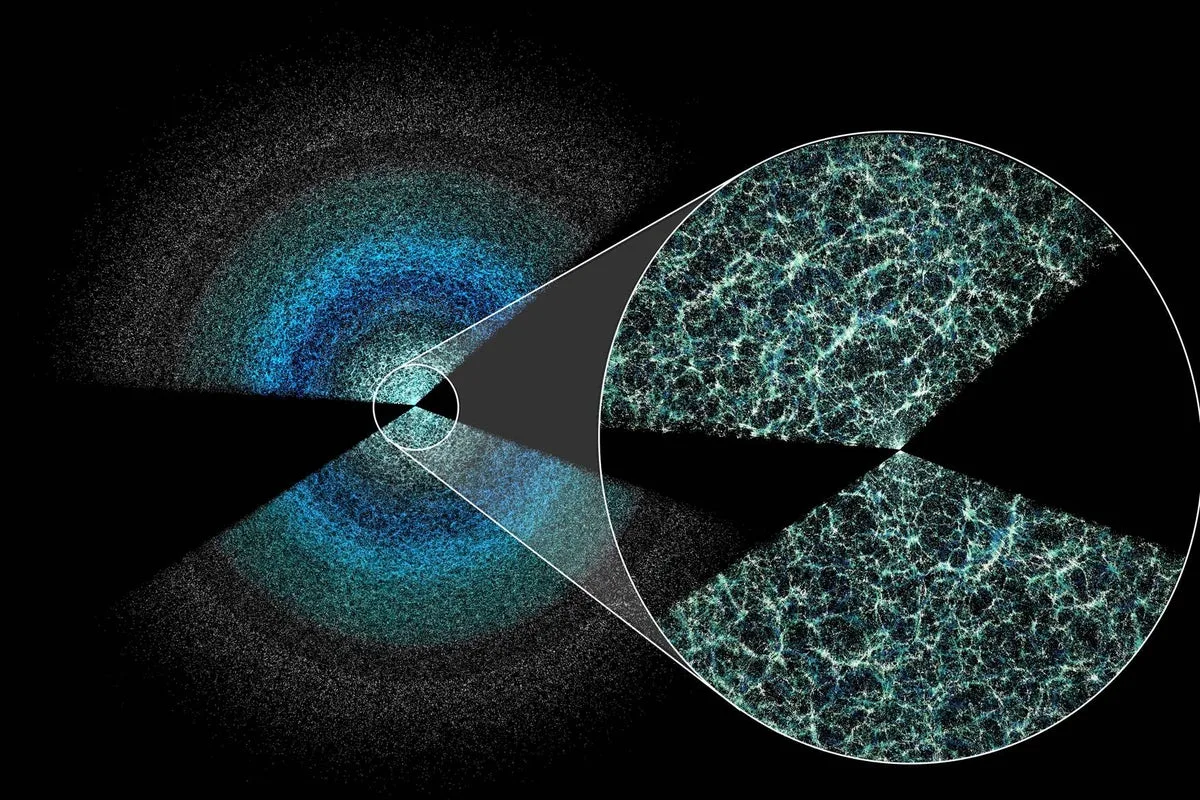
Using cutting-edge technology, a team of Scottish researchers has spent five years gathering data from approximately 47 million galaxies and quasars to help create what they believe to be the largest map of the known universe ever produced. The Dark Energy Spectroscopic Instrument (Desi), based at the Mayall telescope in Arizona, was utilized by scientists from the University of St Andrews alongside leading researchers from the University of California, Berkeley, and other teams from across 70 institutions.

Revolutionary Cosmology Survey

The Desi created a high-resolution, 3D map of the cosmos over the course of five years, with the primary intention of exploring dark energy, which scientists believe makes up the majority of the universe. The experiment was launched in May 2021 and aimed to capture light from 34 million galaxies and quasars. However, researchers exceeded their target, capturing data from 47 million galaxies and quasars, along with 20 million stars, contributing to the comprehensive 3D map.

Rita Tojeiro, professor of Astronomy at the University of St Andrews, stated: “There is no doubt of the huge impact that Desi is having on cosmology. What is also fantastic about Desi, in addition to being a revolutionary cosmology survey, is that this new, three-dimensional map is enabling world-class legacy science.”

Wide Pickt banner — collaborative shopping lists app for Telegram, phone mockup with grocery list

Unprecedented Detail and Future Exploration

Professor Tojeiro elaborated on the significance of the map: “Each of the 47 million galaxies and quasars that Desi observed tells a unique story. We can collect these individual stories to reveal the overarching narratives of how galaxies form and evolve through cosmic time. Because Desi is revealing the three-dimensional cosmic web in which galaxies live with unprecedented detail, we can now study how galaxies respond to cosmic structures around them in ways that have not been possible before.”

Researchers will now focus on better understanding dark energy and dark matter, which scientists say accounts for most of the matter in the universe but has never been physically detected. Professor Tojeiro added: “I have been waiting for over 10 years for this cosmic map. Now it is here and we are lucky enough to extend it and make it even better. The level of detail is incredible, and the map is so rich with information. We will be exploring it for 10 years to come.”

The creation of this map marks a significant milestone in astronomical research, providing unprecedented insights into the structure and evolution of the universe. The collaboration between Scottish scientists and international teams highlights the global effort to advance our understanding of cosmic phenomena.

Pickt after-article banner — collaborative shopping lists app with family illustration