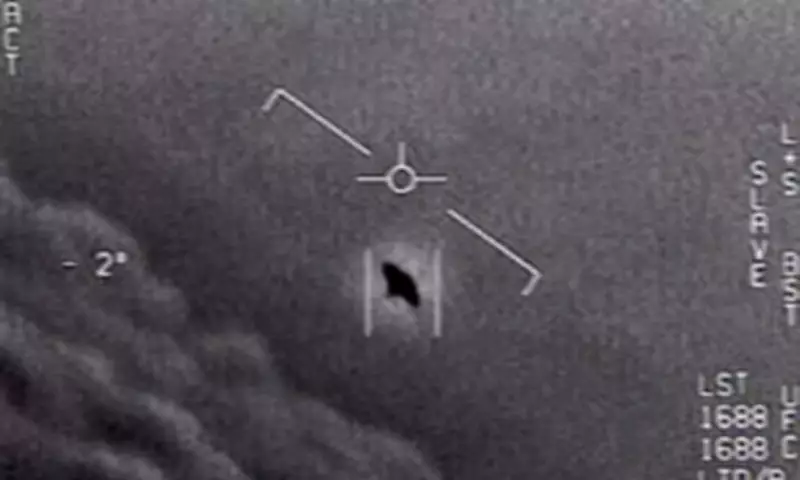
NASA Delivers Playful Yet Definitive Response to Presidential UFO Demands
In a development that blends political theatre with cosmic curiosity, NASA has issued a characteristically witty yet unequivocal response to President Donald Trump's recent demands for the release of all government files concerning UFOs and extraterrestrial life. The space agency's statement effectively extinguishes any lingering hopes among enthusiasts for an imminent disclosure of classified alien documents, instead redirecting attention toward more terrestrial bureaucratic mysteries.
The Presidential Exchange That Sparked Cosmic Speculation
The extraordinary sequence began earlier this month when former President Barack Obama, during an interview with American YouTuber Brian Tyler Cohen, offered provocative comments about extraterrestrial existence. When directly questioned "Are aliens real?", Obama responded with measured certainty: "They're real, but I haven't seen them." He further addressed persistent conspiracy theories surrounding Area 51, the secretive Nevada military facility long associated with alien lore, stating unequivocally that no extraterrestrial beings are concealed there unless "there's this enormous conspiracy and they hid it from the president of the United States."
These remarks prompted President Trump to publicly criticize his predecessor for allegedly sharing classified information, telling Fox News reporter Peter Doocy aboard Air Force One: "I don't know if they're real or not. I can tell you he gave classified information. He made a big mistake." Hours later, Trump announced he would direct his Secretary of War to initiate the process of identifying and releasing all government files related to aliens, extraterrestrial life, unidentified aerial phenomena (UAP), and unidentified flying objects (UFOs), citing "tremendous interest" in these matters.

NASA's Diplomatic Yet Definitive Clarification
NASA Press Secretary Bethany Stevens finally responded to these presidential demands through an official statement on X, writing: "We continue to embrace President Trump's open science commitment as an agency." However, she added a crucial clarification from NASA Administrator Jared Isaacman: "There are certainly things he's come across in the job that he can't explain… but they relate more to unnecessarily costly programs than they do to extraterrestrial life!"
The agency further emphasized its longstanding commitment to open science, stating: "We have fostered open science since our inception so that the public can build upon our innovations. We continue to make all NASA data publicly available, and welcome public participation using our data." This response was met with mixed reactions on social media, with some users expressing skepticism about whether all relevant information has truly been made accessible to the public.
Scientific Perspectives on Extraterrestrial Existence
The political exchange coincides with significant scientific commentary on extraterrestrial possibilities. Dr. Gentry Lee, one of NASA's longest-serving and most decorated scientists with tenure dating back to 1968, recently addressed these matters at the American Association for the Advancement of Science conference in Phoenix. The veteran space engineer stated definitively: "There exists nothing today that says any alien or any alien machine has ever landed on the planet Earth. If you believe otherwise, you are being misled."
Dr. Lee emphasized that simpler explanations likely exist for all reported UFO sightings and alien encounters, while also noting that scientists must remain open to discovering life forms radically different from Earth's DNA-based biology. "Extraterrestrial biologists would come to the Earth and would go back and report: 'Not a terribly interesting planet. All life is the same,'" he remarked, highlighting the uniformity of terrestrial biology compared to potential cosmic diversity.

The Scientific Framework for Cosmic Civilization Search
Researchers continue to employ sophisticated methodologies like the Drake Equation—a seven-variable formula estimating the probability of active civilizations beyond Earth—incorporating recent data from NASA's Kepler satellite about potentially habitable exoplanets. Current calculations suggest that unless the odds of advanced life evolving on a habitable planet are "astonishingly low," humankind is unlikely to be the universe's sole intelligent civilization. Kepler data indicates relatively high probabilities for such development, suggesting technologically advanced aliens may well have existed at some cosmic point.
As the political spectacle unfolds, NASA maintains its focus on scientific exploration while diplomatically addressing presidential inquiries. The agency's response underscores that while unexplained phenomena certainly exist within government programs, they pertain more to budgetary mysteries than cosmic visitors, leaving the search for extraterrestrial life firmly in the realm of scientific inquiry rather than political disclosure.