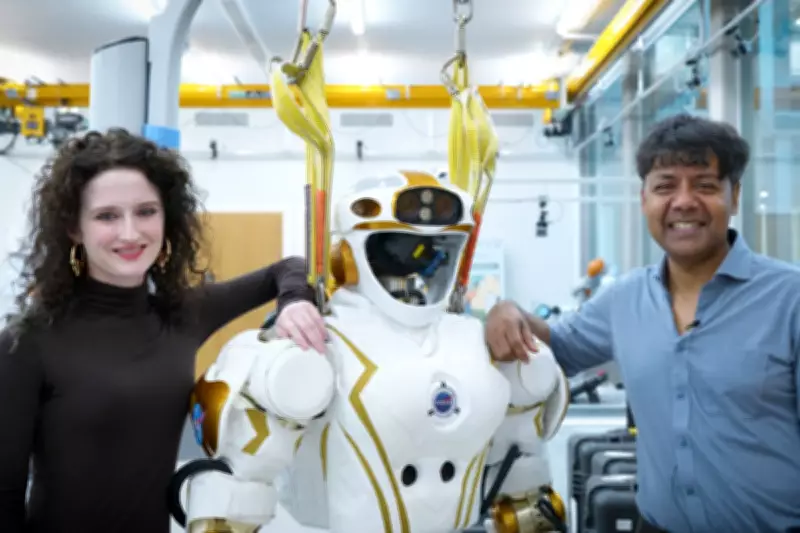
NASA's pioneering humanoid robot, Valkyrie, is set to return to the United States after a transformative decade of research and development at the University of Edinburgh in Scotland. The 1.8-metre-tall, 125-kilogram robot, one of only three such prototypes globally, has been honed for future Mars exploration missions.
A Decade of Scottish Innovation
Valkyrie arrived at the University of Edinburgh in 2016 as one of the world's most advanced humanoid robots. Over the past ten years, scientists at the university's Centre for Robotics, in collaboration with Heriot-Watt University, have significantly enhanced its capabilities. The research focused on improving Valkyrie's handling and walking functions, refining its sensors to navigate the challenging Martian terrain.
Preparing for the Red Planet
NASA's strategic plan involves deploying Valkyrie to Mars years before human astronauts land on the surface. The Scottish research team developed new data processing methods and connectivity systems, enabling the robot to interpret its surroundings and move autonomously in harsh environments. This work was supported by the Engineering Physical Sciences Research Council, part of UK Research and Innovation.

The project involved dozens of PhD students and staff, who are now bidding farewell to Valkyrie as it prepares for shipment to NASA's Johnson Space Centre in Texas. Despite the robot's departure, the collaboration between the University of Edinburgh and NASA will continue on other robotics initiatives.
Legacy and Impact
Vladimir Ivan, a former student who worked on Valkyrie and now serves as chief technical officer at Edinburgh-based robotics start-up Touchlab, reflected on the project's significance. "Hosting NASA Valkyrie at the University of Edinburgh was a rare privilege," he stated. "It provided a unique opportunity to advance fundamental research in mobility and stability, work that has evolved into the humanoid systems we see today."
Ivan emphasised that Valkyrie's presence helped catalyse Edinburgh's emergence as a leading robotics hub, fostering world-class research, innovation, and business growth in the field.
Academic Perspectives
Professor Sethu Vijayakumar, personal chairman in robotics and director of the Edinburgh Centre for Robotics, highlighted the project's visionary nature. "It was a gamble to invest so heavily in humanoids research back in the 2010s," he noted. "In hindsight, this bold decision has contributed to the exciting wave of data-driven humanoid robot research that is now taken for granted."
Professor Vijayakumar praised Valkyrie as a trendsetter, benefiting from NASA's world-leading hardware. "We will miss her, but it has been a privilege. Thank you for all the fun, Valkyrie," he added, underscoring the robot's inspirational role in training a generation of roboticists.
The return of Valkyrie marks the end of a landmark chapter in UK-US space robotics collaboration, setting the stage for future advancements in extraterrestrial exploration and humanoid technology.