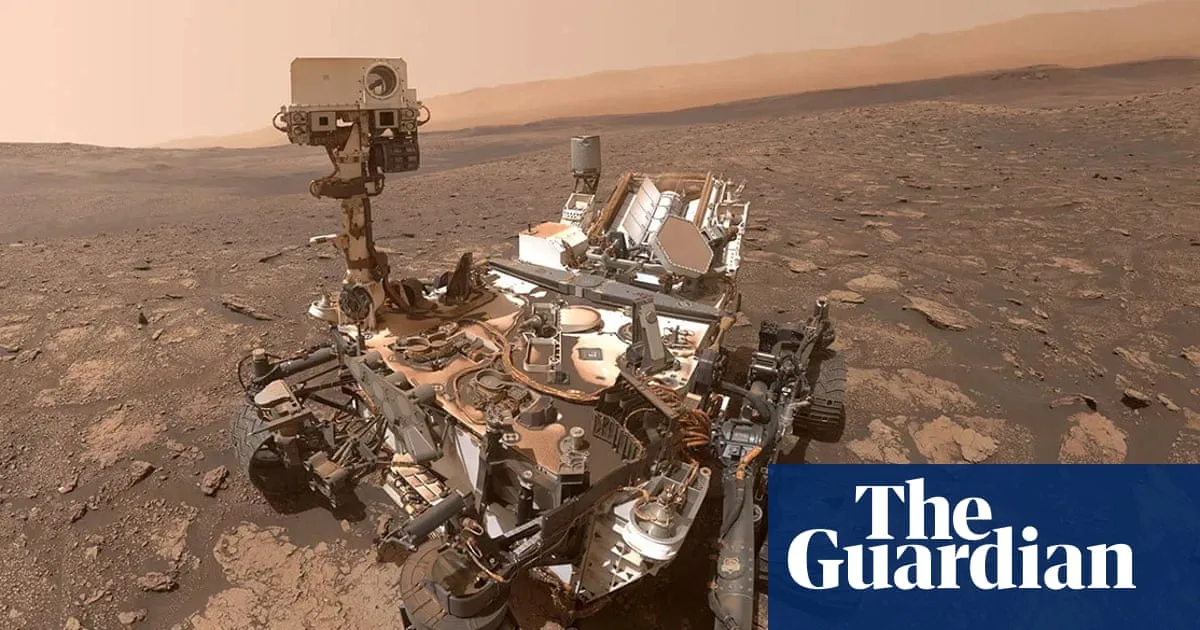
NASA's Curiosity Rover Discovers New Organic Compounds on Mars in Groundbreaking Experiment
NASA's Curiosity Finds New Organic Compounds on Mars

NASA's Curiosity Rover Conducts Unprecedented Experiment on Mars

In a landmark development for planetary science, NASA's Curiosity rover has successfully performed an experiment on Mars that has never been attempted beyond Earth, leading to the discovery of new organic compounds. This breakthrough significantly enhances efforts to determine whether the Red Planet ever supported life, as scientists analyse data from the rover's ongoing mission.

Discovery of Previously Unidentified Organic Compounds

The six-wheeled Curiosity rover confirmed the presence of seven diverse organic compounds in rock samples taken from a dried lakebed near Mars' equator. Remarkably, five of these compounds had never been identified on Mars before. Additionally, the experiment hinted at another organic compound structurally similar to precursors of DNA, the molecule that carries genetic information in terrestrial organisms.

Organic compounds, which consist primarily of carbon atoms bonded to other elements, form the structural basis of all known life on Earth. While dozens have now been found on Mars, researchers caution that these could have formed through non-biological processes. The sampled rock, sediment deposited by flowing water, dates back at least 3.5 billion years, from a period when Mars was warmer and wetter than it is today.

Wide Pickt banner — collaborative shopping lists app for Telegram, phone mockup with grocery list

Insights from Astrobiologist Amy Williams

"We cannot yet say that Mars ever harbored life, but our findings further support the evidence that Mars was a habitable world around the time that life on Earth originated," stated astrobiologist and planetary scientist Amy Williams of the University of Florida. Williams, a member of the Curiosity scientific team and lead author of the study published in Nature Communications, emphasised that definitive proof of past life would require bringing rock samples back to Earth for detailed testing.

"To be clear, we have not found evidence for life with this study, but we're further refining the building-block molecules that were present on Mars," Williams added, highlighting the incremental progress in understanding Martian chemistry.

Experimental Details and Geological Context

Curiosity, which landed in Gale Crater in 2012, conducted the experiment in 2020 in a region known as Glen Torridon. This area is rich in clay minerals, indicating that water was once present there. Clay minerals are particularly effective at preserving organic molecules, making them ideal targets for such investigations. If microbial life ever existed on Mars, bodies of water like those that formed these clays would have been likely habitats.

The experiment utilised the rover's Sample Analysis at Mars (SAM) instrument. Curiosity drilled into bedrock at a site named "Mary Anning" after the 19th-century English paleontologist, then dropped powdered rock samples into a cup containing a chemical that breaks down complex organic matter into detectable fragments.

Implications for Martian Habitability

"This study confirms that larger and more complex organic matter, called macromolecular carbon, is present and preserved in the near surface of Mars bedrock despite the planet's harsh radiation conditions," Williams explained. "The experiment also yielded smaller organic molecules from that breakdown process that have not been seen on Mars before."

She noted that Curiosity was specifically designed to search for habitable environments where life could have thrived. "This study contributes to that story, that Mars environments were habitable in the ancient past and had the ingredients for life as we know it," Williams said, reinforcing the rover's role in advancing our understanding of Martian history.

Broader Context and Future Prospects

This discovery follows last year's announcement that another NASA rover, Perseverance, found rock samples in a different crater with features possibly produced by microbial activity during rock formation. Together, these rovers are at the forefront of exploring Martian habitability and organic chemistry.

Pickt after-article banner — collaborative shopping lists app with family illustration

Williams concluded, "Although we cannot tell if this organic matter came from geologic processes, infall from meteorites, or life, our work suggests that if complex organic matter from life were preserved on Mars, we should be able to detect it with current and upcoming rover instruments." This optimism underscores the potential for future missions to unravel the mysteries of Mars' past, bringing humanity closer to answering the enduring question of whether life ever existed beyond Earth.