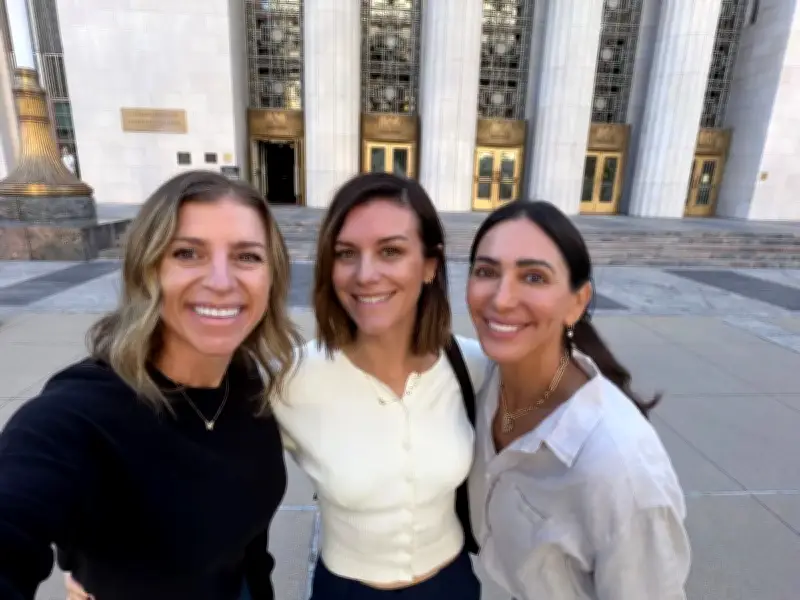
Lauren Cowell, a campaigner for children's online safety, attended the first day of a landmark US trial against social media giants Meta and Snap in a Los Angeles courtroom on Wednesday morning. She said the proceedings could have enormous implications for how children are protected online in Britain.
Trial Details and Corporate Contrast
The first day involved jury selection. Cowell noted the quiet atmosphere and the contrast between the two sides: the legal teams for Meta and Snap appeared corporate, formal and cold, while the team led by Texan lawyer Mark Lanier, who secured a $6million (£5.4m) jury verdict against Meta and YouTube earlier this year, felt more personal and familial. Lanier's team includes his two daughters, Rachel and Sarah.
Cowell was intrigued to see a lawyer from YouTube in the courtroom, despite the company having settled with both plaintiffs involved in the proceedings. She said this highlighted how much attention these cases are attracting.
The Claims and Platform Design
The trial involves two women, now aged 16 and 18, who allege that features deliberately built into social media platforms encouraged compulsive use and contributed to serious mental health difficulties. TikTok and YouTube had settled with both plaintiffs. Meta had settled with one, but two days after Cowell was in court, Meta settled the other. Snap faces claims from both but denies the allegations.
Potential jurors were asked to complete a questionnaire exploring their social media habits, whether they or people they know have experienced mental health difficulties associated with social media, and their personal views on whether social media is harmful.
Cowell said her decision to attend was driven by her role as a mother of two boys, aged 12 and 20, and her campaigning over the past year, which has brought her into contact with families whose lives have been devastated by their children's online experiences. Some of those parents have lost their children.
Legal Significance and UK Relevance
Cowell highlighted the focus on platform design features such as infinite scrolling, autoplay, personalised algorithms, notifications and Snapchat streaks. She said there is a need to look as closely at the mechanisms used to keep children engaged as at harmful content.
The cases are being approached this way partly because technology companies have relied on Section 230, a provision of a 1996 US law that generally protects online platforms from being held legally responsible for content posted by users. The technology companies have argued Section 230 should also protect them against these claims, but the judge has allowed allegations relating to platform design to proceed to trial.
Cowell said this is especially relevant in Britain, where the government has announced plans to restrict social media access for children under 16, alongside protections against certain harmful online features. She expressed concern that focusing too narrowly on individual social media apps risks overlooking similar features and risks appearing elsewhere, including messaging services, gaming platforms and increasingly AI chatbots.
Cowell said there is an enormous opportunity for Britain to learn from the questions being examined in US courtrooms, including what technology companies knew about potential risks, how design decisions were made, and what responsibility those companies should have when children use their platforms. She added that parents have responsibilities too, but should not have to become technology experts to keep their children safe, and it is not reasonable to place the entire burden of responsibility on families.
Cowell left the courtroom feeling she had witnessed the beginning of something potentially very important. For the young women bringing the claims, the outcome will be deeply personal; for the technology companies, there is an enormous amount at stake. She said protecting children online should not just be about teaching them how to navigate a potentially harmful digital world, but also about making that world safer for them in the first place.