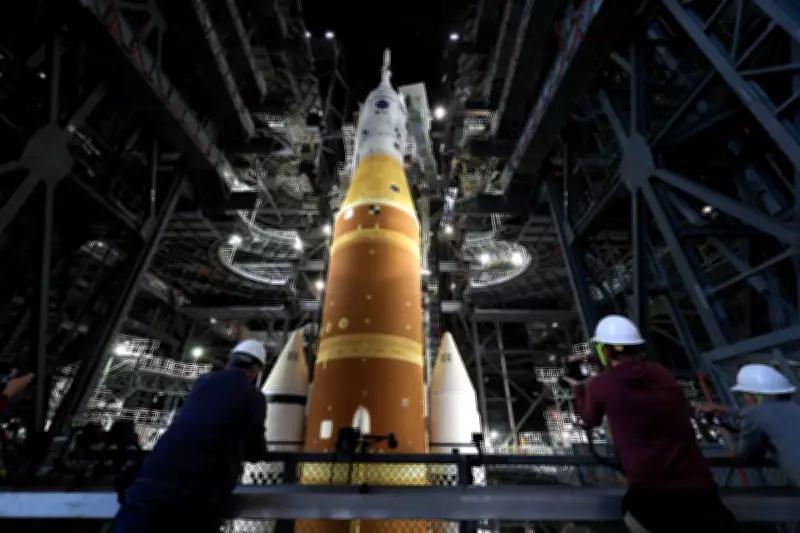
NASA's Artemis II Moon Mission Faces Another Delay Until April
NASA has announced yet another postponement for its highly anticipated return to the Moon, with the Artemis II mission now delayed until April at the earliest. This marks the latest in a series of setbacks for the first crewed lunar mission since the Apollo era, which has faced repeated rescheduling since its initial target launch date of 2019.
Technical Issues Force Rocket Rollback
The delay stems from problems with the spacecraft's helium system, which is crucial for purging engines and maintaining proper fuel tank pressure to ensure a safe launch. Engineers identified the issue after the giant Moon rocket had already been wheeled out to its launchpad and successfully completed a "wet dress rehearsal," a critical test involving fueling and countdown practice.
As a result, NASA will now be forced to roll the rocket back to its hangar at the Vehicle Assembly Building at Kennedy Space Center. This four-mile journey is scheduled for Tuesday, weather permitting. In a statement, NASA explained that returning to the assembly building is necessary to diagnose and fix the helium system problem.

History of Delays and Previous Fixes
The Artemis II mission has experienced numerous delays over the years, primarily due to technical challenges with the spacecraft designed to carry astronauts around the Moon and back to Earth. A previous test revealed dangerous hydrogen fuel leaks, but engineers replaced key components and appeared to have those issues under control, leading to a planned launch date of March 6.
That March date was already a month later than recent plans, and now the mission faces further postponement. NASA has stated that rolling the rocket back quickly should help minimize the delay, but meeting the new April timeline depends entirely on the success of the repairs.
Crew on Standby and Mission Significance
The three American astronauts and one Canadian colleague selected for the mission had already entered quarantine ahead of the early March launch and remain on standby at NASA's facilities in Houston. When the mission finally launches, this crew of four will become the first humans to fly to the Moon since NASA's Apollo program, which last landed people on the lunar surface in 1972.
For Artemis II, the crew will not land on the Moon but will instead fly around its far side, paving the way for future missions that aim to return astronauts to the lunar surface. This latest delay underscores the technical complexities and challenges involved in reviving human deep space exploration after more than five decades.