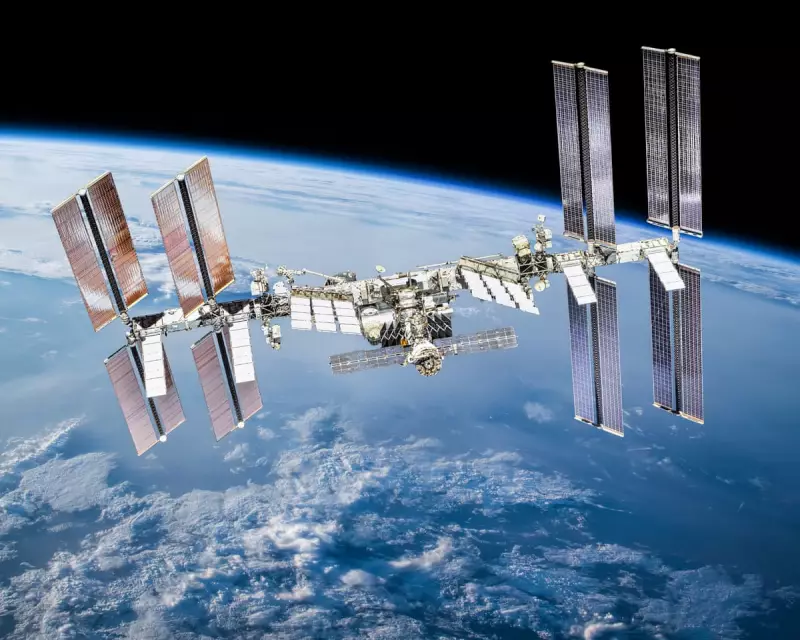
A mission aboard the International Space Station (ISS) has been cut short following a medical issue affecting one of the crew members, prompting NASA to cancel a planned spacewalk and arrange an early return to Earth.
Mission Abbreviated as a Precaution
NASA announced on Thursday that the four-person crew, comprising astronauts from the United States, Japan, and Russia, will be coming home in the coming days, earlier than originally scheduled. The space agency has not identified the astronaut involved nor the specific nature of the medical problem, citing patient privacy, but confirmed the individual is now in a stable condition.
Dr James Polk, NASA’s chief health and medical officer, emphasised the decision was precautionary. "It’s not an emergency evacuation, but we are erring on the side of caution for the crew member," he stated.

Crew Details and Impacted Operations
The affected crew arrived at the orbiting laboratory in August aboard a SpaceX Crew Dragon capsule for a planned six-month stay. The team includes NASA astronauts Zena Cardman and Mike Fincke, along with Japan's Kimiya Yui and Russia's Oleg Platonov.
As a direct result of the health situation, NASA cancelled the first spacewalk of the year. Fincke and Cardman were slated to conduct this extravehicular activity (EVA) to prepare for the future installation of new solar arrays designed to boost the station's power supply.
This mission marked the first spaceflight for both Cardman and Platonov. For Fincke, it was his fourth visit to the ISS, and for Yui, his second.
Station Operations and Future Plans
NASA administrator Jared Isaacman commented, "I’m proud of the swift effort across the agency thus far to ensure the safety of our astronauts." Meanwhile, operations on the ISS continue with three other astronauts currently aboard: NASA's Chris Williams and Russia's Sergei Mikayev and Sergei Kud-Sverchkov, who launched in November for an eight-month stay.
In related long-term planning, NASA has contracted SpaceX to develop a vehicle that will safely deorbit the International Space Station at the end of its operational life, currently slated for late 2030 or early 2031, with plans for a controlled re-entry over an ocean area.