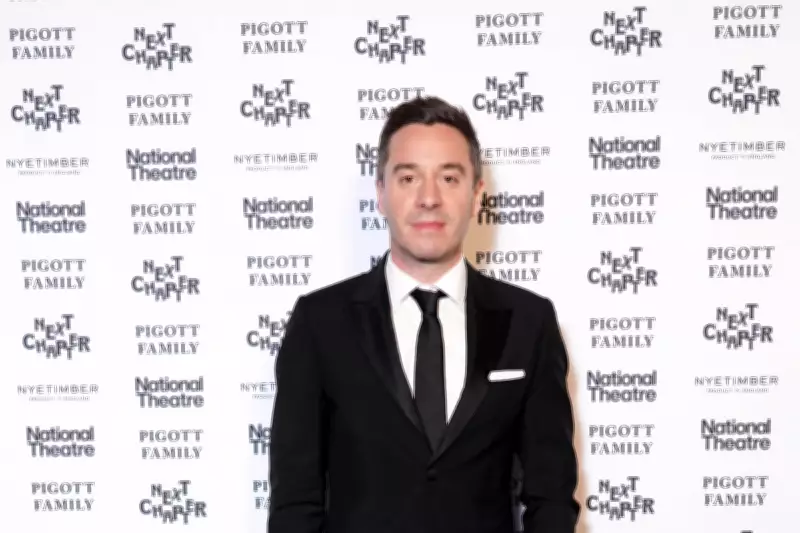
James Graham, the acclaimed playwright behind Dear England, has credited local BBC radio with nurturing his early career, telling MPs that he might not have endured as an artist in a purely commercial landscape. Appearing before the Culture, Media and Sport Committee (CMS) on Tuesday, Graham discussed the challenges facing the broadcaster and the importance of preserving its unique role in the UK’s creative ecosystem.
Graham’s Testimony on BBC’s Value
Graham, whose television credits include Sherwood, Brexit: The Uncivil War, and Channel 4’s Brian And Maggie, emphasised the BBC’s role in allowing creative risk-taking. “If you are a commercial streamer, you view risk differently – it is about reaching the largest international audience,” he said. “But there is still in this country, both in our arts and media, the right to fail, and we should celebrate that. If I failed frequently, it was in those moments I learned the most. If we lived in a purely commercial environment, I may not have survived as an artist, especially one without a financial safety net.”
Local Radio’s Impact
The Olivier Award-winning writer highlighted BBC Radio Nottingham’s support for his debut play. “My first ever play was supported by BBC Radio Nottingham. They gave us a small budget, publicity, and chats when we opened in Nottingham. I gained confidence, empowerment, and training from that,” he recalled.

Concerns Over Funding Cuts
Graham voiced worries about the BBC’s drama budget, which is under strain. “The BBC do a huge amount of training, but the drama programming budget is under strain, and they will likely have to make cuts. I worry that becomes a self-fulfilling cycle for something the world admires. Unnecessary funding pressures are damaging. Embedding yourself in local communities and regions is the only way to access underrepresented, particularly working-class, talent.”
Impartiality in a Polarised World
When questioned about the BBC’s impartiality, Graham acknowledged the difficulty of pleasing everyone in a fragmented media landscape. “Everyone’s perception differs. We live in 65 million different realities. I’ve seen people cancel their licence fee because the BBC is ‘clearly so pro-Israel over Gaza’, and the inverse for the opposite reason. Impartiality is an aspiration; it will always fall short because humans are flawed. We shouldn’t make perfect the enemy of the good.”
Broader Context of the Hearing
The CMS committee is gathering witness views to shape recommendations for the new royal charter, due in 2028, which sets the BBC’s public purpose and constitutional basis, funded primarily by the licence fee. Tuesday’s session also featured The Rest Is Entertainment podcast host Marina Hyde, co-chairman of the Creative Industries Council Sir Peter Bazalgette, former Channel 4 chief executive Alex Mahon, and programme maker Patrick Younge, who chairs the British Broadcasting Challenge.