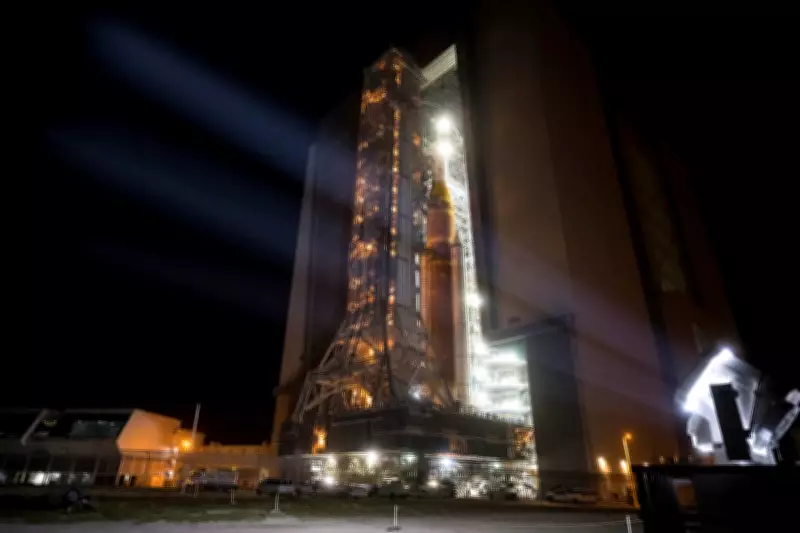
NASA's ambitious Artemis II mission has taken a critical step forward as the Space Launch System rocket and Orion spacecraft began a slow crawl from the Vehicle Assembly Building to the launchpad at the Kennedy Space Center in Florida. This rollout, which occurred on 20 March 2026, marks a pivotal moment in preparations for a lunar fly-by, though the program has faced significant setbacks due to fuel leaks and clogged helium lines.
Delays and Repairs Impact Launch Timeline
The Artemis II mission, which precedes a planned moon landing in 2028, has been delayed multiple times this year. Originally scheduled for an earlier date, hydrogen fuel leaks and issues with helium lines forced NASA to postpone the launch by two months. Technicians worked diligently to plug the leaks at the pad, but the helium problem required the rocket to be rolled back to the Vehicle Assembly Building for repairs at the end of February.
If the latest fixes prove successful and all other conditions align, NASA hopes to blast off as early as 1 April from the Kennedy Space Center. The crew of four astronauts, comprising three Americans and one Canadian, entered quarantine this week in Houston in anticipation of the launch.

Historic Rollout and Technical Challenges
The 322-foot (98-meter) rocket embarked on its 4-mile (6.4km) journey in the middle of the night, transported atop a massive crawler that has been in use since the Apollo era of the 1960s. This slow trek was expected to take approximately 12 hours but faced delays due to high winds, adding several hours to the timeline.
Once launched, the crew will perform a high-speed fly-around of the moon in their Orion capsule before returning directly to Earth without any stops. This mission represents a significant milestone, as the last time NASA sent astronauts to the moon was during the Apollo 17 mission in 1972.
Future Goals and Program Significance
The Artemis program aims to build on this fly-by with a two-person landing targeted for 2028, revitalizing human exploration of the lunar surface. Despite the technical hurdles, NASA remains committed to advancing space exploration and testing new technologies through these missions.
As the rocket now sits at the launchpad, all eyes are on the upcoming weeks to see if the repairs hold and weather conditions cooperate for a successful launch, paving the way for future lunar endeavors.