March Stargazing Guide: Unveiling the Beehive Cluster and Venus's Brilliance
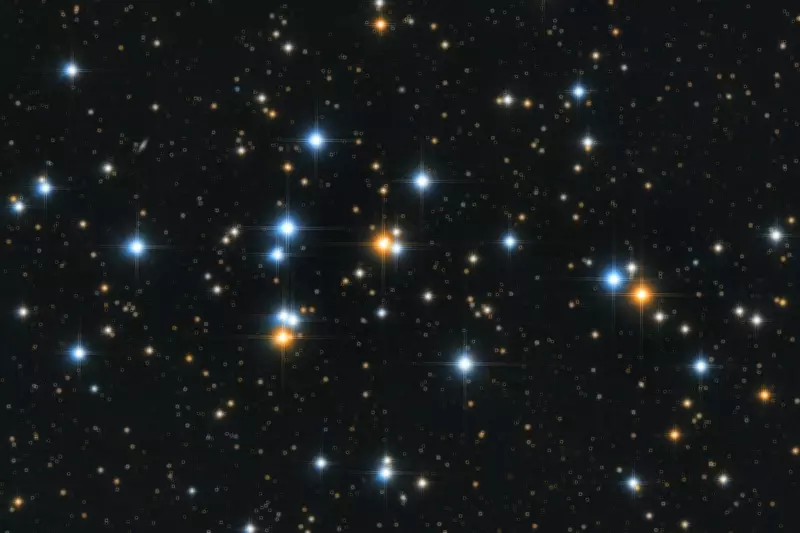
As March unfolds, the night sky offers a celestial spectacle, with the faint constellation of Cancer taking centre stage. Nestled high in the southern sky between the majestic Leo and the twin stars of Gemini, Cancer is the dimmest of the Zodiac constellations but holds a hidden gem: the Beehive Cluster, also known as Praesepe. This month provides the optimal viewing conditions to spot this cosmic wonder, best observed from dark locations away from light pollution.
The Myth and Mystery of Cancer and Praesepe
In ancient Greek mythology, Cancer was the crab that attempted to attack Hercules during his battle with the Hydra. Hercules crushed it underfoot, but the goddess Hera, an enemy of Hercules, elevated Cancer to the heavens as a constellation. While its stars are unremarkable, Cancer boasts Praesepe, a faint glowing cloud described by Ptolemy as "a nebulous mass in the breast of the Crab." Traditionally called "the manger," with flanking stars representing asses feeding from it, Praesepe gained fame in 1609 when Galileo's telescope revealed it as a swarm of over 40 stars, earning its nickname, the Beehive Cluster.
Exploring the Beehive Cluster: A Cosmic Jewel Box
Through binoculars or a small telescope, Praesepe transforms into a dazzling display. Its brightest stars resemble diamonds and rubies scattered on black velvet. The diamond-like stars are hotter and brighter than our Sun, similar to Sirius, while the rubies are massive red giants. At approximately 600 million years old, Praesepe is a cosmic youngster, just one-tenth the age of the Sun. Intriguingly, it shares this age with the Hyades cluster in Taurus, suggesting both formed from denser regions of the same primordial gas cloud, though the Beehive Cluster appears fainter due to being four times farther away at 600 light years.

Recent counts identify 1,004 stars within Praesepe, spanning 70 light years. However, it originally contained more members, with many stars stripped away by galactic gravity as the cluster orbits the Milky Way. Data from the Gaia spacecraft has uncovered 389 stars forming two immense tidal tails, stretching over 500 light years on either side. If visible, these tails would create a band from the Beehive Cluster to the southern horizon and up to Polaris, the Pole Star.
Celestial Highlights: Venus and Planetary Alignments
This month, Venus dominates as the Evening Star, shining brilliantly in the dusk twilight after sunset. Starting March, it sets around 7 pm, but by month's end, it remains visible until 9:30 pm. Key events include Venus near Neptune on March 7, a conjunction with Saturn on March 8 visible to the naked eye, and a pairing with the crescent Moon on March 20.
Jupiter, brighter than any star, graces the southern sky for most of the night, with the Moon nearby on March 26. Meanwhile, winter constellations like Orion and Taurus begin to set, making way for spring patterns such as Leo, Virgo, and Boötes. Don't miss the occultation of Regulus by the Moon on March 29 at 8:20 pm, where Regulus B emerges first through binoculars, followed by the main star.
March Stargazing Diary: Key Dates and Events
- March 6: Moon near Spica
- March 7: Venus near Neptune
- March 8: Venus near Saturn
- March 11, 9:38 am: Last Quarter Moon
- March 19, 1:23 am: New Moon
- March 20, 2:46 pm: Spring Equinox; Moon near Venus
- March 25, 7:18 pm: First Quarter Moon
- March 28: Moon near Jupiter
- March 29, 1:00 am: British Summer Time begins
- March 29, 8:20 pm: Regulus occultation ends
Grab your binoculars or telescope this March to witness these celestial wonders, from the swarming stars of the Beehive Cluster to the radiant glow of Venus, and immerse yourself in the beauty of the night sky.