NASA's Artemis II Astronauts to Enjoy Customised Space Menu on Lunar Mission
For those venturing into the cosmos, a stellar dining experience is essential – and NASA's Artemis II crew is set to receive precisely that. The United States space agency has unveiled the comprehensive food selection destined for the forthcoming 10-day journey around the moon, scheduled for launch in the coming months.
Gourmet Selections Replace Traditional Space Fare
Gone are the days of unappetising packet meals and bland meat pastes. Instead, the four astronauts – Jeremy Hansen, Victor Glover, Reid Wiseman, and Christina Koch – have personally tailored their menus to align with their individual culinary preferences. This marks a significant departure from earlier space missions, offering a diverse array of gourmet options.
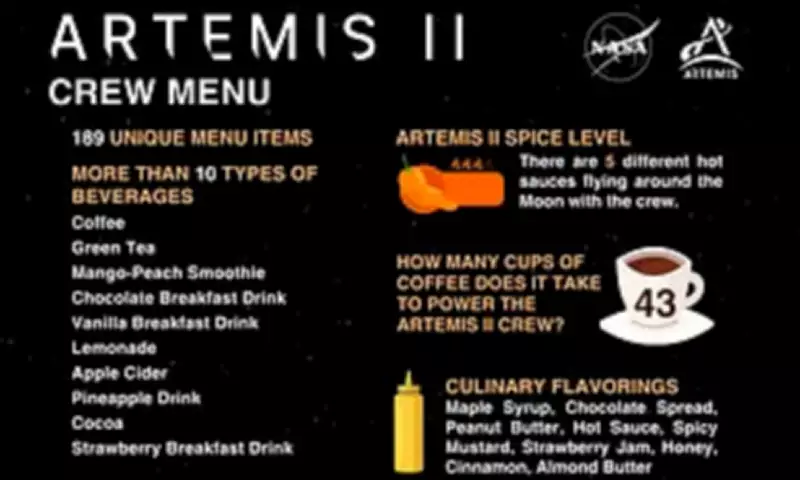
More than ten distinct beverage varieties will accompany the crew on their 685,000-mile (1.1 million-kilometre) voyage. These include mango-peach smoothies, refreshing lemonade, apple cider, and indulgent hot chocolate, alongside sufficient coffee to brew 43 cups.

Daily Meals Designed for Nutrition and Enjoyment
Breakfast offerings feature savoury sausages, granola with blueberries, or a tropical fruit salad. For lunch and dinner, astronauts can select from vegetable quiche, BBQ beef brisket, spicy green beans, broccoli au gratin, and macaroni and cheese. A substantial supply of 58 tortillas will also be onboard to complement these meals.
To enhance flavours, five different hot sauces will be available throughout the mission. Additionally, a selection of cookies, chocolate, cake, and puddings will satisfy sweet cravings, ensuring morale remains high during the demanding expedition.
Advanced Food Systems and Preparation
NASA emphasised that the Artemis II food is meticulously designed to support crew health and performance during the lunar flyby. With no resupply, refrigeration, or late-load capabilities, all meals must be shelf-stable, safe, and straightforward to prepare within the Orion spacecraft.
Food selections were developed in collaboration with space food experts and the crew, balancing calorie requirements, hydration, and nutrient intake while accommodating personal tastes. Each astronaut sampled, evaluated, and rated all options during preflight testing to finalise their onboard menus.
On a typical mission day, scheduled times are allocated for breakfast, lunch, and dinner. Astronauts are permitted two flavoured drinks daily, which may include coffee. Condiments such as maple syrup, peanut butter, chocolate spread, mustard, strawberry jam, and honey provide additional flavour enhancements.
Innovative Preparation and Safety Measures
The crew will utilise Orion's water dispenser to rehydrate foods and beverages, while a compact, briefcase-style food warmer will heat meals as needed. NASA noted that food has been specifically chosen to minimise crumbs, as floating particles could pose hazards in the cabin environment.
This advanced menu represents decades of progress in space food systems, contrasting sharply with the limited variety available during historic Apollo missions. While the International Space Station benefits from regular resupplies and occasional fresh produce, Artemis requires a fixed, pre-selected menu tailored to different mission phases, including launch, transit, and re-entry.
Morale and Crew Cohesion
NASA highlighted the importance of food in boosting onboard morale and fostering crew cohesion. In a video shared on the NASA website, astronauts Christina Koch and Jeremy Hansen were seen sampling various options. Koch remarked on the diversity of the food selection, noting that many entrees can be rehydrated to taste excellent in space.
Hansen added that shared meals will provide valuable moments for the crew to connect during the mission. NASA has previously sent festive items like crab bisque, roast turkey, and blueberry cobbler to the ISS for Thanksgiving, along with Christmas treats such as shortbread biscuits, underscoring the agency's commitment to crew well-being.

Mission Context and Recent Developments
The Artemis II mission, which aims to complete a lunar flyby and test systems for future lunar landings, was recently delayed for a second time due to issues with the Space Launch System rocket. The next launch attempt is now targeted for April 6 at the earliest.
Key mission facts include a total travel distance of 620,000 miles (one million kilometres), a duration of 10 days, and an estimated cost of $44 billion (£32.5 billion). The crew will launch from Kennedy Space Centre, perform a lunar flyby at an altitude of 5,523 miles (8,889 km), and return to Earth for a Pacific Ocean splashdown.