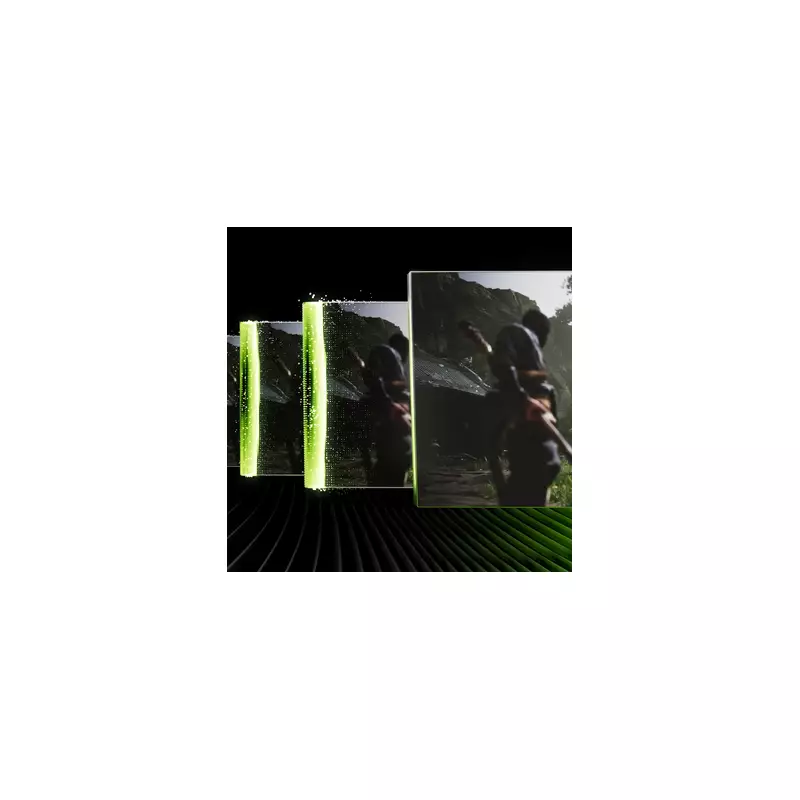
Nvidia has unveiled a significant upgrade for PC gamers, launching a new version of its AI-powered upscaling technology that promises to dramatically improve how games look. The release of DLSS 4.5 was highlighted at the ongoing Consumer Electronics Show (CES), with demos showing clear visual enhancements over the previous model.
What DLSS 4.5 Offers Gamers
The core advancement in DLSS 4.5 lies in its updated image reconstruction model. While DLSS 4, introduced in early 2025, brought Multi Frame-Generation, this latest iteration focuses on delivering superior image quality. Side-by-side comparisons shown at CES made the difference stark. In a demo for the anticipated title Black Myth Wukong, distant particle effects were far more distinct and visible under DLSS 4.5, whereas they appeared blurred or nearly absent using the older DLSS 4 technology.
This visual fidelity does come with a minor trade-off. Initial testing indicates that DLSS 4.5 carries a small performance cost compared to its predecessor. However, the improvement in clarity is so pronounced that players can potentially offset this by switching their DLSS setting from 'Quality' to 'Balanced' or 'Performance' mode, regaining lost frames while still enjoying a cleaner image than before.

How to Enable DLSS 4.5 in Your Games
Critically, this is not merely a tech demo. DLSS 4.5 is available for users to download and test immediately in supported games, including Battlefield 6 and ARC Raiders. As most game menus haven't been formally updated to include the new option, enabling it requires a manual process through the Nvidia app.
Follow these steps to try it out:
- Ensure your Nvidia graphics driver is fully updated to the latest version, which includes the new transformer model.
- Open the Nvidia application and navigate to 'Settings', then the 'About' tab.
- Enable the 'Opt in to access Beta or experimental features' checkbox.
- Go to the 'Graphics' menu, find your installed game, and scroll to its DLSS settings.
- Select 'Latest Model' or specifically choose 'Model M' to activate DLSS 4.5.
It is important to note that this feature is still in beta. As such, performance and stability may vary between titles, and some users might experience adverse effects. Nevertheless, early reports confirm substantial graphical improvements, particularly in rendering fine details that previously looked smudgy.
The Future of Frame Generation
Beyond DLSS 4.5, Nvidia also previewed the next evolution of its frame-generation tech at CES. A new version of Multi Frame-Generation can generate up to six times the original frames. A forthcoming dynamic variant will automatically switch between modes to maintain a user-set target frame rate. However, this advanced feature won't be available for public use until spring and will require an RTX 50 series graphics card.
For now, DLSS 4.5 presents a compelling and accessible upgrade. For gamers keen on extracting every ounce of visual fidelity from their systems, testing this new upscaling model in regular titles could yield a noticeably sharper and more immersive experience. In the world of high-performance gaming, every frame and every pixel truly counts.