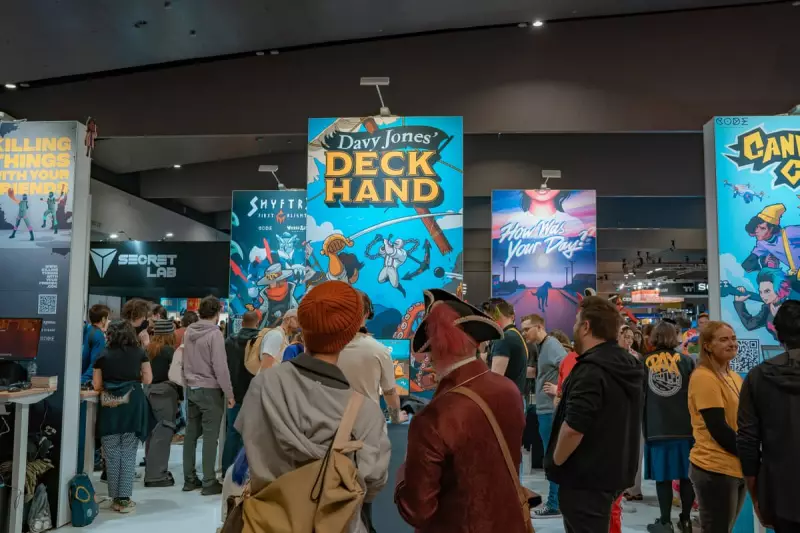
Kiwi Creativity Steals the Show at Melbourne Gaming Expo
The PAX Australia gaming convention in Melbourne witnessed an unexpected dominance this year, with New Zealand's indie game developers capturing attention and acclaim. While the massive event typically showcases Australian talent, the 2025 edition saw a remarkable surge in innovative titles crossing the Tasman Sea from New Zealand studios.
Government Backing Fuels Extraordinary Growth
The numbers tell a compelling story of rapid expansion. According to the New Zealand Game Developers Association, total revenue for local studios has experienced consistent annual growth since 2018. The most dramatic increase occurred between 2024 and 2025, shooting up by 38% to reach NZ$759 million (A$657 million). This impressive figure nearly doubles Australia's gaming revenue of A$339.1 million during the same period.
Several standout successes have contributed to this boom. Grinding Gear Games reported NZ$105 million in revenue for their Path of Exile series between October 2024 and September 2025. Meanwhile, PikPok achieved the remarkable milestone of over 500 million worldwide downloads across all titles, including the popular Into the Dead series and mobile hit Clusterduck.

The Code Programme: More Than Just Funding
Established in late 2019 in Dunedin by New Zealand Labour, the Centre for Digital Excellence (Code) initially served South Island studios before expanding nationally in 2022. What sets Code apart from other government funding programmes worldwide is its comprehensive approach that extends far beyond simple grants.
"In this day and age, publishers and investors only want to engage with you when you have already got some degree of validation," explains Vee Pendergrast, development manager of Code. "We have that baked into our model."
The programme offers multiple funding streams, from travel and kickstart funds through to substantial grants of up to $250,000 for expanding teams. More importantly, it provides crucial industry training including media relations, budgeting, and technical skills like porting to consoles. Recent government commitments have strengthened the initiative, with minister Shane Reti pledging to more than double Code's funding with an additional NZ$2.75 million per year.
Pax Australia Showcase Highlights Kiwi Innovation
At the Code booth during PAX Australia, 18 developers demonstrated why New Zealand's gaming scene is generating such excitement. The diversity and quality of games on display reflected the programme's success in nurturing unique talent.
Among the standout titles was Headlice, a comedic game where players control a parasitic headcrab monster that latches onto human brains. How Was Your Day? offered a completely different experience as a cozy time-loop game set in New Zealand, following a young girl's search for her missing dog. The collaborative multiplayer action game Killing Things With Your Friends featured the bizarre but entertaining mechanic of using your own arm as a weapon against enemy hordes.
Other notable games included Canvas City, a turn-based tactical combat rollerblading game from Disc 2 Games, and Middle Management, an irreverent office culture satire featuring brain-draining octopus creatures.
Community and Collaboration Drive Success
The strength of New Zealand's gaming ecosystem lies not just in financial support but in its collaborative spirit. Developers consistently highlight the importance of community in their success stories.
Jevon Wright, working on their first game Adaptory for four years, discovered Code midway through development and found immediate connection to the wider New Zealand scene. "We all know each other," they say. "And we're all here to support each other."
Will Adamson, demoing his game Apothecurse at PAX, echoed this sentiment: "We share ideas and experiences and contacts but also developers... there's a real sense of community here."

This collaborative environment extends to knowledge sharing between established and emerging developers. Nadia Thorne, chief executive and producer at Black Salt Games (creators of the Code-supported hit Dredge), has become a Code mentor herself. "We're really open to sharing our successes and failures, and what led to them," Thorne says. "We're just trying to make it easier for the next generation of developers coming through."
Standing Out in a Crowded Global Market
With 61 upcoming New Zealand games listed on Steam by NZGDA, the challenge becomes visibility in an increasingly saturated market where 19,000 games were released on the platform in 2024 alone. The Kiwi solution? Embracing uniqueness and local character.
"We get a lot of cool, quirky, Kiwi-oriented stuff," Pendergrast notes. "That's part of our whole brand." This distinctive approach is evident in games like Dream Team Supreme, where two players fight monsters by piloting a two-headed robot using two separate decks of cards.
The economic impact of this creative explosion is significant. According to Code's calculations, every dollar spent by the programme generates NZ$2.67 of investment back into the ecosystem. This return was calculated before the console release of Abiotic Factor from Deep Field Games, which has already sold more than 1.4 million copies on PC alone.
As New Zealand's indie gaming scene continues to punch well above its weight, the combination of government support, community collaboration, and distinctive creative vision suggests this is more than a momentary success story—it's the emergence of a sustainable global competitor in the gaming industry.