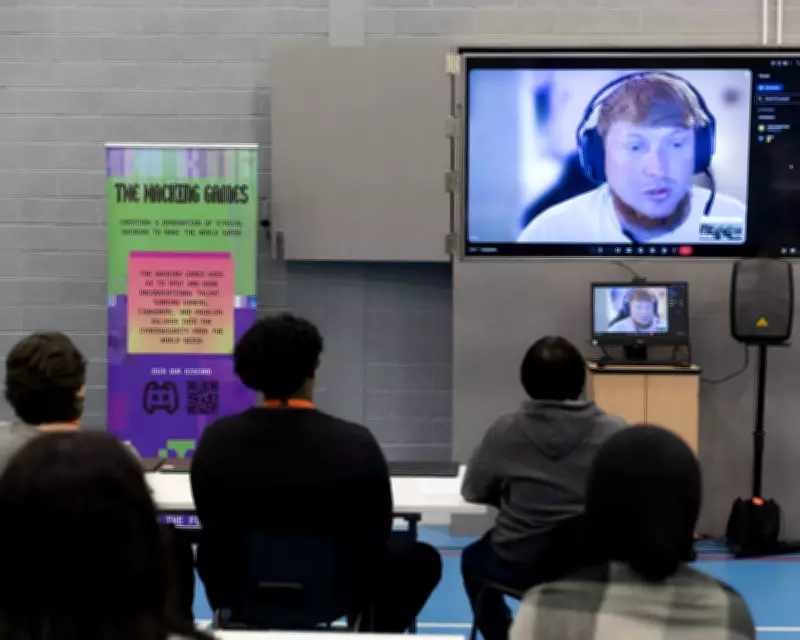
In a remarkable turn of events, former criminal hackers who once operated within shadowy online communities are now delivering powerful messages to Manchester students about using digital skills for legitimate purposes. These individuals, who served prison sentences for sophisticated cryptocurrency heists, are participating in an innovative initiative that identifies talented gamers and coders who could help companies strengthen their cybersecurity defenses.
From Dark Web Forums to Classroom Talks
At Connell Co-op College near Manchester City's Etihad Stadium, two reformed hackers recently shared their cautionary tales with attentive sixth-form students. The teenagers listened as the speakers described the grim reality behind Hollywood's glamorized portrayals of cybercrime, revealing that the daily existence involves petty online disputes and dangerous real-world consequences rather than thrilling adventures.
Conor Freeman, a 26-year-old from Dublin who served nearly three years in prison for his role in a $2 million cryptocurrency theft, explained how he became entangled in criminal activities. "I stumbled on these various different dark-net hacking forums and that's when things really started to escalate," Freeman recounted. "I just fell into these different communities, different groups, befriended a couple of different people, and then found myself involved with large-scale cryptocurrency theft."

The Gaming Connection to Cybercrime
Both Freeman and his American counterpart Ricky Handschumacher entered the criminal hacking world through gaming communities. Freeman was groomed online by an older teenager while playing Minecraft, which eventually led him to dark web forums and cryptocurrency theft. Handschumacher, who served four years in prison for the same crypto heist, similarly fell into criminal hacking through gaming.
Fergus Hay, co-founder and chief executive of The Hacking Games, emphasized the strong connection between gaming and hacking skills. "There's a 100% overlap between gaming and hacking," Hay stated, describing gaming as a "live laboratory for skills development." He explained that skills learned through gaming—particularly "modding" or creating software to alter video games—can be applied to either criminal hacking or legitimate cybersecurity work.
Redirecting Talent Toward Ethical Careers
The initiative represents a proactive approach to cybersecurity talent development. The Hacking Games has designed an AI-powered test to identify skills among proficient gamers who could transition to cybersecurity careers. These individuals could then participate in "red teaming" exercises, where they ethically hack company networks to identify vulnerabilities before criminals can exploit them.
Handschumacher, speaking via video link during the Manchester event, expressed regret about his criminal path. He told students he would have chosen differently had he known "you could be paid a lot of money to do the right thing." This message resonated strongly with the computing students in attendance, including 17-year-old Suheil, who noted: "The lesson is there's great opportunities for you to go into computing, but you have to be watchful of what you're doing because if you do something wrong, it will quickly harm your future."
Corporate Backing and Expansion Plans
The Co-operative Group, which suffered a debilitating ransomware attack in April 2023 that cost £120 million in lost profits, is backing this initiative. Rob Elsey, the Co-op's chief digital officer who led the organization's recovery from the hack, explained the program's purpose: "Helping young people recognize that the digital skills they already have can be a force for good, protecting people, organizations and communities rather than being misused or exploited."
The retailer has partnered with The Hacking Games to identify talented individuals who might otherwise remain invisible to traditional recruitment channels. As Hay noted: "So what you've got is a whole generation of natural-born hackers who've got incredible aptitude, but they're invisible. No one's seen their skill sets because they aren't advertised on LinkedIn."

The Co-op plans to expand these talks across its 38 school academies this year, hoping to reach more young people with digital talents. This expansion comes amid ongoing cybersecurity challenges for major retailers, including last July's arrests of four people—including three teenagers—in connection with cyber-attacks on the Co-op, Marks & Spencer, and Harrods.
Both Freeman and Handschumacher now work for The Hacking Games as ethical hackers, having transformed their criminal expertise into legitimate careers. Their Manchester appearance marked the first time the two had ever seen each other physically, despite their previous criminal collaboration. Their journey from prison cells to classroom speakers represents a powerful narrative about redemption and the positive potential of digital skills when channeled appropriately.