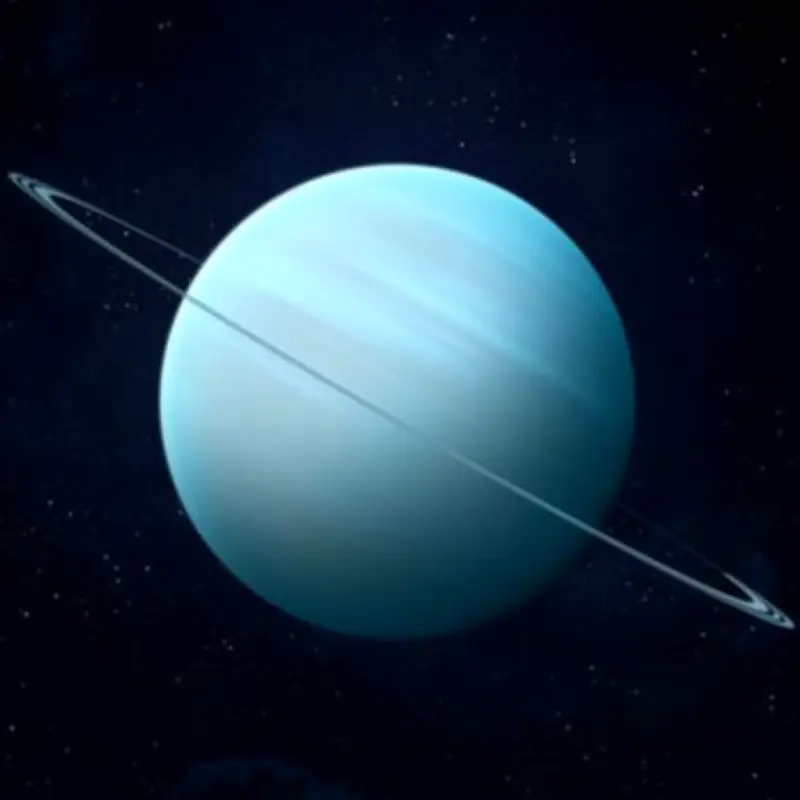
Scientists sniffing around Uranus have discovered a massive icy secret in its deep interior. New data suggests the planet contains far more frozen water than previously thought, potentially settling a long-running debate over whether it formed differently from its neighbor Neptune.
Detection of Carbon Monoxide
Both Uranus and Neptune are classified as ice giants, but their thick atmospheres make interior study difficult. Usually, carbon monoxide in a planet's atmosphere indicates a water- and ice-rich core. While Neptune is abundant in carbon monoxide, Uranus appeared lacking, leading to theories that it might be a rocky giant.
A team led by Thibault Cavalié at the University of Bordeaux in France has now detected carbon monoxide in Uranus's lower atmosphere for the first time. Cavalié stated: "We find that Uranus is more on the ice-giant side than on the rock-giant side. It tells us that this controversy is over now."
Research Methods
The breakthrough came from observations using the Atacama Large Millimeter/submillimeter Array telescope in Chile between 2022 and 2024. Computer simulations showed that only an ice-rich core could explain the carbon monoxide abundance.
Interestingly, carbon monoxide in the upper atmosphere likely came from a comet impact centuries ago, not from the interior.
Skepticism Remains
Not all experts are convinced. Vanesa Ramirez of Leiden University warned: "Interpreting atmospheric abundances requires assumptions about chemistry, mixing and internal structure, all of which remain uncertain for Uranus." She argues that multiple modeling possibilities prevent a definitive conclusion.
Ramirez added: "On its own, it does not settle the question of whether Uranus should be regarded primarily as an ice-rich or rock-rich giant."