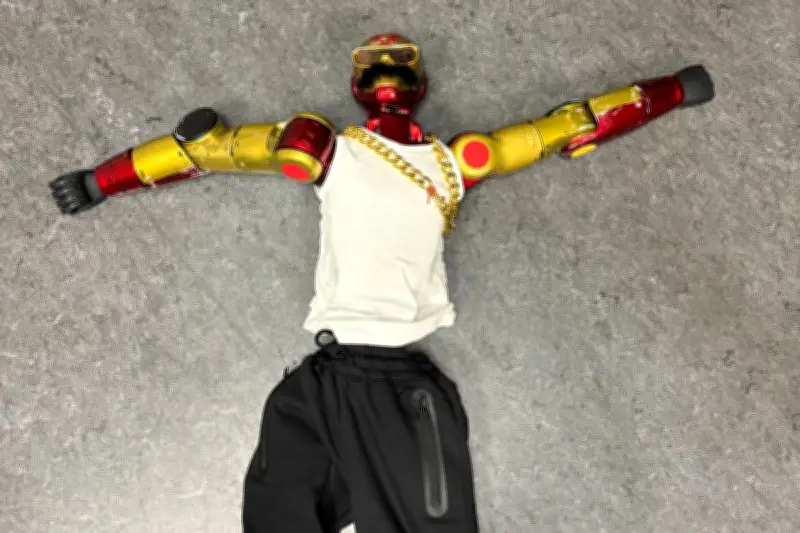
Police in Cologne, Germany, are investigating an incident in which a humanoid robot controlled by two teenage males touched a 16-year-old girl's buttocks and made sexually suggestive gestures toward her. Footage of the groping robot, which was wearing human clothes and a fake mustache, was reportedly livestreamed by the two males online.
Police Confiscate Robot
The robot in question has now been confiscated by the local police, who seem a little befuddled by the whole thing. "We have not been aware of this phenomenon so far," a police spokesperson told the Associated Press, adding it was "new territory for us".
Pattern of Harassment
This incident is part of a broader pattern where new technologies are immediately used to harass women. Meta's smartglasses, for example, have been used to record and harass women in public spaces, with so-called manfluencers filming themselves trying to flirt with women and uploading the footage to TikTok. The Flock license plate tracking system has been abused by law enforcement officers to track the locations of their exes or other women. AI image generators have been used to create deepfake pornography, with a 2023 report finding that "deepfake pornography made up 98 per cent of all deepfake videos online, and 99 per cent depicted women".
Growing Accessibility of Robots
Getting your hands on an AI-powered humanoid robot is still a lot more expensive than buying a pair of smartglasses, but the technology is rapidly becoming a lot more accessible. Earlier this year, a school in New York made headlines after announcing its new teaching assistant would be a humanoid robot called Sally, made by a company that makes realistic sex dolls. Outrage over the announcement forced the school district to halt its plans, but it's only a matter of time before we see humanoid robots in schools. In a report published last year, Bank of America predicted that, as costs go down, we will see mass adoption of humanoid robots from 2035 onwards. By 2060, they expect there to be 3bn humanoid robots, which will replace 20% of the workforce in the industrial sector and 50% of the workforce in the service sector.
Legal Protections for Robots
As the industry develops, expect corporations to ensure that their profit-maximizing robots have more legal protections than the humans they may harm. This week in Philadelphia, a woman was arrested after allegedly blocking the path of one of the Uber delivery robots that are now ubiquitous in the city. A growing body of case law has found that police officers are not under any legal obligation to protect citizens who are not in their custody, yet they seem surprisingly keen on protecting robots.