Breakthrough Fabric Technology Enables Personal Water Collection
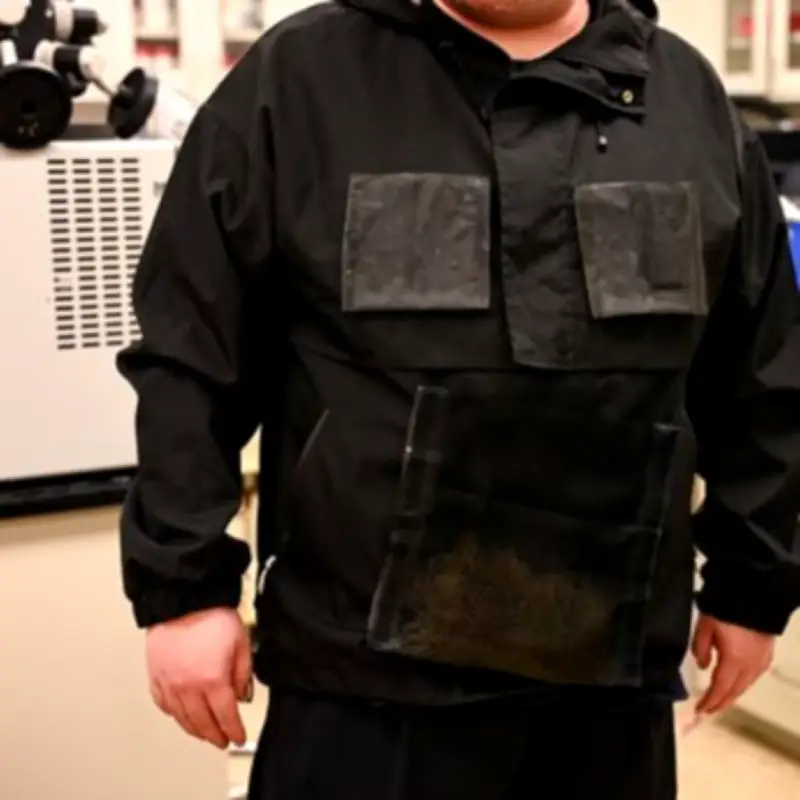
Engineers at The University of Texas have developed a high-tech jacket that can extract drinking water directly from the air, producing between 400 and 900 millilitres (0.7 to 1.5 pints) of drinkable water per day, depending on humidity levels. The innovation, published in the journal Science Advances, represents a significant advance in fabric technology for portable hydration.
Research co-leader Professor Guihua Yu explained: 'Water harvesting from air is usually imagined as a stationary device such as a box, a panel or a large sorbent bed. We wanted to rethink the form of the technology. If the fabric itself can collect water from air, it opens a new direction for personal and portable water access.'
How the Jacket Works
The textile incorporated into the jacket collects moisture from the air and funnels it to detachable harvesting units. These units are placed in a foldable collector piece and heated to produce water. Compared with conventional water-harvesting materials, the textile showed a three- to 10-fold improvement at scale, according to the study.
Study co-author Professor Keith Johnston noted: 'The important advance here is that the team did not simply make another material that absorbs water. They designed a pathway for water to move quickly, from vapour in the air, to liquid on the fibre surface, and then into the textile. That transport design is what allows the material to work not just in a small lab test, but in a wearable system.'
Potential Applications Beyond Clothing
The researchers are now eyeing applications beyond clothing, including backpacks, tents, emergency shelters and other outdoor gear. This would allow items people carry every day to help collect water from the air. They also plan to apply the technology to outdoor activities, remote field operations, disaster response, and water access in arid or infrastructure-limited regions.
Separate Device Achieves Record Water Harvesting in Arid Conditions
A separate device developed by the same research team pulled a record amount of drinking water from the air in the hot, arid climate of the Chihuahuan Desert of New Mexico and the more humid environment of Austin, Texas. In tests, the researchers captured 1.3 litres (2.3 pints) of clean water per day in both arid and semi-humid areas. That equates to 4.3 litres (7.5 pints) of water per kilo of moisture-capturing materials per day—more than any other research group has achieved, according to a paper published in the journal Nature Water.
Study co-lead author Weixin Guan said: 'This is a big stride toward practical atmospheric water harvesting. This goal has been incubated over years of work, from molecular design to real-world operation, and it is especially meaningful to see those pieces finally come together in a field-ready system.'
Hydrogel Fabric and Global Impact
At the centre of the device is a specially engineered hydrogel fabric made from biomass-derived materials. The fabric absorbs moisture from the air, then releases it when heated by sunlight, so the water can be condensed and collected. The researchers say that regions where the device should perform best overlap with many of the world's most water-stressed areas, including parts of North Africa, the Middle East, South Asia and sub-Saharan Africa.
Guan added: 'That makes this technology especially promising as a decentralised water solution for remote communities, emergency response and other settings where conventional water systems are difficult to build or maintain.'