From the simple thumbs-up to the suggestive aubergine, emojis have become a universal language for digital communication. But how well do you truly know your emojis? With a library of over 3,900 characters to pick from, recalling the finer details is tougher than it seems.
The Ultimate Emoji Recall Challenge
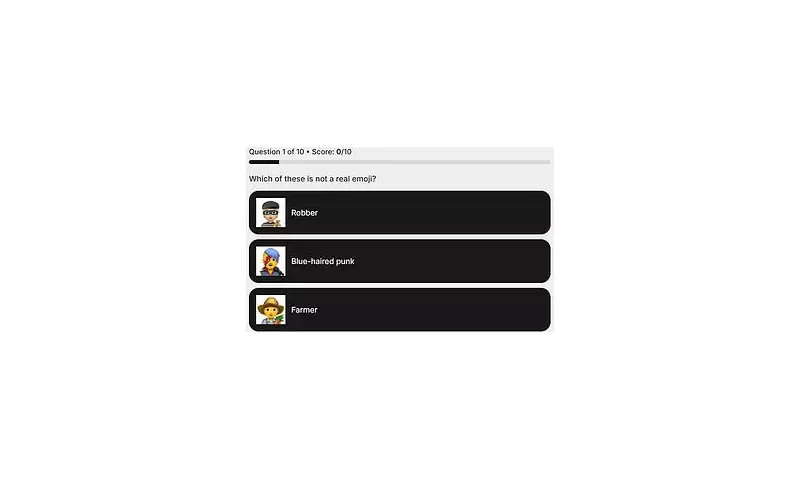
A new, fiendishly difficult test has emerged online, comprising 10 questions designed to probe the depths of your emoji knowledge. This isn't just about recognising symbols; it challenges your memory on specific colours, unique features, and even whether certain emojis exist at all. Some questions delve into the curious realm of the Mandela effect, a phenomenon where a large group of people falsely remembers an event or detail.
For instance, do you know the exact colour of the seahorse emoji? Can you recall how many fingers are depicted on the hand getting a manicure? This quiz promises to deliver the answers and reveal just how sharp your emoji recall really is.

The Case of the Non-Existent Spa Emoji
One of the most perplexing aspects of the quiz involves identifying emojis that were never officially created. A prime example is the widespread belief in a 'spa emoji' featuring a woman with a towel wrapped around her hair and cucumbers resting on her eyes. This character feels so familiar that many social media users are convinced it once existed.
The confusion was highlighted in a viral TikTok video where a user pleaded, 'Please tell me somebody remembers the emoji of a girl wearing her hair in a towel and she has cucumbers over her eyes like she is at the spa! I cannot find it and now I'm realizing it doesn't exist but I remember it so vividly.'
While similar emojis are available, such as the 'Woman in Steamy Room' on iOS which has a towel on her head, or the 'Person Getting Massage', none include the iconic cucumber slices. This collective false memory is a textbook case of the Mandela effect, where our brains conflate similar images to create a new, inaccurate memory.
What Is the Mandela Effect?
The term 'Mandela Effect' was coined by paranormal enthusiast Fiona Broome, who vividly remembered news coverage of Nelson Mandela dying in prison during the 1980s. In reality, Mandela passed away in 2013. This phenomenon occurs when a group shares a strong but incorrect memory.
In the case of the missing spa emoji, experts suggest our minds fill in gaps when presented with a vaguely similar image. Since human memory is notoriously unreliable for minor details, the presence or absence of something like cucumber slices is easily misremembered. Potential sources for this false memory include a cartoon icon from the TV show Lizzie McGuire, the cover of the 'American Girl' book series, or, most popularly, emoji-like icons from the life simulation game Bitlife.
This is not the first time Bitlife has been linked to a 'missing emoji'. Previously, TikTok users were certain they recalled a 'robber emoji' with a black and white striped shirt, sparking theories that it originated from the game. However, no evidence of such an icon in Bitlife has ever been found, just as there is no spa activity icon that matches the described image.
So, are your emoji memories accurate, or have you fallen prey to a digital illusion? Take the test to find out if your knowledge is pixel-perfect.