Human Brain Cells in a Dish Master Doom, Sparking Sci-Fi Fears and Medical Hopes
In a development that seems ripped from a science fiction script, a petri dish containing 200,000 human brain cells is currently playing the iconic 1990s video game Doom. This astonishing feat, achieved by an Australian startup, raises profound questions about consciousness, artificial intelligence, and the future of medicine. Meanwhile, across the Pacific, US scientists have successfully uploaded a fruit fly's brain into a computer simulation, creating a virtual insect that behaves like its biological counterpart. Together, these experiments push the boundaries of neuroscience and computing, blurring the lines between biology and technology.
From Pong to Doom: The Rise of Biological Computing
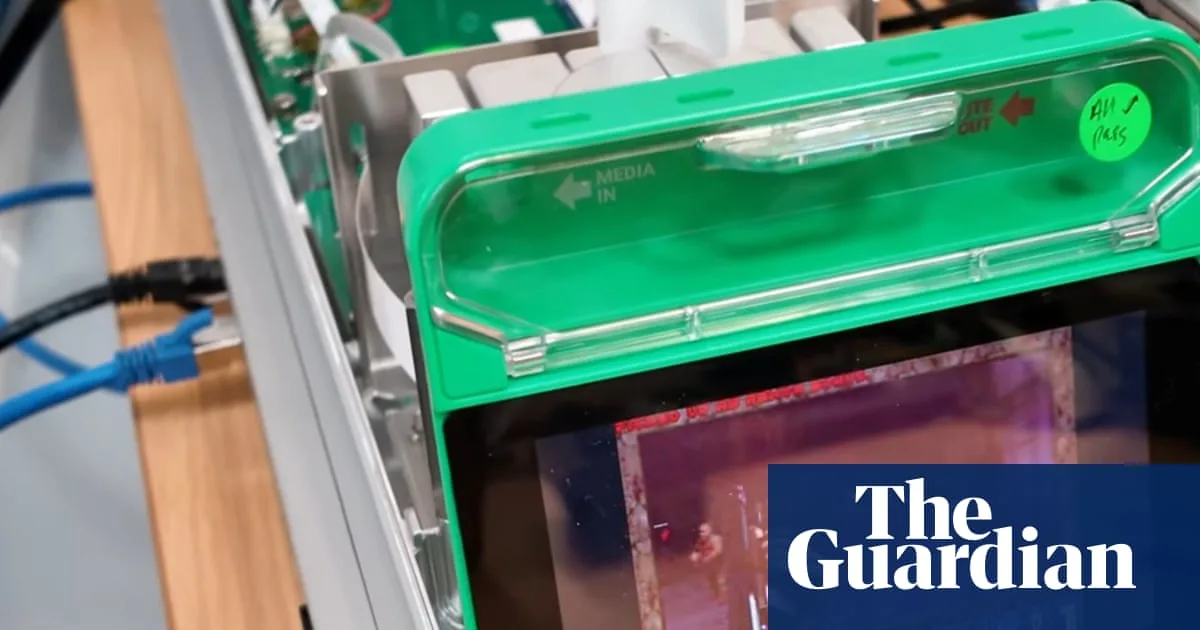
Australian startup Cortical Labs, based in Melbourne, first made headlines in 2022 by teaching lab-grown neurons to play Pong. Now, they have advanced to what they describe as the world's first code-deployable biological computer, which operates on living human tissue instead of silicon chips. This system is now running Doom, a milestone that taps into a long-standing obsession in tech circles. Hon Weng Chong, CEO of Cortical Labs, explains, In computer-science nerd land, there's this obsession with getting Doom to run on everything, from calculators to microwaves. As soon as we managed to get Pong to work, the first thing people said was: 'When are you going to do Doom?'
The brain cells used in this experiment were sourced from Chong's own blood, using a Nobel Prize-winning technique developed by Professor Shinya Yamanaka. By reprogramming white blood cells into induced pluripotent stem cells, the team created neurons that were placed on a glass chip the size of a 50p piece. Chong details, Essentially we reverse the biological clock back to an embryonic state, induce them into neurons, and put them on a chip. Because they're on a chip – and electricity is the common language between neurons and the computer system – we can interface with them and get them to play Doom.
How Do Brain Cells Play a Video Game Without Eyes or Fingers?
The process involves encoding game data into electrical signals that the neurons can interpret. Sean Cole, a 24-year-old AI graduate from the University of Sussex who wrote the code, elaborates, We take a snapshot of the game with information like the player's health and enemy positions, pass it through a neural network, convert it into numbers, and send the data. This is called encoding – essentially turning the game state into signals the neurons can understand. The neurons then fire an output – move left, move right, walk forward, shoot or not shoot – which the system decodes and converts back into actions in the game.
This mimics human sensory processing, as Chong notes, If you think about how humans operate, we have information going into our retina, which is converted into electrical signals, processed in the brain, and then an output happens. It's really no different from that. However, the question of whether these neurons are sentient remains contentious. Cole asserts, I definitely don't think it's conscious. At first it didn't know how to move, aim or even shoot. Then it would shoot the first two enemies and stop – almost as if it was preserving itself. So it's definitely learning.
Parallel Breakthrough: Uploading a Fruit Fly Brain into a Simulation
In San Francisco, biotechnology company Eon Systems has achieved a complementary breakthrough by scanning a fruit fly's brain and recreating it as a virtual insect. This digital fly, with 140,000 neurons, exhibits innate behaviors like walking, flying, grooming, and feeding without any training. Michael Andregg, CEO of Eon Systems, states, The brain was scanned using electron microscopy. Our head of engineering led a project to emulate that brain, and now we've placed the emulated brain back into a body, so it can wander around a virtual world.
This challenges a core assumption in artificial intelligence: that intelligence must be learned. Andregg explains, The fly probably knows something's off, because we're not simulating the environment with high fidelity. We can't give very specific taste and smell cues – just that something smells sweet or tastes bitter, but there are no complex aromas. The goal is to make such emulations indistinguishable from natural brains, potentially paving the way for humans to coexist with superintelligent systems.
Future Implications: From Medical Advances to Ethical Concerns
While these experiments spark fears of lab-grown humans or digital clones, their most immediate applications lie in medicine. Chong highlights, People are looking at it from biomedical research angles, for disease modelling. Things like epilepsy, where drugs could be tested on neurons grown outside the body – not just to discover new drugs, but to tailor them at a personal level. Additionally, biological computing could address challenges in robotics, leveraging evolutionary advantages in motor control and decision-making.
Yet, ethical questions loom large. Cole ponders, A big concern would be: what if you override someone's memories? Both teams emphasize that we are far from the sci-fi visions of uploading human consciousness, with Andregg noting that scanning a human body remains technically daunting. For now, these breakthroughs offer a glimpse into a future where biology and technology merge, raising hopes for innovation while cautioning against unforeseen risks.