Officials in Argentina's Tierra del Fuego province are challenging the idea that the ongoing deadly hantavirus outbreak may have emerged there, pushing instead for investigations into other Argentine provinces that passengers visited before boarding the ill-fated Atlantic cruise ship.
Provincial Officials Deny Origin Claims
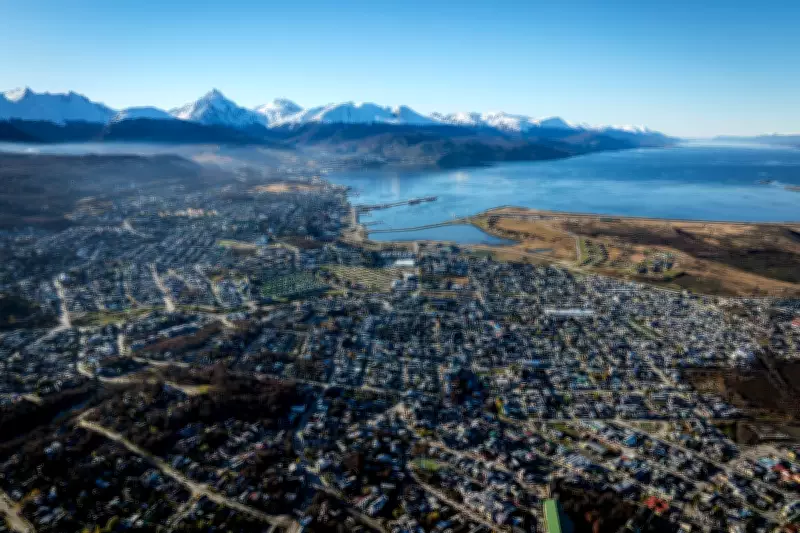
Current and former officials in the archipelago at the southernmost point of South America insist that the virus did not originate from the trash heap in Ushuaia that national health authorities named earlier this week as the most likely place two Dutch tourists contracted it while bird-watching. “I believe we are facing a smear campaign against this destination,” Juan Facundo Petrina, the province's director of epidemiology, told reporters Friday in a press conference from Ushuaia. Federal officials didn’t contact local authorities initially — instead, they discovered the purported Ushuaia connection via media reports, he said. Additionally, Tierra del Fuego has never recorded a case of the hantavirus — let alone the Andes variant involved in the ship outbreak — unlike Argentine provinces further north.
The Dutch couple — both of whom died — spent just two days in Tierra del Fuego during their four-monthlong trip through Argentina and Chile, he added, which “dramatically reduces the likelihood that the infection happened here.”

Economic Impact on Tourism Hub
As the main gateway to Antarctica, the remote town of Ushuaia drew over 157,000 cruise passengers last year — almost double its local population. Deep-pocketed cruisers have increasingly grown vital to Tierra del Fuego's economy as its core electronic manufacturing sector reels from libertarian President Javier Milei's slashing of trade barriers and subsidies. “Now the whole world is associating Ushuaia, and cruise travel, with a lethal virus, and if this continues, reservations for next season are honestly going to plummet because nobody will want to be exposed,” said Rubén Rafael, the former health minister of Tierra del Fuego. “Ushuaia’s reputation as a tourist destination is suffering badly.”
Investigation Stalled
Argentine investigators have yet to arrive. When asked Friday whether the Argentine Health Ministry still favored the outbreak origin theory of the Ushuaia landfill, a ministry official, who spoke on condition of anonymity because he wasn't authorized to talk about the investigation, said that nothing had changed and that Ushuaia was the only place where the ministry was sending investigators, adding that it remained possible the virus originated elsewhere in Argentina.
The Health Ministry announced on Wednesday that it would dispatch experts from the state-backed Malbran Institute to trap rats at the Ushuaia trash heap and nearby areas and test them for the Andes strain of the hantavirus. Over two days later, the investigators have yet to arrive. The official dismissed the delay as normal for Argentina’s slow-moving bureaucracy.
In Tierra del Fuego, Petrina said he hoped national investigators would clear Ushuaia's name. He said it was taking a while “to determine all the exact locations where trapping and analysis will take place.”
Criticism of Government Response
Others in the left-leaning province complained that the government's delay and lack of transparency came as part of a wider pattern ever since Milei took his chain saw to the country's health system, withdrawing his country from the World Health Organization weeks after U.S. President Donald Trump did the same and defunding national programs responsible for tracking infectious diseases. “The health system in Argentina is going through a serious crisis,” said Rafael, the former provincial health minister. “The system is weakened, and as a result, the response to this outbreak has been very slow. That exposes all of us.”

Outside Argentina, public health experts said that the investigation is a critical step so that a similar situation can be avoided. “It's not an extreme emergency, but it's still of urgency in terms of collecting the data,” said Celine Gounder, an epidemiologist who serves as editor-at-large for public health at KFF Health News and previously advised the Biden administration on the coronavirus pandemic. “If there is an Andes virus that is more infectious locally you’d want to know that so that you can warn local residents and take measures to prevent their infection. And if they haven’t started that process yet, that would be concerning.”
Daunting Hunt for Answers
The Dutch couple that the WHO has identified as the first cruise passengers infected with the Andes variant — the only hantavirus that may be able to spread from person-to-person in rare cases — arrived in Argentina last November, according to the Argentine Health Ministry. The couple, 70 and 69 years old, spent weeks driving up and down the country before making a series of border crossings between Argentina and Chile over months. They also traveled between Argentina and Uruguay in March before embarking on the Antarctic cruise from Ushuaia on April 1.
The governments of Chile, which has seen deadly outbreaks of the Andes variant before, and Uruguay, which hasn't, declared the couple couldn't have become infected while visiting based on the virus' up-to-eight-week incubation period. They didn't offer details. Because the couple died, retracing their steps through the country is exceedingly difficult, said Argentine health officials, adding that they're working to fill in some gaps in the couple's travels.
Many independent Argentine epidemiologists believe that the hantavirus outbreak most likely emerged from the woodlands of central Patagonia, another major tourist destination where authorities have recently recorded hantavirus cases and long-tailed rats known to carry the Andes variant run rampant — unlike in Ushuaia. “With the media pressure now, it wouldn’t surprise me if the government's response has been more about quieting criticism by appearing to act,” said Raul González Ittig, genetics professor at the National University of Cordoba.